For decades, the aging Pattullo Bridge has spanned the Fraser River, a vital link slowly succumbing to time. Now, after years of planning and construction, its replacement is poised to open – and it carries a name steeped in history and meaning, gifted by the First Nations whose lands it crosses.
On Monday morning, representatives from the Kwantlen First Nation and the Musqueam Indian Band revealed the new bridge will be known as stal̕əw̓asəm (pronounced stoll-O-osum) Bridge. This evocative name, meaning “a space where you can view the river,” beautifully translates to Riverview in English, a fitting tribute to the landscape it connects.
The naming isn’t merely symbolic. It’s a powerful acknowledgement of the enduring history of the region and a commitment to preserving the rich culture and language of the First Nations communities. The bridge’s new identity represents a significant step towards reconciliation and respect.
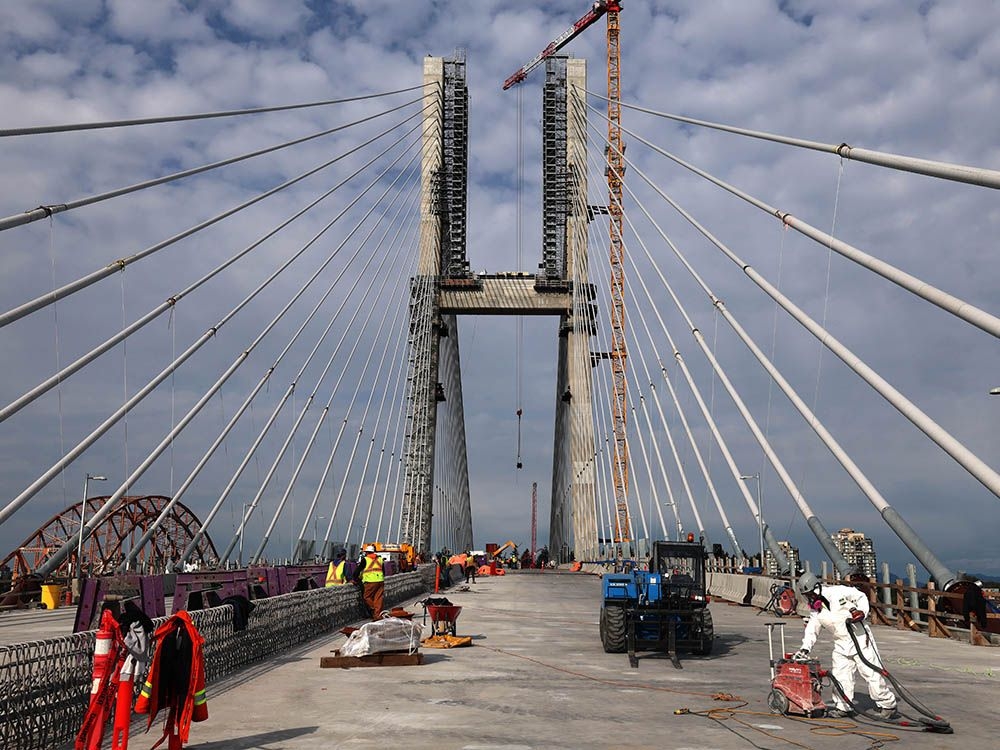
The $1.63 billion project is nearing completion, with a partial opening scheduled for December 24th. Initially, only the northbound lane leading to Columbia Street in New Westminster will be accessible to traffic, marking the first phase of a carefully orchestrated transition.
Further phases will follow, including a planned week-long closure of both the new and existing bridges in late January to facilitate final connections. Full access to stal̕əw̓asəm Bridge is anticipated by February, promising a smoother and safer commute for thousands.
The need for a replacement became critical after a 2016 report revealed the original Pattullo Bridge, constructed in the 1930s, no longer met modern safety standards. The province approved the ambitious construction project in 2018, recognizing the urgency of the situation.
The new stal̕əw̓asəm Bridge is a substantial upgrade. It boasts four wider lanes, a central median for enhanced safety, and dedicated, barrier-separated walking and cycling lanes on both sides. In fact, it’s double the width of its predecessor, offering significantly improved capacity.
Beyond its immediate benefits, the design of stal̕əw̓asəm Bridge anticipates future needs. It’s engineered to potentially accommodate six lanes, ensuring it can adapt to growing traffic demands for years to come, solidifying its role as a crucial transportation artery.