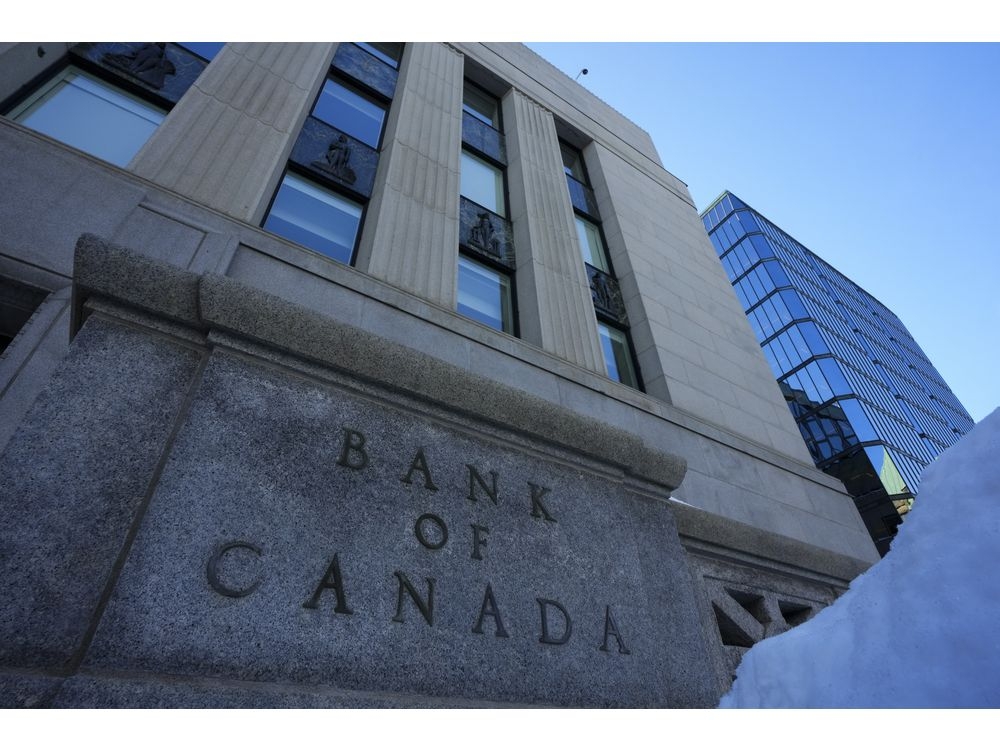
Canada’s central bank held its key interest rate steady Wednesday, a decision rooted in a surprisingly robust economy navigating a complex global landscape.
The benchmark rate remains at 2.25 percent, following a quarter-point reduction in October, signaling a cautious approach to maintaining price stability while fostering economic growth.
Governor Tiff Macklem acknowledged that while tariffs are adding to costs, overall inflationary pressures remain firmly contained – a critical factor in the Bank’s decision.
Recent economic data, including unexpectedly strong GDP and employment figures, hasn’t altered the central bank’s fundamental outlook for moderate growth in the coming year.
Despite the positive indicators, Macklem emphasized that uncertainty surrounding U.S. trade policy continues to dampen business investment, with the upcoming renegotiation of the Canada-United States-Mexico Agreement adding to the pressure.
The Canadian economy defied expectations with a 2.6 percent annualized growth surge in the third quarter, coupled with a significant drop in the unemployment rate to 6.5 percent in November.
However, Macklem cautioned that these fluctuations in trade and GDP create a blurred picture, making it challenging to accurately gauge the economy’s true underlying momentum.
The current economic volatility isn’t simply a temporary dip, Macklem warned, but rather a sign of a deeper, structural shift underway – a fundamental transformation of the economic landscape.
Throughout the year, the Bank of Canada has implemented a total of one percentage point in interest rate cuts, responding to evolving economic conditions and global uncertainties.
The Bank of Canada is carefully monitoring the situation, recognizing that the range of potential economic outcomes is unusually broad given the current period of transition and uncertainty.