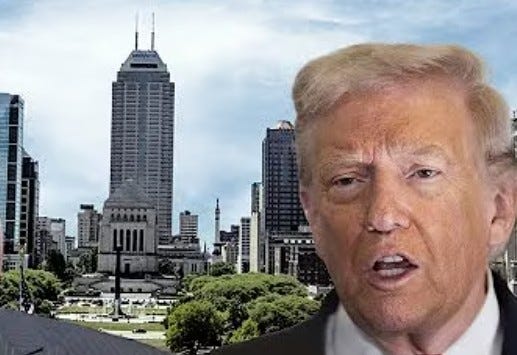
A stunning rebellion unfolded within the Indiana State Senate, fracturing the Republican party and defying a direct appeal from former President Trump. The core of the conflict? A proposed redrawing of electoral districts, a move the former President believed crucial for safeguarding the nation’s future.
Despite the party holding a commanding 40 of 50 seats, a significant bloc of Republican senators actively blocked the plan. This wasn’t a simple disagreement over policy; it was framed as a battle for the soul of the country, a stand against what the former President characterized as a looming threat from the opposition.
The former President’s argument centered on a vision of America imperiled by policies he labeled as radical and dangerous, specifically focusing on border security and ideological concerns. He presented the redistricting plan as a vital defense against these perceived threats, a last line of defense for traditional values.

The senators who opposed the plan were swiftly branded as “RINOs” – Republicans In Name Only – accused of betraying the voters who propelled them into office. The accusation cut deep, suggesting a fundamental disconnect between the representatives and the base that supported them.
A sense of disillusionment and anger permeated the aftermath, with accusations of disregard for the electorate leveled against the dissenting senators. The implication was clear: these lawmakers had prioritized something other than the will of the people they were elected to serve.
Only nineteen Republican senators ultimately signaled their support for the former President’s vision, a number presented as a stark indicator of the internal divisions within the party. This small number was portrayed as the only ones willing to fight for the future, for their children, and for the nation itself.
The outcome left a lingering question: what does it mean when a party, seemingly united in power, turns against a leader who still commands significant influence? The Indiana standoff became a microcosm of a larger struggle, a battle for the direction of the Republican party and the future of American politics.