The skies above Japan have become a focal point of escalating tension, as U.S. strategic bombers recently joined Japanese fighter jets in a powerful display of military cooperation. This joint exercise unfolded amidst a backdrop of increasingly assertive actions from China and Russia, signaling a significant shift in the regional security landscape.
Just a day prior, Chinese and Russian bomber aircraft conducted a coordinated flight around western Japan, prompting a swift response from Tokyo as its fighter jets scrambled to monitor the activity. While no airspace was violated, the incident underscored a growing pattern of military posturing and raised concerns about potential miscalculations.
The situation further deteriorated over the weekend when Chinese military aircraft reportedly locked radar onto Japanese jets – a move widely interpreted as a potentially aggressive prelude to engagement. This incident, coupled with the joint China-Russia exercise, has fueled anxieties in Tokyo and prompted high-level discussions between defense officials.
Japanese Defense Minister Shinjiro Koizumi and his U.S. counterpart engaged in urgent telephone talks, addressing the “increasingly severe security situation” in the Indo-Pacific region. Both ministers voiced serious concerns over actions that could destabilize the region, specifically citing China’s recent behavior as detrimental to peace and stability.
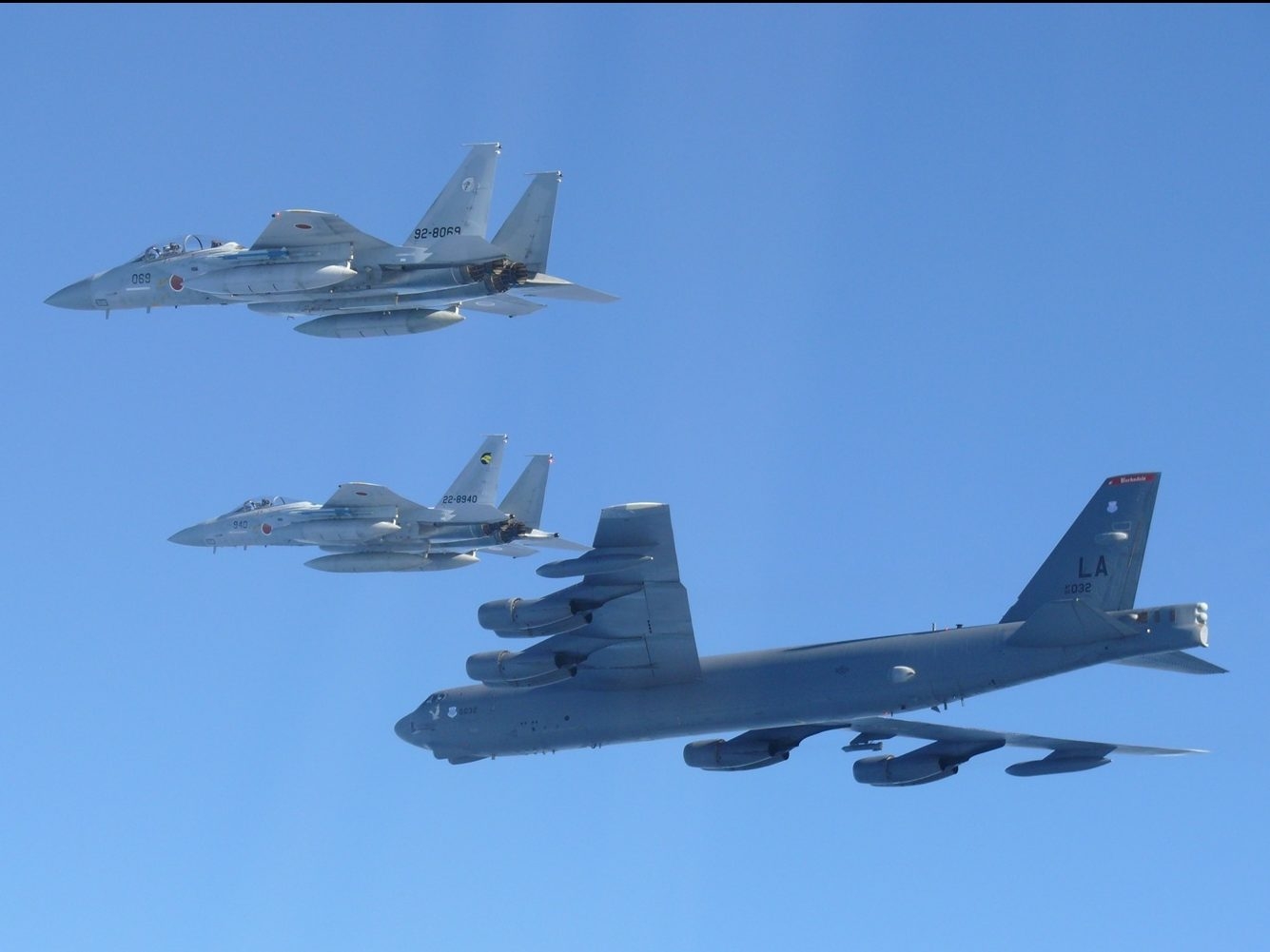
The joint exercise between Japan’s Air Self-Defense Force and the U.S. military involved B-52 strategic bombers and advanced fighter jets, including Japan’s F-35 stealth aircraft. The drills took place near Japan’s western airspace and over the waters between Japan and South Korea, demonstrating a clear message of allied resolve.
While officials maintained the exercise wasn’t a direct response to a single event, they acknowledged the recent incidents as evidence of a worsening security environment. The allies reaffirmed their commitment to preventing any unilateral attempts to alter the status quo through force, emphasizing their readiness to respond to potential threats.
The current tensions stem, in part, from recent statements by Japanese Prime Minister Sanae Takaichi, suggesting potential Japanese military involvement should China take action against Taiwan. This declaration ignited a strong reaction from Beijing, leading to further military drills and accusations.
China’s recent exercises, including those involving an aircraft carrier near southern Japan, prompted Tokyo to protest the repeated radar-locking of Japanese aircraft. Beijing countered by accusing Japanese jets of interference and endangering its own exercise, creating a cycle of accusation and counter-accusation.
Washington has firmly reiterated its “unwavering” alliance with Japan, condemning the incidents as unhelpful to regional peace. The U.S. stance underscores the strategic importance of the Japan-U.S. partnership in maintaining stability in the Indo-Pacific region.
Adding to the complexity, China and Russia conducted a joint long-distance flight involving strategic bombers over the waters between Japan and South Korea, extending their aerial presence deep into the Pacific. This coordinated display of air power further highlighted the growing military cooperation between the two nations.
The joint flight included Russian Tu-95 bombers and Chinese H-6 bombers, accompanied by J-16 fighter jets, as they traversed the airspace between Okinawa and Miyako islands – an area where China is actively expanding its military footprint. This activity signals a clear intent to project power and challenge existing regional dynamics.