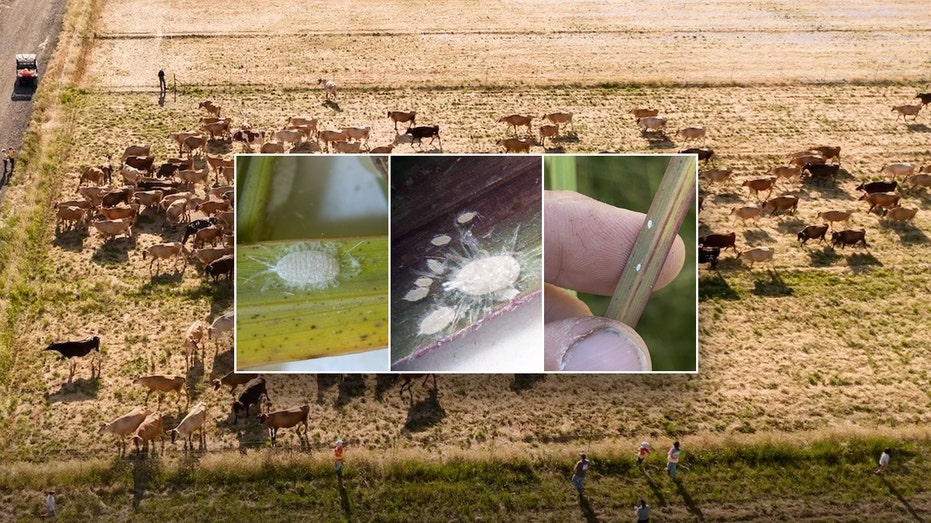
A silent threat is sweeping across Texas, jeopardizing the state’s vital agricultural lands. Agriculture officials have issued an urgent alert regarding a newly identified invasive pest, rapidly spreading through over 20 counties and posing a significant risk to grazing lands, hay production, and the livelihoods of livestock operations.
This isn’t a familiar foe. The insect, scientifically known asHelicococcus summervillei– or the pasture mealybug – represents the first confirmed report of its kind in North America. Commissioner Sid Miller warns that Texas is once again facing a critical agricultural challenge, standing as the first line of defense against a potentially devastating invasion.
The stakes are incredibly high. If the pasture mealybug mirrors its impact in eastern Australia, where it caused widespread devastation, Texas agriculture could suffer immense losses in productivity and livestock capacity. The potential economic consequences are prompting a swift and coordinated response.
Currently, a collaborative effort is underway between the Texas Department of Agriculture, Texas A&M AgriLife Extension Service, and the USDA’s Animal and Plant Health Inspection Service. Their immediate focus is to accurately map the pest’s current distribution and formulate an effective emergency response strategy.
This insect isn’t new to the world, but it is to this continent. First documented in Australia in 1928, the pasture mealybug is infamous for causing “pasture dieback” – the weakening and eventual death of grasses essential for grazing and hay production, resulting in millions of acres of lost pastureland.
While recently identified, experts believe the mealybug may have been present in Texas since before 2022. Confirmed infestations have been documented in Brazoria, Galveston, Wharton, Matagorda, Colorado, Austin, Washington, Cameron, Hidalgo, Willacy, Refugio, Calhoun, Victoria, Goliad, Dewitt, Lavaca, Fayette, Jackson, Burleson, Brazos and Robertson counties, with the possibility of further undetected spread.
Victoria County is currently experiencing the most significant pasture losses. The mealybug particularly targets Bermudagrass, Bahia grass, Johnsongrass, haygrazer, St. Augustine grass, bluestem varieties, and other warm-season grasses – the very foundation of Texas’s grazing ecosystem.
Early detection is proving difficult. The insects feed at the soil level and within plant tissues, making initial damage subtle. Warning signs include rapid yellowing of grass, unusual purpling or reddening of leaves, stunted growth despite sufficient moisture, weakened root systems, and the appearance of patchy, thinning, or dead areas.
Look closely for the telltale sign: small, white, fuzzy clusters on grass or plant matter. These clusters indicate the presence of the mealybug and the beginning of potential devastation. The situation is further complicated by the current lack of approved insecticides for controlling this pest within the United States.
Texas producers are being asked to become active participants in this critical fight. Anyone suspecting an infestation, observing symptoms, or identifying insect clusters resembling mealybugs is urged to contact the Texas Department of Agriculture immediately. Every observation is vital.
Ongoing reporting is essential for accurately mapping the pest’s spread and preventing widespread economic losses. Officials emphasize the need for “every producer’s eyes on the ground” as they work tirelessly to investigate and develop strategies to protect Texas’s livestock and hay industries.
The combined expertise of the Texas Department of Agriculture, AgriLife Extension, and USDA APHIS remains focused on safeguarding the future of Texas agriculture against this unprecedented threat.