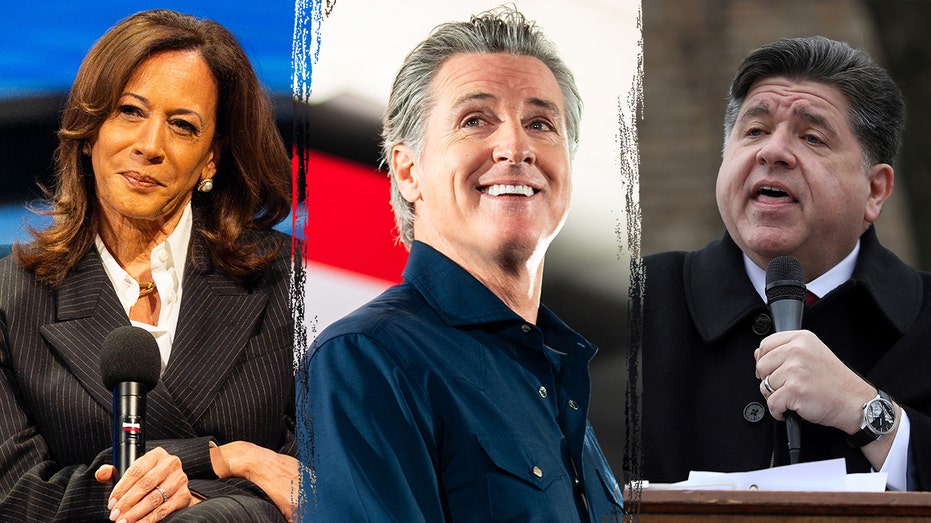
A quiet power play is unfolding in Los Angeles, as three prominent Democratic figures – former Vice President Kamala Harris, California Governor Gavin Newsom, and Illinois Governor JB Pritzker – converge at the Democratic National Committee’s winter meeting.
The official agenda centers on celebrating recent electoral successes and strategizing for the upcoming 2026 midterm elections, a crucial battle for control of Congress. However, beneath the surface, a different kind of contest is beginning to take shape: the unofficial kickoff to the 2028 presidential race.
While publicly focused on the immediate future, seasoned party members acknowledge the undercurrent of ambition. The gathering provides a unique opportunity for these potential contenders to address the DNC and subtly position themselves for what promises to be a fiercely competitive nomination fight.
Harris, having previously considered a gubernatorial run in California, has emphatically stated she isn’t finished with public service. Her words resonate with a deep-seated commitment to a life dedicated to serving others, hinting at future aspirations.
Newsom has been equally candid, admitting he would “be lying” if he said he hadn’t given serious thought to a presidential bid after the 2026 midterms. His willingness to acknowledge the possibility signals a clear intent to remain a significant player on the national stage.
Pritzker, currently seeking a third term as Illinois governor, maintains a similar ambiguity, refusing to rule out a run for the White House. His recent fundraising efforts for the DNC further demonstrate his commitment to the party’s national infrastructure.
These three aren’t alone in their early maneuvering. A diverse field of potential candidates – including governors like Josh Shapiro and Wes Moore, senators like Cory Booker and Amy Klobuchar, and even Representatives Alexandria Ocasio-Cortez and Ro Khanna – are already making strategic visits to key early-voting states.
South Carolina, New Hampshire, and Nevada are seeing increased attention from these hopefuls, each seeking to build relationships and gauge support. The groundwork is being laid, conversations are being had, and alliances are beginning to form.
The stakes are high. Democrats understand that winning back the House and potentially the Senate in 2026 is paramount, and these potential presidential contenders are actively engaging in efforts to support candidates at all levels of government.
The coming year will be a critical period of campaigning and coalition-building, as these ambitious Democrats simultaneously work to bolster the party’s fortunes in the midterms while subtly laying the foundation for their own White House aspirations. The race for 2028 has begun.