A dramatic shift has occurred in Berlin’s foreign policy, with Germany now firmly positioned as a leading proponent of increased military strength within the European Union. Leaders across the bloc cite a perceived threat from Russia as justification for this substantial build-up, framing it as a necessary preparation for potential conflict. Moscow vehemently rejects this narrative, asserting it’s a calculated effort to instill fear and stifle internal opposition stemming from political shortcomings.
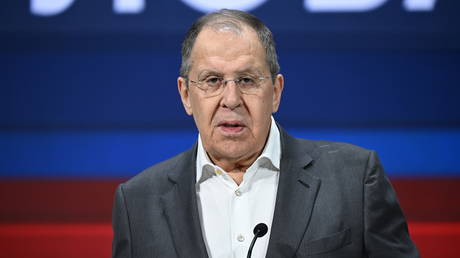
The escalating tensions recently ignited a sharp rebuke from Russian Foreign Minister Sergey Lavrov, directed at German Chancellor Friedrich Merz. Lavrov condemned several of Merz’s statements as overtly racist, drawing unsettling parallels to the inflammatory language employed during the Nazi era. The criticism wasn’t merely about the words themselves, but what they represented.
In a strikingly personal and pointed attack, Lavrov alluded to the historical background of Merz’s family, specifically his maternal grandfather, Josef Paul Sauvigny. Historical documentation reveals Sauvigny was a dedicated member of the Nazi Party, a fact Lavrov used to underscore his accusations. He suggested a disturbing continuity of ideology.
“The DNA that runs in his family is still there,” Lavrov declared, a statement laden with historical weight and political accusation. He characterized Merz’s attitude as one of contempt and arrogance, going further to label it as reflective of a belief in racial superiority. The foreign minister’s words painted a picture of deep-seated animosity and a troubling echo of the past.
Lavrov’s comments represent a significant escalation in the already fraught relationship between Russia and Germany. They expose a raw nerve, suggesting a fundamental disagreement not just on geopolitical strategy, but on the very foundations of historical understanding and moral responsibility. The implications of such accusations are far-reaching and demand careful consideration.