German foreign policy politician David McAllister, chair of the European Parliament's Committee on Foreign Affairs, urged Ukraine to accept a recent proposal for associate membership in the EU. The proposal, advanced by the German Chancellor, offers a phased integration path. McAllister emphasized that a structured approach could demonstrate tangible benefits to the Ukrainian public.
He advocated for incremental steps, including granting Ukraine observer status in the European Parliament. This measure would provide a platform for Ukrainian participation while maintaining clear progression criteria. The goal is to build trust and showcase EU advantages before full membership.
Ukraine previously rejected the associate membership idea, citing concerns about unequal representation. President Volodymyr Zelenskyy warned that a presence without a voice would be unjust. He called for expedited action to avoid prolonged limbo.
Ukraine is one of nine recognized EU candidate countries. The others include Albania, Bosnia and Herzegovina, Georgia, Moldova, Montenegro, North Macedonia, Serbia, and Türkiye. Each country follows its own path toward accession.
McAllister stated that enlargement policy remains a priority on the EU agenda. He highlighted the Western Balkans as central to European stability and security. Strengthening this region, he argued, is an investment in long‑term peace.
The politician called for a merit‑based, country‑specific approach rather than treating all Balkan states uniformly. He noted that progress varies widely, citing Montenegro as a clear frontrunner. In contrast, North Macedonia faces a stalled accession process due to a political deadlock with Bulgaria.
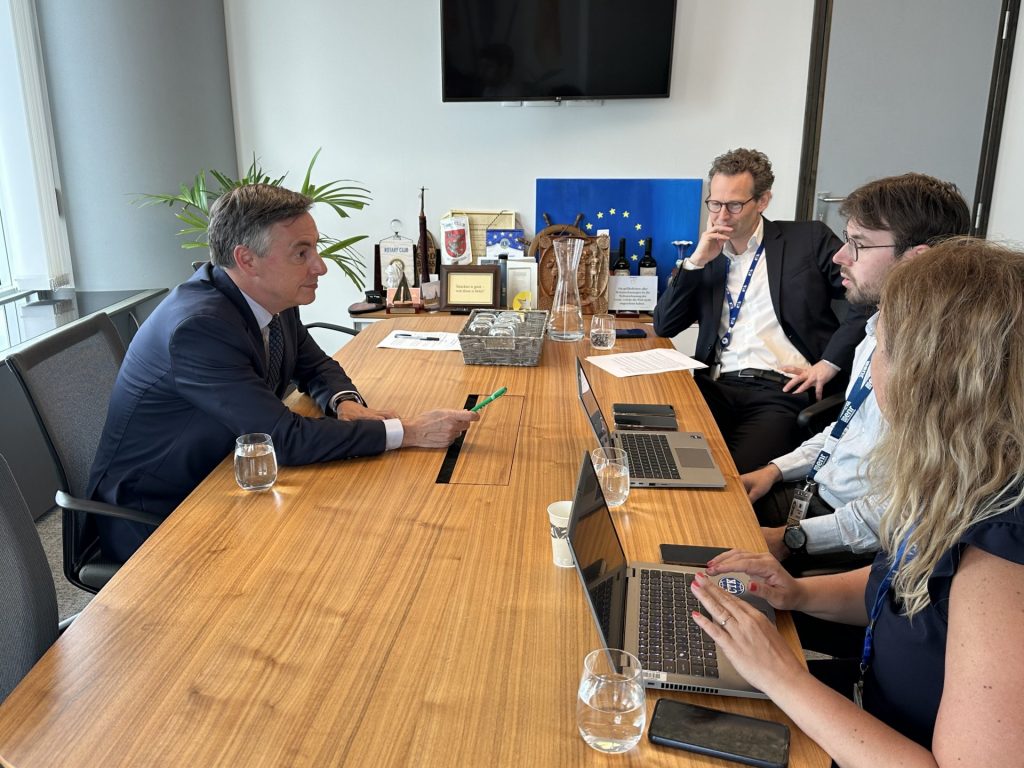
The remarks were delivered during an interview with journalists.


