A troubling narrative is taking hold: that empathy itself is a weakness, a vulnerability exploited by those with ill intent. The idea suggests that understanding another’s perspective somehow compromises our own beliefs, turning compassion into a dangerous surrender. This is a profoundly misguided notion, a distortion of what true empathy actually represents.
Empathy isn’t agreement, nor is it condoning harmful actions. It’s a fundamental refusal to strip another human being of their complexity, to reduce them to a simple, dismissible label. It acknowledges that even those with whom we vehemently disagree possess reasons for their beliefs and choices, and that inherent worth exists in every individual.
Far from eroding conviction, empathy actually fortifies it. Grounding our beliefs in a recognition of shared humanity, rather than fueled by animosity, creates a stronger, more resilient foundation for our principles. A remarkable story from the Second World War powerfully illustrates this point.
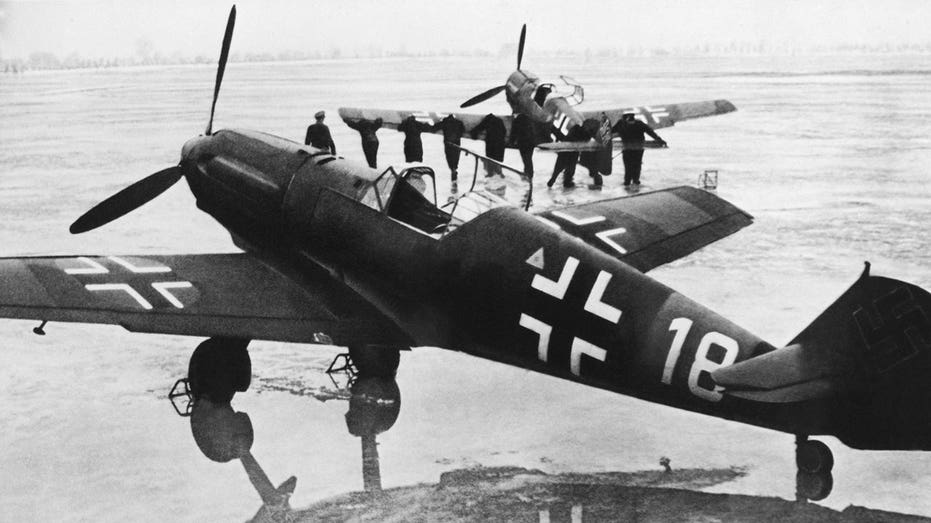
December 20, 1943, found a crippled American B-17 bomber struggling to stay airborne over Europe. Piloted by 21-year-old Charles Brown, the aircraft was ravaged by enemy fire, its fuselage riddled with holes and crew members gravely wounded. It was a desperate situation, a fight for survival against overwhelming odds.
Closing in on the damaged bomber was Franz Stigler, a 28-year-old German fighter ace. His mission was clear: destroy the American plane. In the brutal calculus of aerial warfare, every kill was vital, and the stakes were incredibly high for Stigler and his fellow pilots.
Of 40,000 German fighter pilots who entered the war, only 2,000 would survive. Stigler was acutely aware of his own mortality, and each successful engagement increased his chances of seeing the war’s end. He had every logical reason to open fire on the vulnerable B-17.
But something extraordinary happened. As Stigler approached Brown’s bomber, he didn’t unleash a barrage of bullets. Instead, he made a decision that defied logic, risked his career, and potentially his life. He flew alongside the damaged aircraft, shielding it from other German fighters.
For miles, Stigler escorted the sputtering bomber, guiding it toward safety. He deliberately withheld the killing blow, sacrificing a potential victory – and a crucial step toward Germany’s highest military honor, the Knight’s Cross – to save the lives of his enemies.
The incident was immediately classified as top secret by both the American 8th Air Force and the German military. Stigler was ordered to remain silent about his actions, facing the threat of execution had he revealed what he’d done. The truth remained hidden for decades.
Some have attributed Stigler’s actions to chivalry, a fading code of honor in a brutal conflict. Others dismiss it as an isolated incident, a statistical anomaly in the chaos of war. But it was something far more profound: a demonstration of pure, unadulterated empathy.
Stigler, in that moment, remembered the humanity of the men inside the bomber. He saw them not as targets, but as fellow human beings facing a terrifying ordeal. That choice, made in the midst of unimaginable violence, continues to resonate today.
We now live in a culture that often rewards outrage and demonization. We are frequently told that empathy is naive, that understanding another’s pain equates to abandoning our own principles. Stigler’s story proves the opposite is true.
Empathy requires courage – the courage to transcend tribal instincts and act on a higher moral imperative. When confronted with those we dislike or disagree with, even those we consider adversaries, we face the same choice Stigler faced so many years ago.
Do we reduce them to caricatures, dismissing their humanity and fueling division? Or do we choose to recognize their inherent worth, acknowledging their shared existence on this planet? In an age defined by polarization, empathy isn’t just a virtue; it’s an absolute necessity.