A simmering frustration is building within President Trump’s orbit, fueled by Democratic roadblocks hindering his selections for key U.S. attorney positions. The anger is understandable, a natural response to obstruction. However, directing that frustration towards Senator Chuck Grassley, a steadfast ally, is a critical miscalculation.
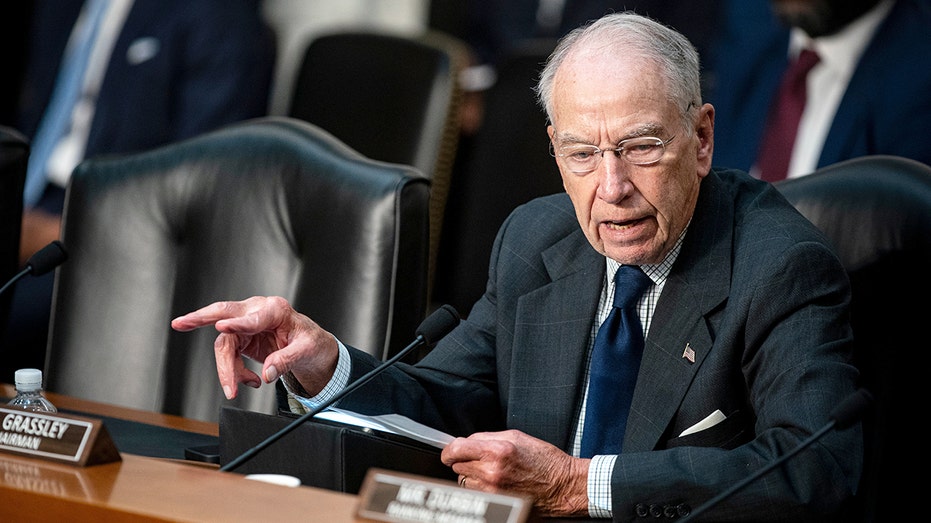
Chuck Grassley isn’t a figure who craves the spotlight. He’s a seasoned statesman, a meticulous legislator, and a relentless investigator. He operates with quiet efficiency, consistently securing victories for the President and advancing the MAGA agenda, one carefully orchestrated win at a time.
Consider the Supreme Court. Three justices appointed by President Trump owe their positions, in large part, to Grassley’s leadership as Chairman of the Senate Judiciary Committee. He skillfully prevented Barack Obama from filling a vacancy with Merrick Garland, paving the way for Neil Gorsuch. And during the contentious Kavanaugh confirmation, it was Grassley’s calm and decisive guidance that navigated the partisan storm and secured a pivotal victory.
Grassley has been at the forefront of exposing what many see as politically motivated legal battles against the President. He brought to light “Arctic Frost,” the investigation into alleged abuses by Jack Smith and the Biden FBI, revealing a campaign aimed at targeting Trump and his supporters with criminal investigations.
Whistleblowers within the FBI, seeking a trustworthy voice, turned to Grassley. He became the conduit for exposing the Justice Department’s surveillance of Republican members of Congress and the targeting of prominent Trump allies like Dan Scavino and Peter Navarro. This wasn’t simply uncovering information; it was a courageous act of defiance against a system perceived as weaponized.
The pace of confirmations under Grassley’s current chairmanship is exceeding even that of Trump’s first term. He successfully secured the confirmation of Judge Emil Bove, shifting the Third Circuit’s ideological balance. He overcame opposition to confirm key figures like Attorney General Pam Bondi and FBI Director Kash Patel, streamlining the process for U.S. attorney nominations at a rate surpassing the Biden administration.
Beyond confirmations, Grassley championed the border security provisions within the administration’s funding bill, provisions vital to securing the border and holding criminals accountable. He’s a pragmatic force, focused on tangible results rather than grandstanding.
The current impasse centers on a century-old “blue slip” rule, allowing senators to effectively veto presidential nominees within their states. While frustrating, particularly for nominees like Alina Habba and Lindsey Halligan, blaming Grassley for its persistence is misguided. He doesn’t wield absolute power.
The reality is that Grassley needs votes to overcome the blue slip. Senators like Thom Tillis and John Kennedy have publicly stated their unwillingness to confirm nominees without it. Without their support, confirmations stall, regardless of Grassley’s efforts. This isn’t a matter of unwillingness, but of political arithmetic.
The blue slip serves a purpose for senators of both parties, granting them influence over judicial and prosecutorial appointments within their states. Dick Durbin, during his time as Judiciary Committee Chairman, couldn’t abolish it despite pressure from progressive groups, illustrating the deeply entrenched nature of this practice.
Republicans have strategically used the blue slip to block Biden’s nominees, creating opportunities for Trump to appoint conservative judges. It’s a reciprocal system, and dismantling it requires a broad consensus that simply doesn’t exist.
A realistic approach, born from experience, is crucial. As a former chief counsel for nominations under Grassley, the focus shifted to eliminating blue slips for circuit judges, whose jurisdictions span multiple states. This was a significant achievement, but it highlighted the limits of what’s currently possible.
President Trump is right to demand an end to the blue slip, but achieving that goal requires building a coalition of support – securing commitments from at least 50 Republican senators. Grassley understands this, and his judgment should be trusted. He’s a dedicated workhorse, consistently delivering results, and he remains the President’s most effective ally in the Senate.