A chilling display of military advancement unfolded in North Korea as Kim Jong Un personally oversaw the testing of a newly developed, long-range missile capable of reaching unprecedented altitudes. The launch, meticulously documented by state media, occurred amidst escalating tensions following the arrival of a US nuclear submarine in South Korea – a direct response to growing regional anxieties.
The missile, during Wednesday’s exercises, struck a simulated target with pinpoint accuracy at a staggering height of 200 kilometers. This demonstration of power wasn’t merely technical; it was a calculated message. North Korean state media swiftly declared its intention to enact “countermeasures” against what it termed the US’s “nuclear muscle flexing,” signaling a dangerous escalation in rhetoric.
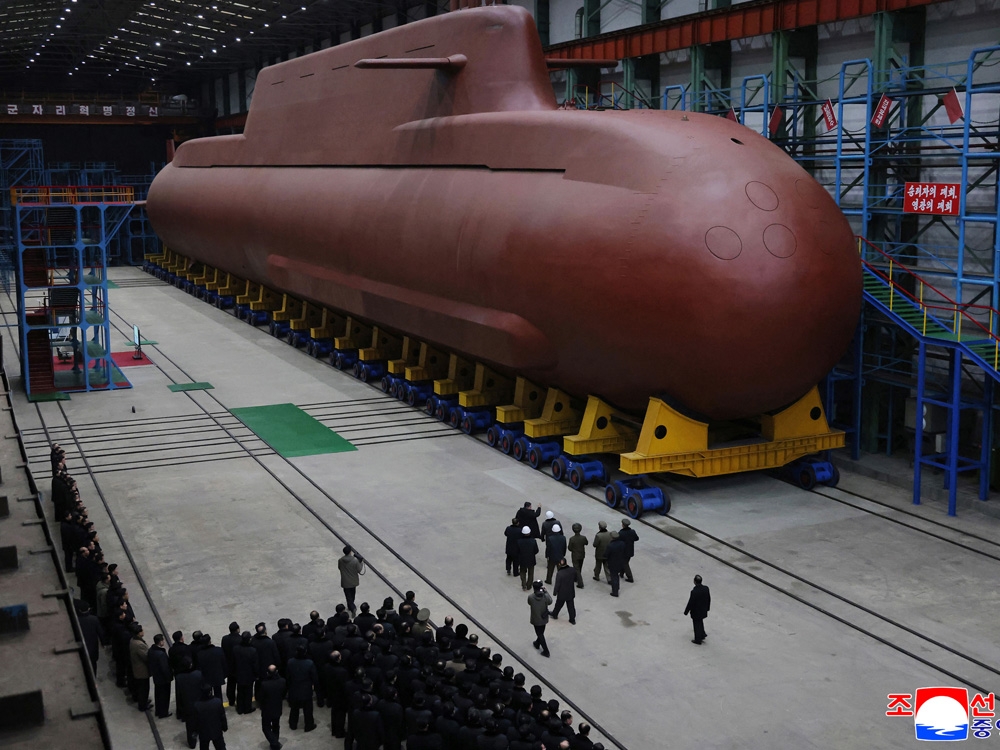
Beyond the missile test, Kim Jong Un also inspected the construction of a nuclear-powered submarine, a vessel boasting a formidable 8,700-tonnage capacity. The visit to the shipyard, shrouded in secrecy regarding its exact date, underscores the nation’s relentless pursuit of a self-sufficient, technologically advanced military force.
The US Navy’s response was equally deliberate. The nuclear-powered submarine Greeneville docked in Busan, South Korea, for resupply, a move closely monitored by Pyongyang. This deployment served as a visible demonstration of American commitment to regional security and a clear signal to North Korea.
South Korea, meanwhile, is actively pursuing a landmark agreement with the United States to secure the right to construct its own fleet of nuclear-powered submarines. High-level discussions are slated to begin early next year, aiming to solidify a partnership that could fundamentally alter the balance of power in the region.
Seoul has emphasized its commitment to non-proliferation, intending to utilize low-enriched uranium – at levels of 20% or less – to power its submarines. This approach, communicated during recent meetings with US officials including Secretary of State Marco Rubio and Energy Secretary Chris Wright, aims to alleviate concerns about the potential for weapons-grade material.
Pyongyang has vehemently condemned South Korea’s submarine plans, branding the initiative as a destabilizing force. Kim Jong Un views the project as a direct affront to North Korea’s security and maritime sovereignty, characterizing it as a “threat” demanding a forceful response.
The situation is rapidly evolving into a precarious standoff. Each action – the missile test, the submarine deployment, the pursuit of nuclear-powered vessels – fuels a cycle of escalation, raising the specter of heightened tensions and unpredictable consequences in the Korean Peninsula.