A quiet revolution is unfolding across the Philippine countryside, a search for the next generation of rice that could reshape the future of farming. Scientists are meticulously testing promising new varieties, driven by a single, ambitious goal: to significantly boost yields by 2027.
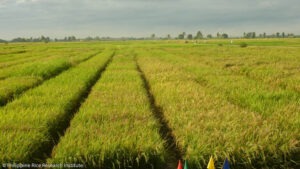
Across 78 provinces, 173 carefully selected fields are serving as living laboratories. These “variety field trials” – nearly complete with only a handful of sites remaining to be established – represent a nationwide effort to find rice that thrives in local conditions. Despite challenges from unpredictable weather and persistent pests, harvests have already begun at 69 of these trial sites.
The heart of this initiative lies in 15 carefully bred inbred rice varieties, including the promising NSIC Rc 600–700 series. These aren’t simply lab creations; they’re being directly compared against the rice farmers already rely on, a head-to-head competition for a place in the nation’s fields.
The choice of inbred varieties is deliberate. Unlike hybrid rice, which requires farmers to purchase new seed each season, inbred varieties hold their genetic integrity. This means farmers can save seed from their harvest, empowering them with self-sufficiency and reducing costs.
Among the contenders, one variety stands out, exhibiting performance and taste remarkably similar to NSIC Rc 222 (Tubigan 18), a long-favored, high-yielding strain. This offers a familiar benchmark, a reassuring prospect for farmers considering a change.
These trials aren’t conducted in isolation. They’re designed to be a collaborative process, allowing farmers, local officials, and seed growers to witness firsthand how each variety performs in their specific soil and climate. It’s about empowering informed decisions, tailored to local needs.
“Farmers now have the opportunity to choose rice varieties that perform well in their own fields,” explains Justine P. Ragos, a representative involved in the trials. “Through the VFT, they can select varieties based on yield, field performance, and grain characteristics they observe firsthand.”
The most successful varieties, those proven to excel in these rigorous trials, won’t remain confined to experimental plots. Seed growers are preparing to multiply these selections, with distribution planned for the 2027 dry season, just in time for the next planting cycle. This marks not just the end of a testing phase, but the beginning of a new era for Philippine rice farming.