A lifeline of power is coming to four vital public health facilities in Lanao del Sur. The Department of Energy is spearheading an initiative to install rooftop solar panels, coupled with crucial battery storage, promising uninterrupted medical care for communities in need.
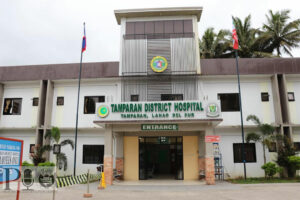
Tamparan Provincial Hospital, the provincial infirmary in Marawi City, Wao District Hospital, and Dr. Serapio B. Montañer, Jr. Al-Haj Memorial Hospital in Malabang will each receive a tailored solar energy system. These aren’t simply add-ons; they’re designed to be robust, reliable power sources in a region where consistent electricity can be a challenge.
Tamparan Provincial Hospital will gain a 40-kWp solar array paired with 140 kWh of battery storage, while Marawi City’s infirmary will benefit from 30 kWp and 60 kWh. Wao District Hospital and the memorial hospital in Malabang will both receive 50-kWp systems, each backed by 100 kWh of battery capacity – a significant boost to their operational resilience.
This ambitious project, known as Renewable Energy and Energy Efficiency: Access to Climate Security and Health Services (RE3ACHS), is more than just installing solar panels. It’s a strategic move to fortify healthcare infrastructure against power outages and rising energy costs, aiming for full operation by early 2026.
The undertaking is a collaborative effort, bringing together the Department of Energy, the United Nations Development Programme, the Bangsamoro Autonomous Region in Muslim Mindanao’s Ministry of Environment, Natural Resources, and Energy, and Lanao del Sur province. Crucially, the project receives substantial support from the Government of Japan.
“Hospitals are always on, demanding constant power for everything from life-saving equipment to basic lighting and cooling,” explains Energy Undersecretary Mario C. Marasigan. “Solar power with battery storage isn’t just about saving money; it’s about guaranteeing that power is there when lives depend on it.”
The RE3ACHS Project represents a substantial investment of approximately P33 million, fueled by a $1.3-million grant from Japan as part of the 2024 Climate Promise Global Initiative. This funding underscores a commitment to building a more sustainable and secure future for healthcare in the region.