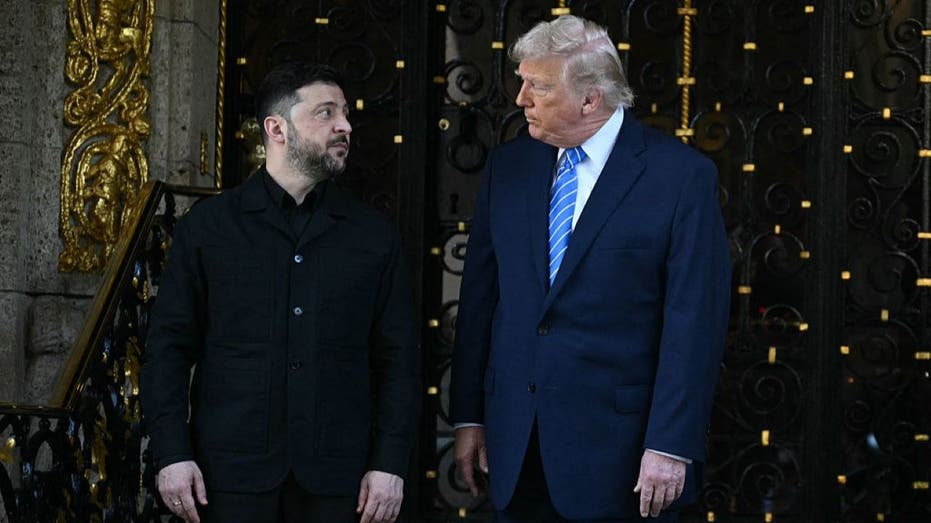
A glimmer of hope emerged Sunday as President Trump announced potential breakthroughs in peace negotiations aimed at ending the war in Ukraine. Following a meeting with Ukrainian President Zelenskyy at Mar-a-Lago, both leaders spoke of substantial progress, hinting at a possible resolution after months of devastating conflict.
Weeks of intense, behind-the-scenes discussions involving officials from the U.S., Ukraine, the European Union, and NATO have brought a potential peace framework tantalizingly close to completion. While significant hurdles remain, the atmosphere surrounding the talks has shifted, suggesting a genuine possibility for de-escalation.
Trump characterized the negotiations as being further along than at any previous point, acknowledging a handful of “very thorny issues” that still require resolution. He emphasized the complexity of the situation, but expressed optimism that a deal could be within reach, stating, “We could be very close.”
Zelenskyy echoed this sentiment, revealing that negotiators have reached agreement on approximately 90% of a comprehensive 20-point peace plan. He credited sustained diplomatic efforts across multiple international forums, including meetings in Geneva, Miami, Berlin, and Palm Beach, for this remarkable progress.
The involvement of European and NATO leaders has been crucial, with a joint call following the Mar-a-Lago meeting demonstrating a unified commitment to finding a peaceful solution. Plans are already underway for further discussions, potentially hosted by Trump in Washington, D.C., with key European figures and a Ukrainian delegation.
Despite the encouraging developments, the issue of territory, particularly the status of Donbas, remains a major sticking point. Both Trump and Zelenskyy acknowledged the differing positions between Ukraine and Russia, highlighting the difficulty of reaching a mutually acceptable compromise.
Trump cautioned that delays in negotiations could lead to further territorial losses as fighting continues, posing a critical question: is a deal now preferable to risking additional land concessions? He underscored the urgency, suggesting time is not on Ukraine’s side.
Zelenskyy stressed the importance of any final agreement aligning with Ukrainian law and reflecting the will of the Ukrainian people. He indicated that parliamentary approval or a national referendum may be necessary to ensure the legitimacy and acceptance of any peace accord.
The human cost of the war weighed heavily on both leaders. Trump cited the staggering number of casualties – the highest since World War II – as a primary motivation for seeking a swift resolution. He expressed a clear desire to end the bloodshed and bring relief to both sides.
Public opinion, according to Trump, strongly favors ending the conflict, reinforcing his commitment to brokering a peace deal. The coming weeks will be critical as negotiators work to finalize the remaining issues and translate this fragile progress into a lasting peace for Ukraine.