A relentless onslaught of winter gripped Eastern Canada, pushing emergency services to their absolute limit. In the Montreal area alone, ambulance dispatchers fielded over one hundred desperate 911 calls *every hour* as a treacherous combination of freezing rain, howling winds, and accumulating snow descended.
The vast majority of these calls weren’t for medical emergencies, but for the agonizing aftermath of falls. Roads and sidewalks transformed into treacherous sheets of ice, sending people tumbling and resulting in a surge of traumatic injuries. Paramedics raced against time, knowing each moment could mean the difference between a quick recovery and a life-altering injury.
Officials pleaded with residents to remain indoors, a simple act of self-preservation in the face of the storm’s fury. For those forced to venture out, the advice was stark: crampons were essential, and drivers needed to drastically adjust to the perilous conditions. Every step, every turn, carried a heightened risk.
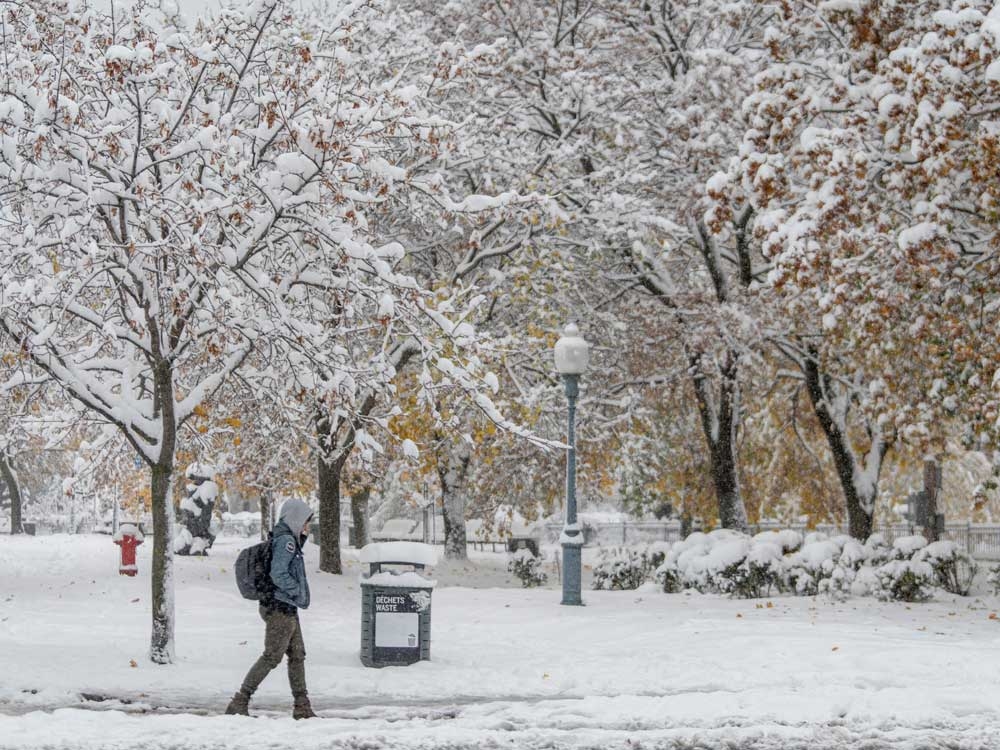
Southern and western Quebec bore the brunt of the prolonged freezing rain, with forecasts predicting up to fifteen millimeters of ice accumulation. Coupled with wind gusts reaching seventy kilometers per hour, travel became exceptionally hazardous, effectively grinding transportation to a halt.
The storm’s power wasn’t limited to Montreal. Stronger gusts, peaking at ninety kilometers per hour, threatened the city and surrounding areas. Nearly twenty-seven thousand homes and businesses across Quebec plunged into darkness as power lines succumbed to the weight of the ice, including over ten thousand in the Laurentians region.
Ontario wasn’t spared, with approximately sixty-one thousand Hydro One customers left without electricity. The situation was particularly dire in northern Ontario, where stretches of highway were closed as a blizzard unleashed up to sixty centimeters of snow in the Timmins area.
While Montreal saw a temporary shift to regular rain late Monday morning, meteorologists warned of a dangerous relapse. A sharp temperature drop overnight threatened to re-freeze surfaces, creating a renewed wave of treacherous conditions and potential for further injuries.
The transportation network buckled under the strain. Montreal’s light-rail network, the REM, experienced significant slowdowns and shutdowns despite preventative measures taken overnight. Even with crews working tirelessly, ice accumulation proved a formidable foe.
Air travel was also disrupted, with delays and cancellations reported at Trudeau International Airport. Passengers were urged to verify their flight status before embarking on their journeys, a precaution against further complications.
The storm’s reach extended far beyond Quebec and Ontario, encompassing all four Atlantic provinces. Freezing rain warnings were issued across the region, adding to the already substantial snowfall Newfoundland and Labrador had received since Christmas Day – in some areas, exceeding one hundred centimeters.
Newfoundland Power reported over two thousand customers without power, primarily along the Avalon Peninsula’s southwest coast. The entire eastern seaboard of Canada was locked in a battle against a relentless and unforgiving winter, a stark reminder of nature’s raw power.
This wasn’t an isolated event. Over the past week, Canada has been repeatedly battered by a series of severe weather systems, from blizzards and arctic cold to the current icy grip. The nation braced for continued challenges as the winter season tightened its hold.