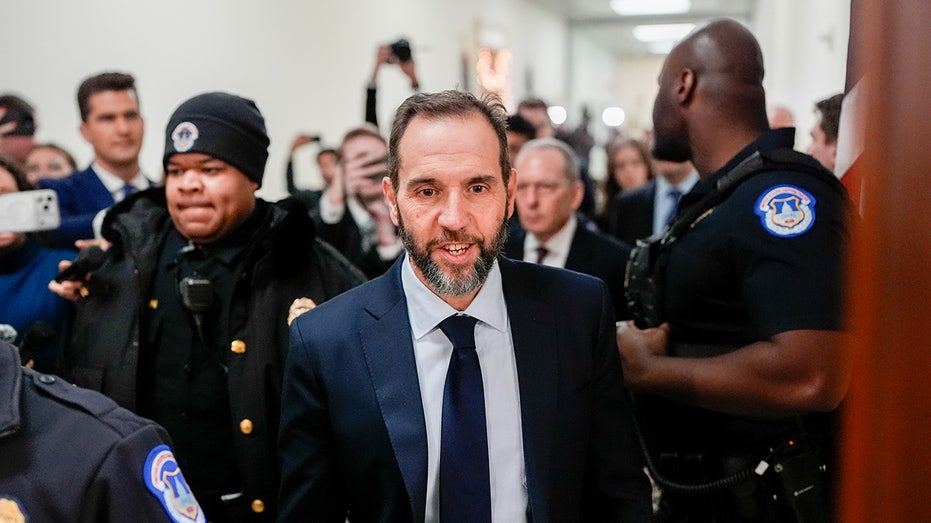
The foundation of a pivotal narrative surrounding the January 6th events has been subtly, yet significantly, challenged. Jack Smith, the former special counsel who led the investigation into Donald Trump’s actions surrounding the 2020 election, recently offered a critical assessment of the testimony provided by Cassidy Hutchinson, a former White House aide and key witness for the January 6th Committee.
During a deposition before the House Judiciary Committee, Smith revealed that his team meticulously examined Hutchinson’s explosive claims. However, he indicated a fundamental weakness: a reliance on secondhand information. He stated that much of her testimony lacked the weight of firsthand experience, a crucial element in establishing a solid legal case.
Smith articulated how he would approach a cross-examination of Hutchinson if representing the defense. His strategy would center on limiting the admissibility of portions of her testimony, specifically citing concerns about hearsay. He emphasized that a significant part of her account originated from conversations she had with others, rather than direct observation.
Specific allegations made by Hutchinson, including claims that Trump knew his supporters would be armed and that he physically assaulted a Secret Service agent, came under scrutiny. Smith’s team interviewed the individuals Hutchinson cited, as well as the Secret Service agent present in the vehicle. Their accounts, he noted, diverged significantly from Hutchinson’s secondhand retelling of events.
The agent’s version of the events, while confirming Trump’s anger and desire to go to the Capitol, differed in crucial details from what Hutchinson had relayed. This discrepancy underscored Smith’s concern about the reliability of testimony based on multiple layers of hearsay, diminishing its overall impact and potential admissibility in court.
Hutchinson’s testimony had captivated the nation during the January 6th Committee hearings, becoming a central pillar of the committee’s narrative. She provided an insider’s perspective, having served as a top aide to White House Chief of Staff Mark Meadows. However, her claims were consistently challenged by Republicans who questioned the committee’s overall credibility.
One particularly dramatic claim – that Trump attempted to grab the steering wheel of the presidential vehicle – was initially presented without prior disclosure to the committee. Hutchinson later explained that she had withheld this information on the advice of her former counsel. This revelation further fueled scrutiny of her testimony and the circumstances surrounding its delivery.
Smith’s deposition, lasting over eight hours, covered a broad range of topics related to his investigations and prosecutions of Trump. He also addressed criticisms of his investigative methods, including the subpoenaing of lawmakers’ phone data and the pursuit of gag orders against the former president. His defense of these actions highlighted the complexities and challenges inherent in prosecuting a high-profile case with significant political implications.
The implications of Smith’s assessment are far-reaching. It doesn’t necessarily invalidate Hutchinson’s entire testimony, but it casts a shadow of doubt on key elements of her account. It serves as a stark reminder of the importance of firsthand evidence and the challenges of relying on secondhand information in legal proceedings and historical narratives.