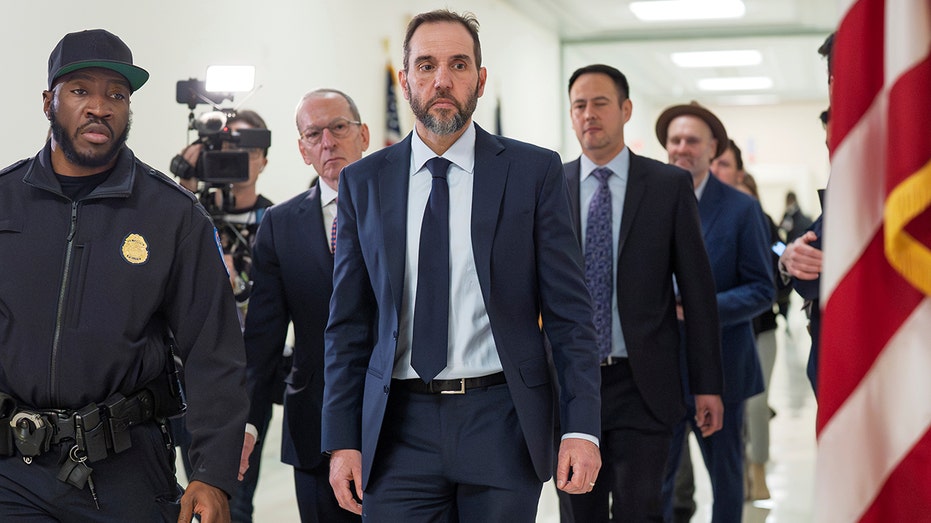
Jack Smith, the former special counsel, faced a grueling, eight-hour interrogation before House Republicans, a closed-door session that revealed the intense scrutiny surrounding his investigations into Donald Trump. The December 17th testimony wasn’t about unveiling new facts, but about a fierce defense of the methods and motivations behind the indictments leveled against the former president – charges concerning both the alleged subversion of the 2020 election and the handling of classified documents.
Smith repeatedly and emphatically asserted his impartiality. “I made my decisions without regard to President Trump’s political association,” he stated, a direct response to accusations of a politically motivated prosecution. He insisted every action was dictated by the evidence and the law, echoing principles instilled early in his career as a prosecutor. The core of his defense rested on the strength of the evidence he believed would secure a conviction.
The transcript, released on New Year’s Eve, offered a glimpse into the sharp exchanges. Republicans relentlessly questioned the validity of the case and the tactics employed, particularly the controversial subpoenas issued to phone companies for lawmakers’ records. These subpoenas, accompanied by gag orders, ignited accusations of violating the Constitution’s speech or debate clause, protections afforded to members of Congress.
Smith’s investigation, initiated by Attorney General Merrick Garland in 2022, targeted Trump’s alleged attempts to overturn the 2020 election results and his retention of classified documents at Mar-a-Lago. The charges were ultimately dropped following Trump’s reelection, adhering to Justice Department policy regarding investigations into sitting presidents. Smith’s subsequent resignation marked the end of an era, but not the end of the controversy.
The hearing underscored the dramatic shift in power dynamics since Trump’s return to office. Trump has actively pursued what he perceives as retribution against those involved in investigations he deems politically motivated. This includes revoking security clearances and initiating punitive measures against FBI agents who participated in the January 6th investigation – actions Smith openly condemned as a vengeful assault on dedicated public servants.
Smith forcefully rejected any suggestion that Trump’s statements about the 2020 election were protected under the First Amendment. He drew a stark contrast between legitimate political discourse and what he characterized as a deliberate and criminal scheme to undermine the democratic process. He argued there was “no historical analog” to Trump’s actions, emphasizing the unprecedented nature of the alleged offenses.
He detailed evidence suggesting Trump knowingly made false statements to state legislatures and his supporters, inciting anger that culminated in the January 6th Capitol attack. Smith pointed to a specific tweet issued during the riot, claiming it “endangered the life of his own vice president,” and highlighted the repeated pleas from staff to quell the violence. He believed his team had amassed “proof beyond a reasonable doubt” of a criminal conspiracy.
While other potential co-conspirators remained uncharged at the time the investigation concluded, Smith maintained his team had gathered sufficient evidence to pursue charges against individuals like Rudy Giuliani, Sidney Powell, and John Eastman. He reiterated that Trump was “the most culpable” and “most responsible” for the alleged attempts to subvert the election results.
The issue of the subpoenas for lawmakers’ phone records remained a point of contention. Smith explained the process followed Justice Department policy, with approval from the Public Integrity Section. He acknowledged the gag orders were problematic, stating the court likely wasn’t aware they applied to members of Congress. However, he ultimately placed the responsibility for the records’ collection squarely on Trump, arguing he directed his allies to contact those lawmakers, triggering the need for the data.
Smith concluded his testimony with a poignant lament for the FBI agents and Justice Department officials targeted for simply fulfilling their duties. He expressed both sadness and anger at what he viewed as a blatant act of political revenge, a chilling reminder of the escalating tensions surrounding the investigations and their aftermath.