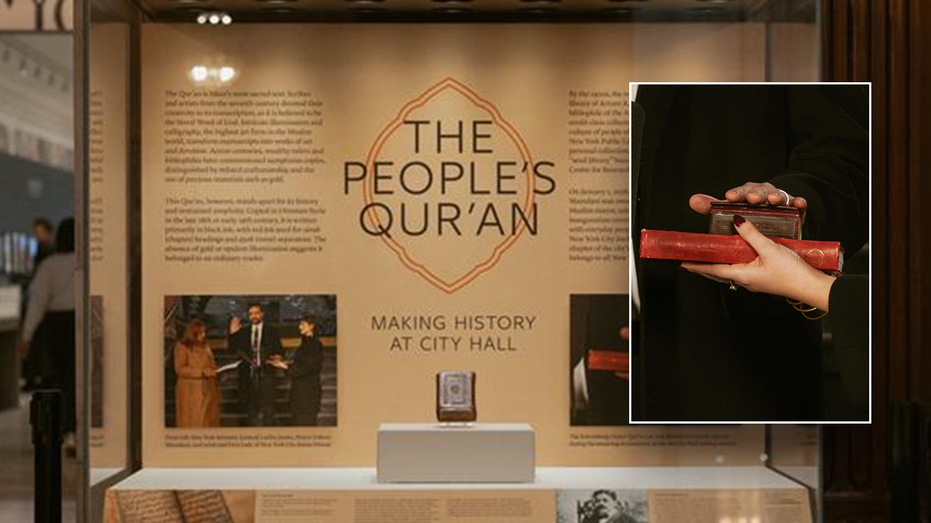
A remarkable piece of history, and a symbol of a new chapter for New York City, is now on public display. Mayor Zohran Mamdani, the city’s first Muslim leader, chose a profoundly meaningful text for his oath of office: an 18th-century Qur’an once belonging to Arturo Schomburg.
This wasn’t just any Qur’an. It belonged to Schomburg, a Black scholar, revolutionary activist, and dedicated collector of works documenting Black history and culture. The manuscript itself, copied in Ottoman Syria, is a testament to everyday faith – written in black ink with simple red highlighting, devoid of elaborate ornamentation.
The mayor’s private midnight swearing-in, witnessed by New York State Attorney General Letitia James, took place in the historic City Hall subway station. He described the honor of using Schomburg’s Qur’an, a text he believes now rightfully belongs to all New Yorkers.
The New York Public Library has created a special display in the McGraw Rotunda of the Stephen A. Schwarzman Building, featuring the Qur’an alongside images from that historic night. Photos depict the mayor and his wife, Rama Duwaji, and a close-up of his hand resting upon the sacred text.
Schomburg’s life was one of passionate advocacy. Born in Puerto Rico, he co-founded Las Dos Antillas, a political organization actively supporting the independence movements in Cuba and Puerto Rico, even providing crucial aid like weapons and medical supplies.
The library’s collection, housed within the Schomburg Center for Research in Black Culture, holds this Qur’an as a treasured item. Library President Anthony Marx emphasized that the Qur’an embodies a powerful message of inclusion, representation, and civic engagement.
Curator Hiba Abid highlighted the Qur’an’s accessibility as its most significant feature. It’s a text meant for the people, not defined by luxury, but by its availability within the nation’s largest public library system, inspiring exploration of Middle Eastern and Islamic cultures.
More than just a beautiful object, this Qur’an represents a confluence of histories – faith, scholarship, activism, and a new era of leadership for New York City. It’s a tangible link to the past, offered as an invitation to understand and celebrate the city’s diverse heritage.