At a recent technology showcase, Nvidia unveiled advancements that promise to redefine the gaming experience: upgraded G-Sync Pulsar monitors and DLSS 4.5. While capturing the true impact of these technologies through conventional means proves difficult, the reality experienced firsthand is nothing short of remarkable.
Spending hours immersed in Nvidia’s demonstrations revealed a leap forward in visual clarity. G-Sync Pulsar monitors employ sophisticated techniques to virtually eliminate motion blur, delivering a consistently crisp image even during rapid movements. The difference is immediately apparent, making these displays a compelling option – even potentially surpassing OLED for fans of fast-paced strategy and esports titles.
DLSS 4.5 introduces a new generation of AI-powered upscaling, addressing long-standing issues like ghosting and temporal instability. The result is a noticeably sharper, more stable image, particularly evident in detailed textures and complex scenes. The improvement over DLSS 4 is clear and instantly recognizable.
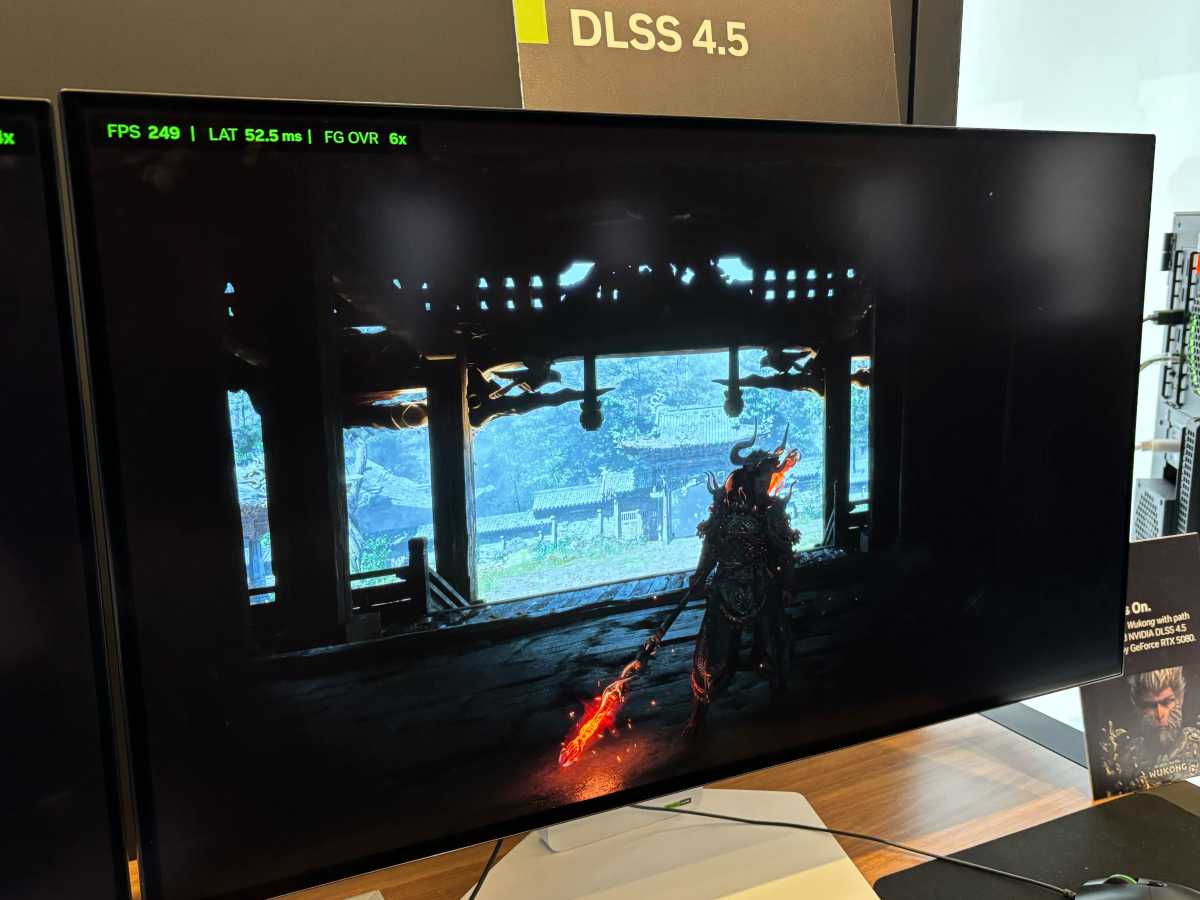
The new 6x and Dynamic Multi-Frame Gen capabilities within DLSS 4.5 seamlessly maximize your monitor’s potential. Dynamic MFG intelligently adjusts the number of AI-generated frames to match your display’s refresh rate, ensuring a smooth and responsive experience.
Testing across various systems demonstrated the adaptability of Dynamic MFG. On a high-end setup with a 4K 240Hz display, it operated at 5x or 6x, while a 4K 165Hz display maintained stability at 3x. Crucially, these adjustments were imperceptible, eliminating any concerns about jarring transitions.
The system intelligently pauses AI frame generation during moments where it’s unnecessary, such as pre-rendered cutscenes, further optimizing performance. This thoughtful implementation ensures efficiency without compromising visual quality.
Despite the difficulty in conveying these improvements through videos or images, the benefits of DLSS 4.5 and G-Sync Pulsar are undeniable. For gamers seeking the ultimate in visual fidelity and responsiveness, these technologies represent a significant step forward, particularly for those immersed in intricate worlds or competitive arenas.