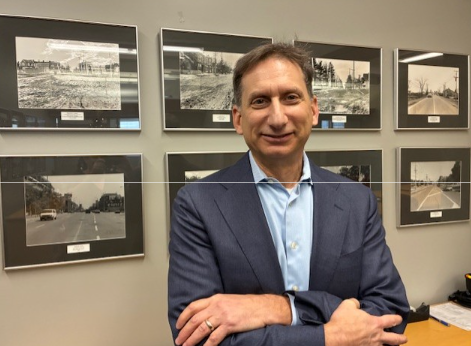
Toronto’s newly appointed Chief Congestion Officer, Andrew Posluns, is diving headfirst into a challenge that has plagued the city for decades. Just five days into the role, however, his focus remains firmly on listening and learning, a period of intense consultation before any concrete solutions emerge.
Posluns describes his initial days as “getting the lay of the land,” a whirlwind of meetings with city stakeholders. He’s tasked with a monumental undertaking: untangling Toronto’s notoriously complex traffic woes, a problem costing the region an estimated $10 billion annually.
Three key priorities are already taking shape. First, a thorough review of the upcoming Congestion Management Plan, slated for consideration by city council in April. Second, a critical examination of construction projects and their disruptive impact on roadways. And third, proactive planning for major events, like the approaching FIFA World Cup, which promise to further strain the city’s transportation network.
The weight of expectation is palpable. Toronto’s traffic has become a source of international embarrassment, with celebrities and even professional athletes opting to walk to events rather than brave the gridlock. These incidents underscore the urgent need for effective solutions.
Posluns brings a wealth of experience to the table, having spent 25 years immersed in transportation infrastructure with organizations like the Canada Infrastructure Bank and Metrolinx. His past involvement with the Pan Am and Para Pan Am Games offers a potential blueprint for managing large-scale events.
During the Pan Am Games, the implementation of High-Occupancy Vehicle (HOV) lanes proved successful in prioritizing athletes and officials, while also incentivizing carpooling. This approach, along with lessons learned from cities like New York and London, will be carefully considered.
New York’s strategic reconfiguration of traffic flow around busy areas like Times Square, and London’s congestion charge, are examples of innovative approaches Posluns intends to explore. He emphasizes a collaborative approach, seeking input from local experts before proposing any specific strategies.
He’s cautious about prematurely endorsing any particular solution, stating the goal is to identify what strategies might work for Toronto, not simply replicate what has succeeded elsewhere. The true test will come when, and if, Toronto’s traffic begins to flow freely once more.
The city’s enduring struggle with construction is a central focus. Posluns acknowledges that construction is a major contributor to congestion, a reality often summarized by the local saying: Toronto has two seasons, winter and construction.