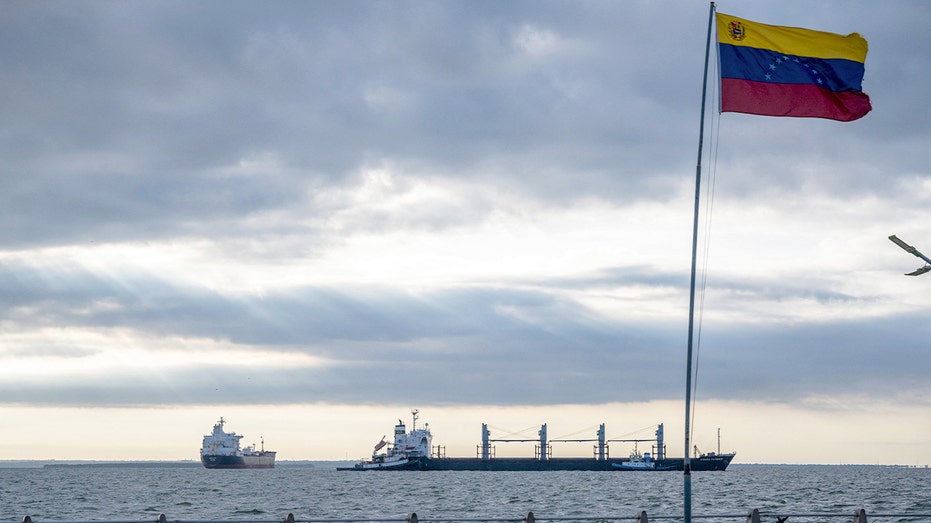
A shadow game is unfolding in the waters off Venezuela, as four tankers that vanished from tracking systems – sailing in “dark mode” – have quietly reappeared within the country’s territorial boundaries. This movement follows a series of assertive actions by the U.S., including the seizure of tankers, all stemming from a strategic push to gain access to Venezuela’s vast oil reserves.
The initial exodus saw roughly a dozen loaded vessels, alongside at least three empty ones, defy a U.S.-imposed blockade established in mid-December. These ships represented a bold attempt to continue trade despite mounting pressure, a gamble that has now seen a portion of the fleet return home.
The supertanker M Sophia, flying the Panamanian flag, was one of the first to be intercepted by U.S. forces earlier in the week. Shortly after, the Olina, registered under the flag of Sao Tome And Principe, met the same fate, seized in a swift, pre-dawn operation conducted by Marines and sailors from Joint Task Force Southern Spear.
The U.S. Southern Command emphasized the force behind the operation, highlighting the presence of the USS Iwo Jima, USS San Antonio, and USS Fort Lauderdale. They framed the actions as part of “Operation Southern Spear,” a mission dedicated to combating illicit activity and bolstering security across the Western Hemisphere.
The Olina, previously known as the Minerva M, had already drawn scrutiny from the U.S. government due to its alleged involvement in transporting Russian oil, placing it firmly within the crosshairs of sanctions. Its brief detention underscored the lengths to which authorities were willing to go to enforce these restrictions.
Meanwhile, TankerTrackers.com observed the return of three other vessels – the Panama-flagged Merope, the Cook Islands-flagged Min Hang, and the Panama-flagged Thalia III – all spotted late Friday navigating Venezuelan waters. Their reappearance signals a complex and evolving situation.
These maritime maneuvers unfolded against a backdrop of high-level discussions in Washington. The White House hosted nearly two dozen oil executives, eager to explore investment opportunities in Venezuela following the recent developments. Representatives from industry giants like Chevron, Exxon, and Shell were present.
The message from the administration was clear: a new era of “total security” had arrived, removing the barriers that previously hindered investment. The promise of access to Venezuelan oil, and the potential for significant profits, was dangled before these companies.
The administration predicted a surge in oil production, envisioning substantial wealth, reduced taxes, and a wave of job creation for both Americans and Venezuelans. The plan involved direct dealings with the U.S., effectively bypassing the Venezuelan government.
Prior to the meeting, claims surfaced that Venezuela would be transferring between 30 and 50 million barrels of sanctioned oil to the U.S., to be sold at market price. The proceeds, it was stated, would be carefully managed to benefit both nations, a bold assertion of control over a vital resource.
The unfolding events represent a high-stakes gamble, a delicate dance between geopolitical strategy, economic ambition, and the complex realities of international trade. The return of these tankers is not simply a logistical detail, but a signal of the shifting power dynamics at play.