The courtroom fell silent as Becky Hamber’s composure fractured, tears welling in her eyes as she recalled finding him – a twelve-year-old boy, unresponsive, in the chilling dampness of a basement bedroom.
This wasn’t just a child; he was a boy she and her wife, Brandy Cooney, had welcomed into their home with promises of a “forever home,” a sanctuary. They’d planned to adopt him and his younger brother, yet the reality painted a far darker picture.
Court records revealed a disturbing undercurrent to their intentions. Hamber had confided in a friend, describing the boy as “horrible, horrible, disgusting,” a child who seemed resistant to change. A sentiment echoed in deleted text messages, unearthed by investigators, revealing a chilling exchange between Hamber and Cooney.
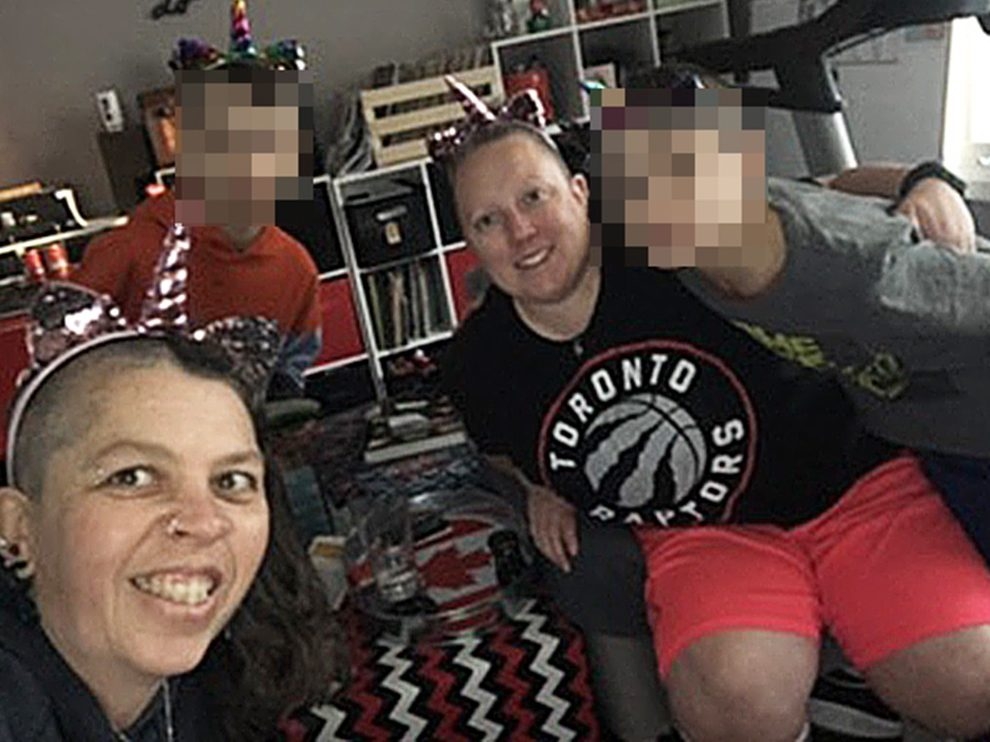
The messages, now hauntingly public, spoke of desperate measures and unthinkable threats. When the older boy revealed he identified as non-binary, Cooney texted, “Kill them if they break it,” to which Hamber chillingly replied, “drown ’em in their poo.” The pronoun “them” a stark indicator of the dehumanization that had taken root.
Five years after the brothers arrived in 2017, the older boy was gone, his weight shockingly diminished, barely exceeding what it had been at age six. His younger brother was taken into the care of children’s aid, and Hamber and Cooney faced accusations of murder and abuse.
Both women pleaded not guilty, claiming they were ill-equipped to handle the boys’ alleged violence and that the older boy suffered from an untreated eating disorder. Hamber testified to suffering injuries, even a possible broken arm, at the hands of the boy, though she admitted to never seeking a definitive diagnosis.
Under intense questioning, Hamber acknowledged the existence of deeply troubling texts, admitting the couple often expressed “really negative” feelings about the children. She characterized these messages as desperate venting, a release valve for overwhelming stress.
“I hate myself,” she confessed, her voice laced with anguish. “I’m deeply shocked and ashamed that I did that.” Yet, she insisted, these were merely words, devoid of any intent to cause harm. She vehemently denied ever physically striking the boy.
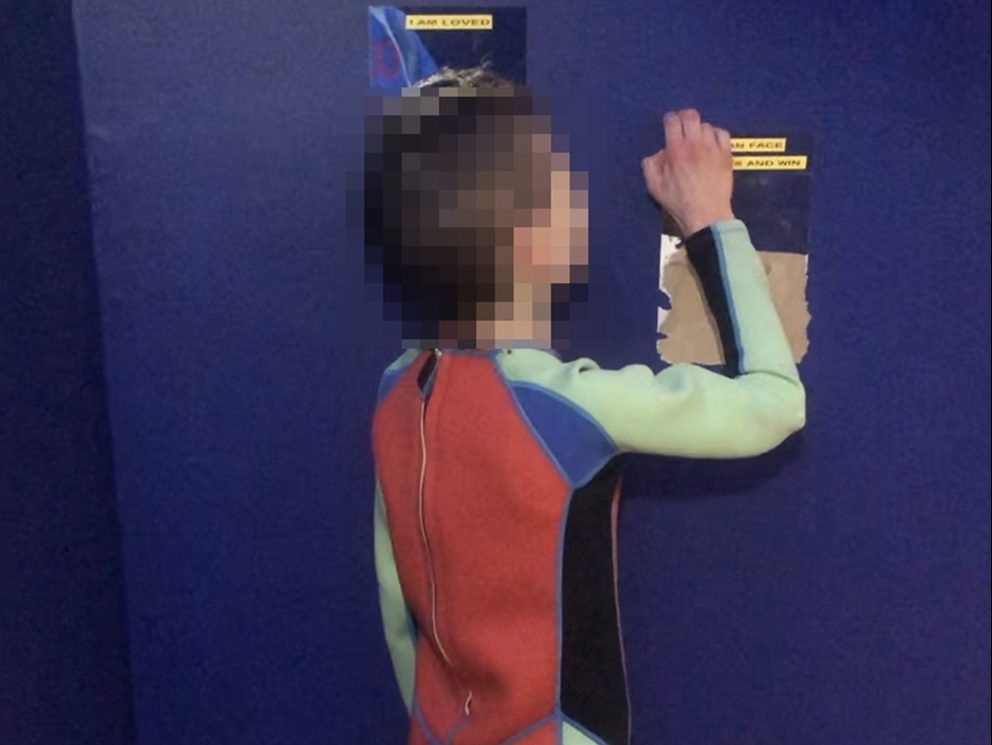
The court learned of a disturbing pattern of control: the boy was frequently confined to his room, restrained with zip-ties within a wet suit, and forced to wear a hockey helmet or a tightly bound rain jacket – methods Hamber justified as attempts to manage his “behaviours.”
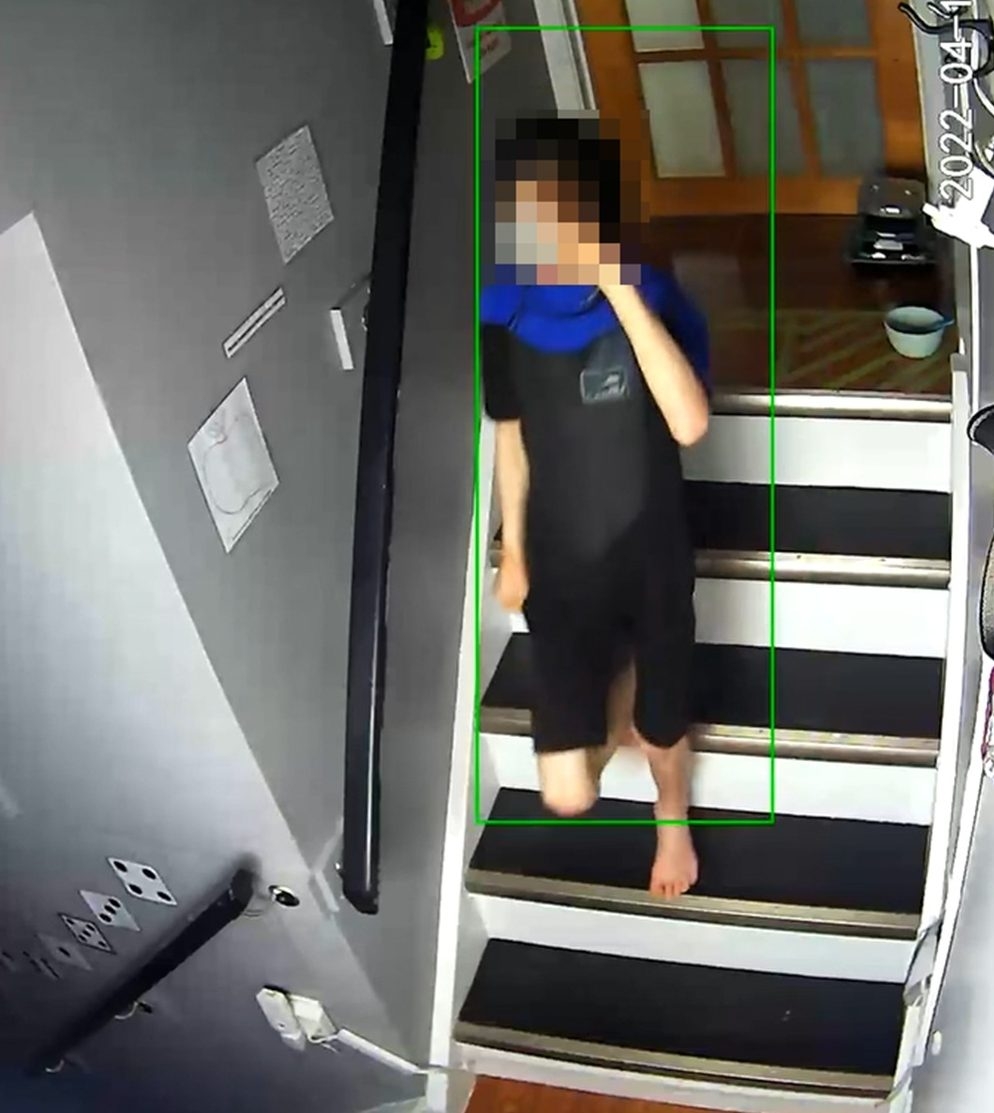
A video presented in court showed the emaciated boy, clad in a hockey helmet, weakly ascending the stairs, a heartbreaking image of his deteriorating condition. Despite this, Hamber maintained she hadn’t been gravely concerned, claiming he possessed the same energy levels as before.
Just a month before his death, a terrifying incident occurred. The boy tripped, struck his head, and began shivering, his eyes unfocused, his speech incoherent. Hamber admitted to Googling “hypothermia” and immersing him in a warm bath for an hour, claiming he improved. A course of action that bypassed a crucial trip to a medical professional.
Then came December 21, 2022. Hamber described a day of typical “behaviours” – tantrums, yelling, screaming – before being jolted by a scream from her wife, a sound she’d never heard before. It was a scream that signaled a tragedy unfolding.
Rushing downstairs, she was met with a horrific scene: the boy lying motionless in his wet suit, submerged in a pool of fluids, his face a chilling shade of blue. The stench of vomit and urine filled the air. She frantically called for CPR and for her father-in-law to dial 911.
“Did you want him to die?” her lawyer pressed, his voice heavy with the weight of the accusation. “Did you do anything in pursuit of that, trying to kill him?” Hamber’s voice trembled as she vehemently denied any such intent. “No, I did not.”
Her cross-examination, and the search for truth, continues.