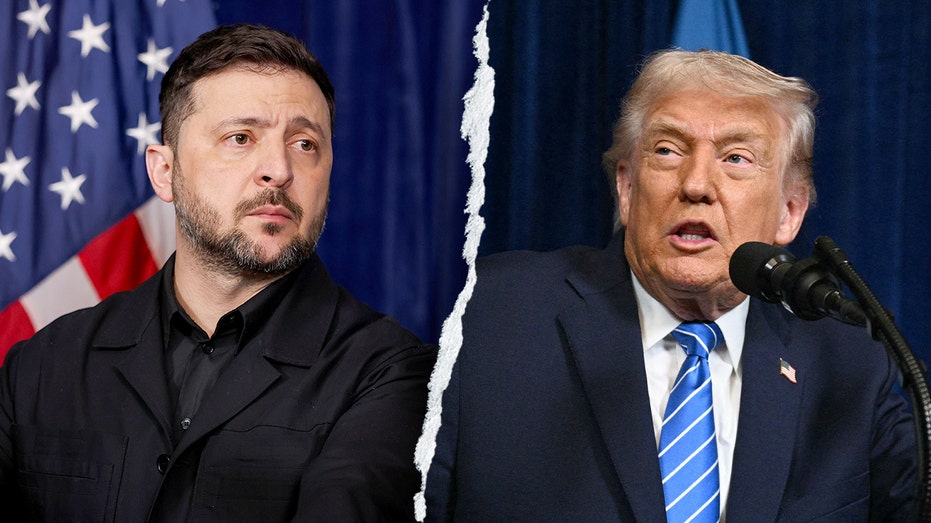
The former president recently asserted a controversial perspective on the ongoing conflict, placing the impediment to peace not on the aggressor, but on Ukraine itself. During an interview, he directly challenged the widely held narrative surrounding the nearly four-year-long war, ignited by the full-scale invasion in 2022.
He stated that Vladimir Putin appears prepared to negotiate an end to hostilities, yet Ukrainian President Volodymyr Zelenskyy remains hesitant. The former president’s assessment, delivered with conviction, suggested a significant disconnect in willingness to pursue a resolution.
When questioned about the lack of progress despite U.S. involvement, a single name was offered as the primary obstacle: Zelenskyy. The former president refrained from elaborating on the reasoning behind this belief, only noting a perceived difficulty for the Ukrainian leader in reaching a potential agreement.
Despite the pointed remarks, a willingness to engage directly was expressed. The former president indicated he would be open to a meeting with Zelenskyy at the World Economic Forum in Davos, Switzerland, offering a potential avenue for direct dialogue.
He also addressed reports concerning a possible, unofficial trip to Moscow involving his son-in-law and a White House envoy, firmly denying any prior knowledge of such a venture. This denial aimed to dispel speculation surrounding back-channel negotiations.
These statements sharply diverge from the views of other global leaders. A prominent European Commission president recently emphasized Russia’s responsibility to demonstrate a genuine interest in peace, outlining plans for Ukraine’s economic recovery post-conflict.
The relationship between the former president and Zelenskyy has been marked by tension, culminating in a reported, heated exchange within the Oval Office. Disagreements arose when Zelenskyy cautioned about potential repercussions for the U.S., despite its geographical distance from the conflict zone.
Despite past friction, Zelenskyy has publicly signaled a desire for continued collaboration with the U.S. He emphasized the need for swift progress on security guarantees, economic agreements, and a political framework, while also calling for increased American engagement in the process.


