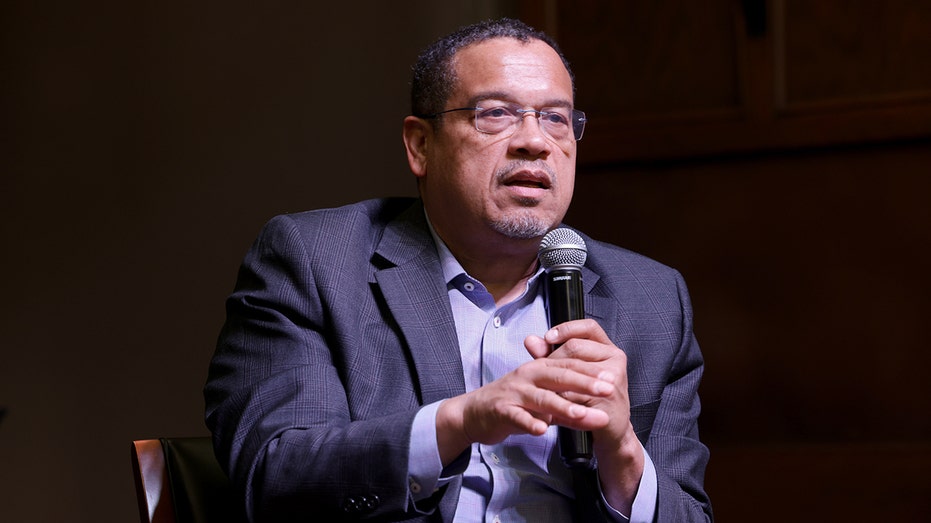
A disturbing scene unfolded at St. Paul’s Cities Church, disrupted by a vocal mob, yet Minnesota Attorney General Keith Ellison swiftly declared no federal grounds existed for prosecution. He characterized the actions not as a crime, but as protected “First Amendment activity,” signaling a clear unwillingness to enforce state laws regarding trespass and disorderly conduct.
This isn’t an isolated incident. Ellison’s past is marked by support for groups often associated with unrest, drawing consistent criticism for his associations and statements. He once held up the Antifa Handbook, even suggesting the group would instill “fear” in opponents, and his own son publicly voiced support for Antifa during recent protests.
The Attorney General’s history extends to controversial figures and even critiques of the U.S. Constitution itself, which he once described as evidence of a “white racist conspiracy.” This context casts a long shadow over his response to the church disruption, raising questions about selective application of the law.
The incident at Cities Church should have been a point of universal condemnation – a blatant attack on a place of worship. Yet, Ellison dismissed even the “bad optics” of the situation, steadfastly defending the mob’s actions as legitimate exercise of free speech.
This is a fundamental misinterpretation of the law. While protesting is protected, disrupting services, trespassing, and verbally accosting congregants crosses the line into unlawful conduct. An Attorney General is obligated to enforce the law impartially, a standard Ellison appears to have abandoned.
Instead of addressing the disruption, Ellison pivoted to criticizing the Trump administration, suggesting that perceived political favor dictates whether one can be held accountable. This deflection undermines his credibility and raises serious concerns about his commitment to equal justice.
He further asserted there were no grounds for federal charges, a claim demonstrably false. Several federal statutes could plausibly apply to the actions taken against the church, including laws designed to protect religious freedom.
The narrative took an even more troubling turn on a podcast hosted by Don Lemon, a former CNN host who faced criticism for his coverage of the incident. Lemon framed the controversy as a matter of “entitlement” stemming from “White supremacy” within the congregation, echoing similar sentiments from protest organizers.
Despite this inflammatory rhetoric, Ellison doubled down, falsely claiming the FACE Act – a law designed to protect access to places of religious worship – only applied to reproductive health centers. He ignored the explicit language extending its protections to churches and other religious institutions.
This misrepresentation is not simply incomplete; it’s misleading. Ellison knowingly downplayed the existence of federal laws designed to protect the very rights violated at Cities Church. This pattern of selective enforcement and disregard for legal boundaries is deeply concerning.
This episode is not an anomaly. Ellison has faced criticism for a perceived reluctance to aggressively pursue large-scale fraud cases, even meeting with individuals later convicted in connection with such schemes. Simultaneously, he’s pursued legally questionable lawsuits aimed at hindering federal investigations within the state.
It’s a paradox: a law enforcement official seemingly hostile to traditional policing while simultaneously advocating for increased federal intervention in his state. By refusing to enforce laws against his political allies, Ellison has created a vacuum that practically invites federal oversight.
Ultimately, Ellison’s actions speak volumes. His consistent pattern of prioritizing political considerations over the impartial administration of justice provides a compelling argument for the very federal oversight he opposes. His conduct may well be the strongest justification for increased scrutiny of his office.