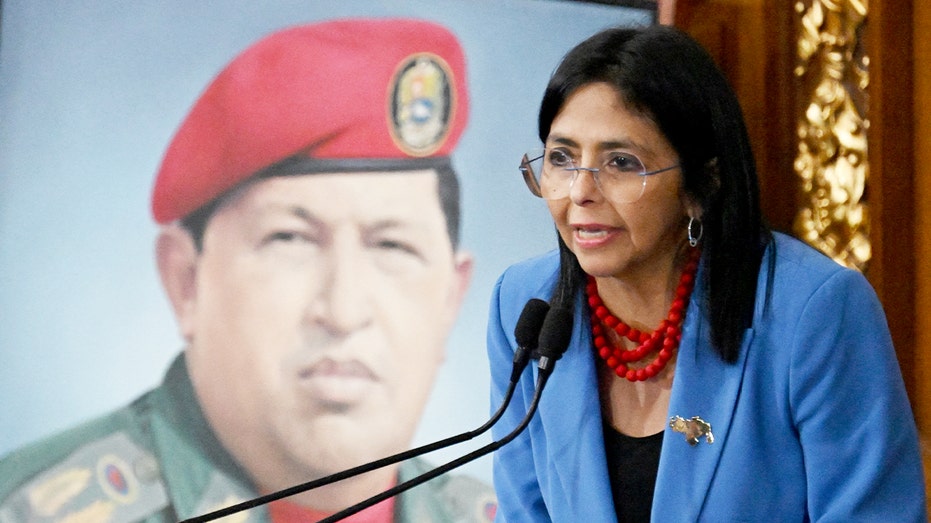
A defiant message echoed from Venezuela this weekend as acting president Delcy Rodríguez publicly challenged the United States’ involvement in her nation’s affairs. Speaking directly to oil workers, she declared, “Enough already of Washington’s orders over politicians in Venezuela,” signaling a clear break in tone.
Rodríguez passionately argued for Venezuela’s right to self-determination, insisting that internal conflicts should be resolved by Venezuelans themselves. She framed the nation’s struggles as a battle against “fascism and extremism,” emphasizing the heavy price already paid for external interference.
This bold rhetoric raises critical questions about the extent to which Rodríguez intends to resist U.S. influence, particularly given the country’s current economic constraints. Venezuela remains heavily reliant on U.S. decisions regarding vital oil licenses and is burdened by existing sanctions.
The situation is complex, rooted in the aftermath of the previous administration’s actions. Following the removal of the former leader, it was revealed that Rodríguez was permitted to remain in power, based on the belief that Washington held considerable sway over her decisions.
Recent communications between former President Trump and both Rodríguez and opposition leader Maria Corina Machado underscore the ongoing U.S. involvement. A White House spokesperson previously stated the U.S. possessed “maximum leverage” over the interim authorities in Venezuela.
Despite Rodríguez’s public defiance, the reality of Venezuela’s economic dependence casts a shadow over her ability to enact significant policy changes. It remains unclear whether her statements are primarily intended for domestic consumption, aimed at bolstering support amidst perceived U.S. overreach.
Simultaneously, Rodríguez extended an olive branch to the Venezuelan opposition, expressing a desire to reach “agreements” regarding the nation’s political future. She emphasized the need for unity, urging an end to partisan divisions in the pursuit of peace.
The backdrop to this escalating tension is the United States’ increasing assertion of control over Venezuela’s oil resources – a cornerstone of the Venezuelan economy. A recent energy arrangement saw Venezuela commit to providing millions of barrels of oil to the U.S. at market price.
Initial sales of Venezuelan crude have already generated substantial revenue, with further transactions anticipated under the broader agreement. This move has prompted some to question the strategy of maintaining Rodríguez in power while simultaneously pursuing economic arrangements.
In a potentially conciliatory move, Venezuela’s legislature has begun the process of loosening state control over its vast oil reserves, a significant shift since the nationalization policies enacted years ago. This legislation appears designed to attract private investment and potentially appease the U.S. government.
Opposition leader Machado, after meeting with Trump, expressed hope for new elections following a transition period, though the timeline remains undefined. She characterized Rodríguez as a key ally of international powers and argued she does not represent the Venezuelan people.
Interestingly, Trump himself has recently praised Rodríguez’s “strong leadership” and acknowledged she has “done a very good job,” adding another layer of complexity to this evolving geopolitical landscape.