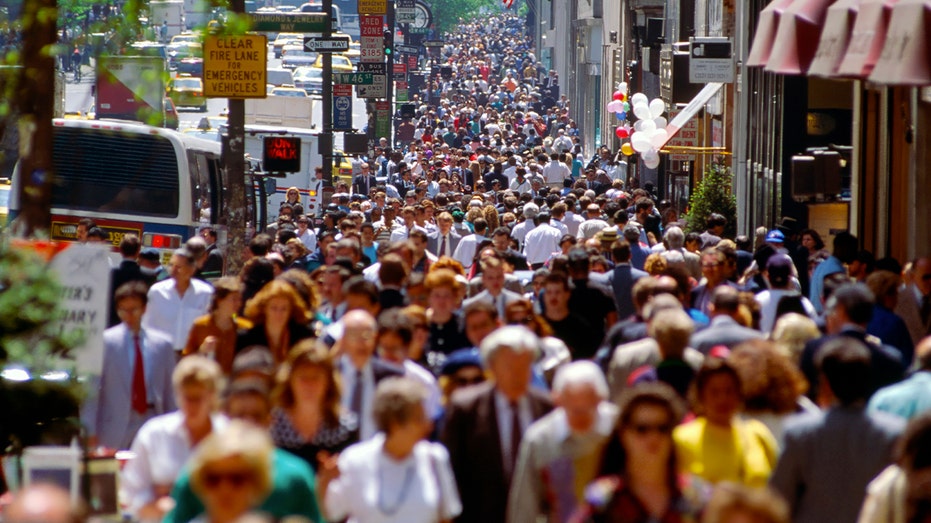
A quiet shift is underway in the American landscape. The nation’s population growth has slowed to its lowest rate since the pandemic’s initial shock, a development signaling a profound change in demographic patterns.
While a brief surge occurred in 2023 and 2024 – growth rates of 0.8% and 1.0% respectively – the momentum has waned. Current projections indicate a significant deceleration to just 0.5% between 2024 and 2025, marking a post-pandemic low.
The primary driver of this slowdown isn’t a decline in births or an increase in deaths; those numbers have remained relatively stable. Instead, a dramatic reduction in international migration – the flow of people moving to the U.S. from other countries – is the key factor.
The numbers tell a stark story. Net international migration plummeted from 2.7 million to 1.3 million between July 2024 and June 2025. This substantial decrease is the central reason for the current sluggish growth rate, according to Census Bureau officials.
This shift has created a new dependency for some states. Those experiencing limited growth from residents moving *within* the U.S. are now particularly reliant on international migration to maintain or increase their populations.
States like Connecticut, Massachusetts, New Jersey, New York, and Rhode Island exemplify this reliance. While births still exceeded deaths in these states, international migration played a more significant role in their overall population growth than natural increases.
Conversely, states like Alaska, Idaho, North Dakota, South Dakota, and Utah are experiencing growth primarily fueled by natural population change – more births than deaths. This highlights the diverse demographic forces at play across the country.
The slowdown in international migration has been felt nationwide, but its impact is most pronounced in those states that previously depended on it for growth. The ripple effects are reshaping the demographic map of the United States.
The number of states where international migration was the largest component of population gain has decreased, falling from 40 states and Washington D.C. to just 30 states and D.C. Simultaneously, domestic migration – movement within the U.S. – is becoming more prominent.
Domestic migration is now the largest component of change for 16 states, a significant increase from the nine states that experienced this trend the previous year. This suggests a rebalancing of population distribution within the country itself.
Further detailed data, including population estimates for metropolitan areas, counties, and Puerto Rico, will be released in March, offering a more granular understanding of these evolving demographic trends.