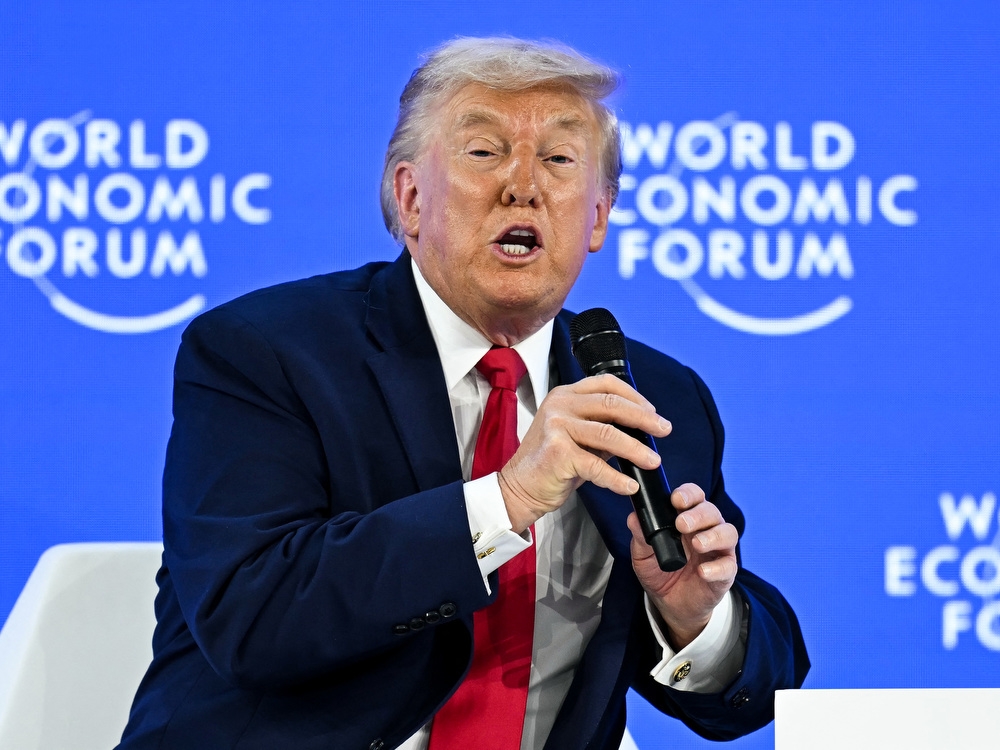
The scene at Davos was…unconventional. Donald Trump arrived not as a welcomed guest, but as a disruptive force, seemingly bewildered by the cool reception. He spoke of past accolades, recalling a time when allies affectionately called him “daddy,” a jarring image against the backdrop of current tensions.
His request was peculiar, almost comical. Not for grand concessions or policy changes, but for a piece of ice – “cold and poorly located,” he insisted – for his drink. This seemingly trivial demand became a metaphor for his broader grievances, a demand for something small after, in his view, providing immense value to NATO.
Trump’s core complaint centered on reciprocity. He felt the U.S. was consistently asked to support its allies, yet wasn’t receiving the same level of commitment in return. He questioned NATO’s willingness to stand with America, a sentiment that glossed over decades of shared sacrifice in conflicts around the globe.
The focus then shifted to Greenland – repeatedly referred to as “Iceland” – and its strategic importance, particularly in relation to Canada. A veiled threat hung in the air, suggesting consequences if the U.S. didn’t get its way. It sparked speculation about a reaction to a standing ovation received by Canadian Prime Minister Mark Carney just a day earlier.
But beneath the bluster, a significant shift was occurring. Trump, intentionally or not, had exposed the inherent inequalities within the established world order. He’d shattered the pretense of fairness, forcing a reckoning with the reality that the system often favored Washington’s interests above all others.
Mark Carney, speaking at Davos, acknowledged this uncomfortable truth. The “rules-based order,” he admitted, was a facade, riddled with exceptions for the powerful and inconsistencies in enforcement. The carefully constructed narrative of mutual benefit was crumbling.
This revelation resonated with a growing sentiment – a frustration with leaders who had long prioritized Washington’s agenda at the expense of their own nations. It was a sentiment fueled by populism, a movement that questioned the established order and demanded accountability.
Carney attempted to reframe globalism, emphasizing cooperation and national sovereignty through diversified trade. He spoke of Canada’s strength through diversity, while simultaneously enacting stricter immigration controls – a move that seemed to blend globalist ideals with populist policies.
He even proposed a new label: “Glo-Pop,” or globalist populism, for those cautiously embracing the movement’s principles. This attempt to sanitize populism felt disingenuous, given its historical association with grassroots movements fighting for social justice and challenging entrenched power structures.
Ultimately, the geopolitical upheaval was a direct consequence of Trump’s actions. He’d stripped away the polite veneer of international relations, exposing the raw power dynamics beneath. He’d forced the elites to confront the fact that the system they’d built wasn’t serving the average person.
Trump’s approach, often resembling coercion, had shattered the globalist facade. He’d revealed a system where the interests of ordinary citizens were often secondary, leaving those in power with no choice but to acknowledge the long-held criticisms of a deeply flawed order.