A fragile hope bloomed in Gaza Sunday as preparations began to reopen the Rafah border crossing with Egypt – a vital artery to the outside world for a territory long constrained. For Palestinians, it represented a potential lifeline, a chance to reach desperately needed medical care and, for some, to return home.
But even as workers laid the groundwork, a sense of cautious impatience hung in the air. Ghalia Abu Mustafa, a resident of Khan Younis, voiced a common concern: “Opening the crossing is a good step, but they set a limit on the number of people allowed to cross, and this is a problem.” The promise felt incomplete, shadowed by restrictions.
Initial reports indicated a phased reopening, with only a trickle of people permitted to pass through at first. Suhaila Al-Astal, displaced from Rafah, pleaded for more, her voice laced with desperation. “We want a large number of people to leave, for it to be open so that sick people can go and return. We want the crossing to be open permanently,” she said, her daughter’s health hanging in the balance.
The anticipation followed a grim reminder of the recent conflict. Just a day earlier, strikes claimed the lives of at least 30 Palestinians, including children – a devastating toll even as the ceasefire held. Accusations of truce violations flew, underscoring the precariousness of the situation.
International efforts to stabilize the region continued, with Nicolay Mladenov urging restraint from all parties. His office worked alongside a newly formed Palestinian committee tasked with overseeing Gaza, seeking ways to prevent further escalation and build a lasting peace.
Approximately 20,000 Palestinians – children and adults alike – are in urgent need of medical attention unavailable within Gaza’s war-ravaged borders. Thousands more yearn to return to their homes, scattered and displaced by years of conflict. The Rafah crossing, once a bustling gateway, had been largely sealed since its seizure in 2024.
The initial plan allows for a limited flow: 50 patients needing evacuation daily, each accompanied by two relatives, alongside 50 returning residents. However, the Gaza Health Ministry reported they hadn’t received official notification regarding the start of medical evacuations, adding another layer of uncertainty.
Israel and Egypt will jointly vet individuals seeking to cross, with European Union border patrol agents providing oversight. The success of this initial phase will determine whether the number of travelers can be increased, offering a more substantial lifeline to the beleaguered population.
Simultaneously, a troubling development emerged: Israel announced its intention to terminate the operations of Doctors Without Borders in Gaza by the end of February. The decision stemmed from the organization’s refusal to comply with new registration requirements, which Doctors Without Borders argued could endanger its Palestinian staff.
The medical charity’s work is critical, providing funding and staffing for six hospitals, running field hospitals, and operating vital clinics and medical centers, including stabilization centers for severely malnourished children. Its absence would exacerbate an already catastrophic humanitarian crisis.
Israel has suspended over two dozen humanitarian organizations, citing concerns that they could be infiltrated by Hamas. These organizations, however, denounce the rules as arbitrary and warn of the devastating consequences for a population desperately in need of aid.
Gaza’s healthcare system lies in ruins, battered by years of bombardment and strangled by restrictions on essential supplies. The reopening of Rafah, while a positive step, cannot fully address the deep-seated wounds inflicted by prolonged conflict.
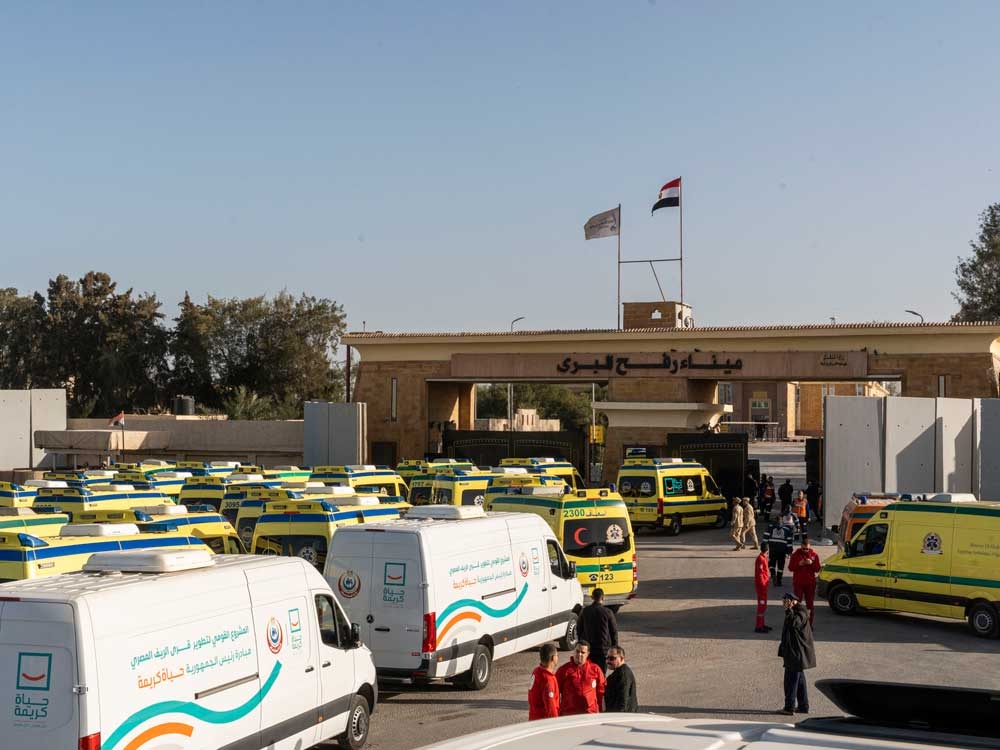
On Sunday, Egyptian security officers crossed into the Palestinian side of the Rafah crossing, joining an EU mission to oversee the process. Ambulances also moved through the Egyptian gate, a tangible sign of the impending resumption of activity. Before the war, Rafah served as Gaza’s primary gateway to the world.
Israel’s seizure of the crossing in 2024 was justified as a measure to combat arms smuggling. It briefly reopened during a previous ceasefire to facilitate medical evacuations. The recovery of the last hostage held in Gaza last week finally paved the way for its renewed operation.
Under the terms of the ceasefire, Israeli forces maintain control of the area surrounding the crossing. Egypt has consistently emphasized the need for two-way access, fearing Israel might exploit the crossing to displace Palestinians. Historically, both Israel and Egypt have vetted individuals seeking passage.
The current ceasefire followed more than two years of intense conflict, triggered by a Hamas-led attack on southern Israel on October 7, 2023, which resulted in the deaths of approximately 1,200 people and the abduction of 251 hostages. Israel’s subsequent offensive has claimed the lives of over 71,795 Palestinians, including 523 since the ceasefire began.
The first phase of the ceasefire focused on the exchange of hostages for Palestinian prisoners, a surge in humanitarian aid, and a partial withdrawal of Israeli troops. The second phase, however, presents a far more complex challenge: establishing a new governing body for Gaza, deploying an international security force, disarming Hamas, and initiating the long and arduous process of rebuilding.