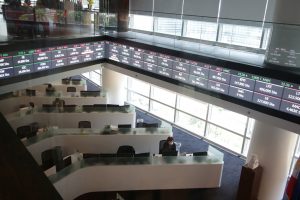
Philippine equities stumbled on Monday, retreating to the 6,200 level as a wave of investor concern washed over the market. The downturn stemmed from disappointing economic growth figures and a cautious approach to upcoming inflation data, triggering a profit-taking spree.
The benchmark Philippine Stock Exchange index (PSEi) closed down 0.5%, shedding 31.89 points to reach 6,297.08. This decline mirrored a broader market weakness, with the all-share index falling even further, down 2.05% or 73.71 points to 3,509.52.
The primary catalyst for this shift in sentiment was the recently released GDP data. The Philippine economy expanded by only 3% in the fourth quarter of 2025 – a significant slowdown from the 5.3% growth seen a year prior and the 3.9% recorded in the previous quarter.
This marked the weakest quarterly growth in nearly five years, excluding the pandemic-induced contraction, and the slowest pace since the economic turmoil of 2009. The figures painted a concerning picture of fading momentum, prompting investors to reassess their positions.
For the full year, economic growth settled at 4.4%, falling short of the government’s ambitious 5.5% to 6.5% target. This underperformance, coupled with market forecasts that were also missed, amplified anxieties about the country’s economic trajectory.
Adding to the pressure, investors began to secure profits following gains in the previous trading session. This strategic move was coupled with a desire to adopt a more conservative stance as the release of January inflation data loomed.
Economists surveyed predicted inflation would hold steady at 1.8%, remaining within the central bank’s target range of 2% to 4%. Despite this expectation, a sense of caution prevailed, influencing trading decisions throughout the day.
Sectoral performance was largely negative. Mining and oil stocks experienced a particularly sharp decline, plummeting 13.6% and significantly dragging down the overall market. Financials also suffered, falling by 2.62%.
Property, industrial, and holding company shares also saw declines, albeit less dramatic. The service index stood as the sole exception, managing to gain 1.43%. This divergence highlighted the uneven impact of the economic slowdown across different sectors.
RL Commercial REIT, Inc. emerged as a standout performer, climbing 4.85% to close at P7.57. Conversely, Bank of the Philippine Islands bore the brunt of the downturn, sliding 6.61% to P115.80.
Market breadth was decidedly negative, with 128 stocks declining compared to just 79 that advanced. A total of 56 stocks remained unchanged. Trading volume decreased to P9.11 billion, down from P14.58 billion in the previous session, indicating reduced market participation.
Despite the overall negative sentiment, foreign investors continued to show interest, recording net inflows of P291.04 million – an increase from the P41.01 million seen on Friday. This suggests continued confidence in the long-term potential of the Philippine market.
The weak growth data has fueled speculation about potential policy interventions to support the economy. However, investors remain hesitant, carefully weighing the possibility of monetary easing against the uncertainties surrounding the recovery’s pace and future earnings prospects.