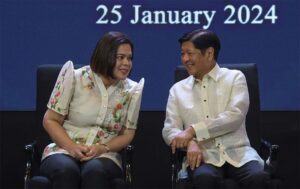
A political storm is brewing in the Philippines as impeachment proceedings against President Ferdinand Marcos Jr. gained momentum this week. Lawmakers in the House Justice Committee deemed two separate complaints against the President “sufficient in form,” initiating a critical phase in a process that could reshape the nation’s leadership.
The committee, led by Batangas Rep. Gerville Luistro, clarified that this initial approval simply confirms the complaints meet basic procedural requirements – proper verification, notarization, and endorsement. The real challenge lies ahead: determining if the allegations hold substance and warrant a full-blown inquiry.
At the heart of the accusations are claims of corruption and abuse of power. The complaints allege the President improperly benefited from government contracts and utilized a flawed budget allocation system that fostered graft. These are serious charges, striking at the core of public trust.
The timing of these developments is particularly sensitive, coinciding with growing public concern over a widening scandal involving substandard flood control projects. The allegations paint a picture of systemic corruption, potentially undermining the administration’s stability.
Adding another layer of complexity, two impeachment complaints were also filed against Vice-President Sara Duterte-Carpio. These accusations center on the alleged misuse of confidential funds, falsification of reports, and a pattern of avoiding legislative scrutiny.
This isn’t the first attempt to remove Vice-President Duterte from office. A previous effort was halted by the Supreme Court, but the new complaints, filed by activists and civil society leaders, are determined to press forward, alleging a betrayal of public trust and the treatment of public funds as a “personal war chest.”
The Palace, however, remains steadfast in its defense. Press Officer Clarissa Castro asserted the President’s innocence, stating he has “done nothing wrong” and committed no impeachable offense. Vice-President Duterte’s camp similarly expressed confidence that an impartial review would exonerate her.
The House Justice Committee will now meticulously assess the merits of each complaint. A crucial point is that the committee will vote on the complaints as a whole, meaning a single weakness could jeopardize the entire case. This demands a comprehensive and rigorous evaluation.
Should the complaints pass this critical hurdle, full committee hearings will be convened, inviting the President, Vice-President, complainants, and witnesses to present their cases. This promises a high-stakes public spectacle, potentially exposing deep divisions within the government.
Adding to the political tension, recent public opinion surveys reveal a concerning trend: trust in President Marcos is waning. A nationwide poll showed a 9-percentage-point drop in trust during the final quarter of last year, while Vice-President Duterte’s trust and performance ratings are on the rise.
This diverging public sentiment, particularly the sharpest declines in support for the President in key regions like the capital and among higher-income groups, underscores the gravity of the situation. The impeachment proceedings are unfolding against a backdrop of eroding confidence in the administration.
The House of Representatives is also preparing to revise its impeachment rules to align with a recent Supreme Court ruling regarding the calculation of session days. This procedural adjustment highlights the legal complexities surrounding the process and the need for clarity.
The renewed impeachment efforts risk reigniting a bitter political feud between the Marcos and Duterte camps, a once-powerful alliance that has demonstrably fractured. The coming weeks will be a defining moment for Philippine politics, with the potential to dramatically alter the country’s leadership landscape.