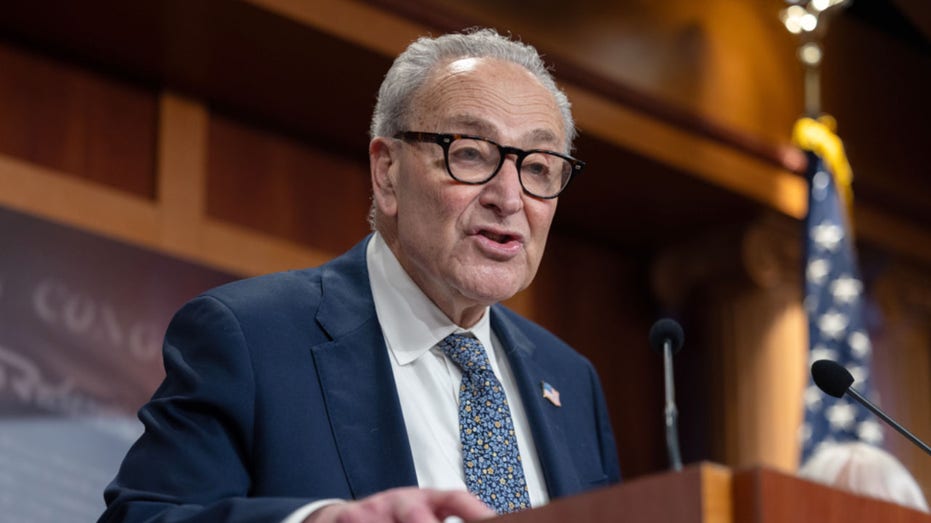
A fierce debate erupted in the Senate this week as Minority Leader Chuck Schumer vehemently opposed the Safeguard American Voter Eligibility Act (SAVE). His reasoning? A stark and historically charged accusation: he labeled the proposed legislation a modern echo of Jim Crow-era segregation laws.
The SAVE Act aims to require in-person proof of citizenship during voter registration and to systematically remove non-citizens from voter rolls. Schumer declared the Act “dead on arrival,” characterizing it as a “poison pill” that would derail any legislation it touched. He insisted it represented a dangerous attempt to reinstate discriminatory voting practices nationwide.
This isn’t the first time Schumer has employed this powerful comparison. Critics were quick to point out his previous use of similar rhetoric against Georgia’s election integrity law in 2022. He then predicted the law would usher in “Jim Crow 2.0,” a claim that now appears strikingly at odds with the actual results.
Despite warnings from Schumer and others, including President Biden and Stacey Abrams, the Georgia law did not suppress voting. In fact, the state experienced record Black voter turnout in the 2022 election, directly contradicting the initial predictions of widespread disenfranchisement.
Commentators highlighted the apparent contradiction, questioning the sincerity of Schumer’s accusations. The claim that any voting law equates to a return to Jim Crow was described as “incredibly offensive and unserious,” particularly given the demonstrable expansion of voter access in Georgia.
Data following the 2022 Georgia election further undermined the claims of voter suppression. A University of Georgia poll revealed that zero percent of Black respondents reported a negative voting experience, suggesting the law had not created barriers to participation.
Critics argue Schumer’s opposition to the SAVE Act stems not from genuine concerns about voter rights, but from a desire to resist measures ensuring only American citizens cast ballots – a position supported by a significant majority of the population. They suggest his accusations are a tactic to deflect from legitimate debate.
The debate underscores a broader tension regarding election integrity and access. Opponents of the SAVE Act contend it is a solution in search of a problem, while proponents maintain it is a necessary safeguard against potential voter fraud and ensures the sanctity of the ballot box.
The core of the disagreement lies in differing interpretations of voting laws and their potential impact. While some see efforts to tighten election rules as inherently discriminatory, others view them as reasonable measures to protect the integrity of the democratic process.