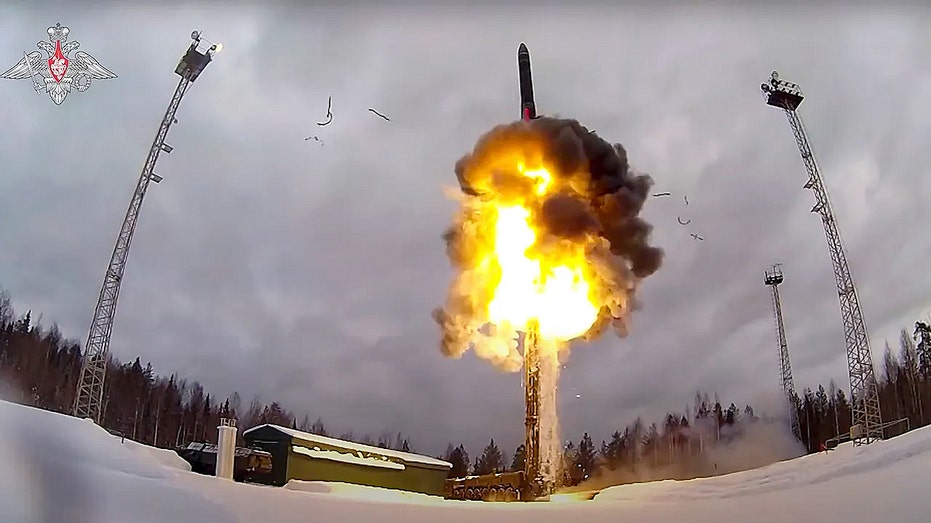
A chilling new era has begun. The last anchor preventing a full-blown nuclear arms race between the United States and Russia has dissolved, leaving the world precariously balanced on the edge of uncertainty. The New START treaty, once a vital safeguard, is now history, and with it, the legally binding limits on the world’s two largest nuclear arsenals.
The collapse wasn’t sudden, but a deliberate unraveling. Former President Trump dismissed New START as a “bad deal,” alleging violations and demanding a radical overhaul. Russia countered, asserting that any new agreement under these terms is impossible, a dead end before negotiations even begin. The core disagreement? Each side wants to dictate terms, expanding restrictions to include the other’s allies – a complex web of demands that threatens to paralyze any progress.
The immediate consequence is the loss of transparency. For years, New START allowed for on-site inspections, a crucial verification process that built trust and monitored compliance. Since 2023, Russia halted these inspections, effectively blinding the U.S. to its nuclear activities, even while ostensibly adhering to the treaty’s numerical limits. Now, even that pretense is gone.
But the problem extends beyond simply counting warheads. The nuclear landscape has fundamentally shifted. The U.S. points to Russia’s development of destabilizing, unconventional weapons – like the nuclear-powered cruise missile “Burevestnik” (Skyfall) and the underwater torpedo “Poseidon” – designed to evade defenses and strike with devastating force. Russia, in turn, highlights the growing nuclear capabilities of China, demanding its inclusion in any future arms control framework.
China’s rapid expansion is a critical factor. While still trailing far behind the U.S. and Russia in total warheads – currently possessing around 1,000 compared to roughly 4,000 each – China is projected to reach approximately 1,000 warheads by 2030. Its reluctance to accept binding limits while modernizing its arsenal adds another layer of complexity to the already fraught negotiations.
Experts warn that the expiration of New START isn’t about an immediate surge in new missiles, but rather the potential for a rapid increase in *deployed* warheads. Both nations possess the capacity to quickly equip their existing systems with hundreds more nuclear weapons, escalating tensions without adding a single new delivery vehicle. The situation is a powder keg, primed for a dangerous escalation.
Perhaps the most unsettling aspect is the proliferation of tactical nuclear weapons – shorter-range arms intended for battlefield use. Russia holds a significant advantage in this category, possessing thousands of these weapons, which have *never* been subject to treaty limitations. These weapons, due to their smaller size and potential for early use, dramatically lower the threshold for nuclear conflict, increasing the risk of a catastrophic miscalculation.
The Bulletin of the Atomic Scientists, a group dedicated to monitoring existential threats, recently moved its “Doomsday Clock” to 85 seconds to midnight – the closest it has ever been to global catastrophe. This stark warning reflects the escalating nuclear risks, the breakdown of arms control, and the intensifying competition between major world powers. The world is facing a level of nuclear peril not seen in decades, and the path forward remains shrouded in uncertainty.
The loss of New START isn’t just the end of a treaty; it’s the erosion of a stabilizing foundation. Without it, the world is left to navigate a dangerous new reality, where trust is dwindling, transparency is fading, and the specter of nuclear war looms larger than ever before.