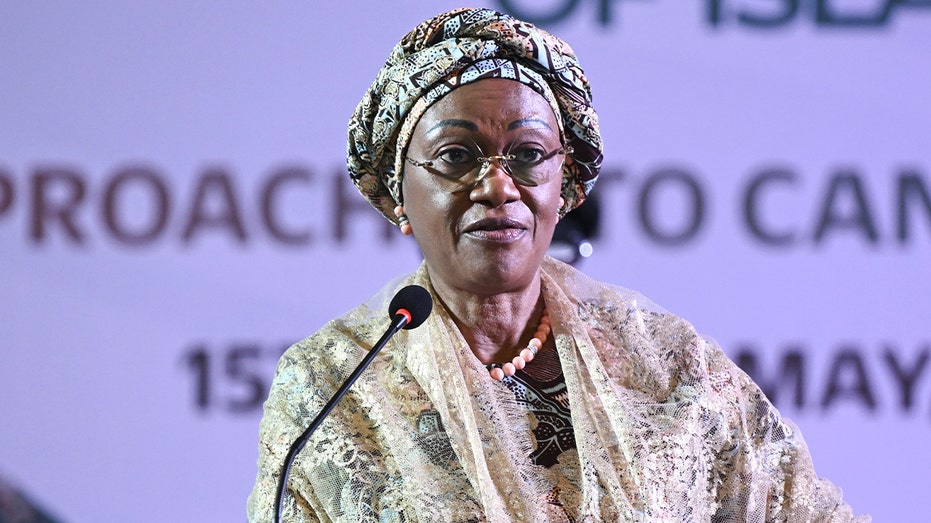
A delicate but crucial dialogue unfolded this week in Washington, D.C., as First Lady Oluremi Tinubu arrived with a clear mission: to reshape the narrative surrounding Nigeria’s struggle against escalating violence. For years, a complex relationship has existed between Nigeria and some U.S. lawmakers, particularly concerning the safety of Christian communities within Africa’s most populous nation.
In a striking shift, Mrs. Tinubu publicly welcomed the recent U.S. Christmas Day strike against Islamist militants in northwest Nigeria, calling it a “blessing.” This declaration signals a desire for deepened collaboration with the United States in confronting a multifaceted threat – a blend of insurgents and ruthless criminal gangs terrorizing the nation.
The violence has become a focal point of debate within American political circles, drawing attention from prominent figures. Nigeria was previously designated a “country of particular concern” regarding religious freedom, a label the Tinubu administration contests, emphasizing the widespread suffering that transcends any single faith.
Earlier this year, a horrific attack in Kwara state left at least 162 people dead, with homes burned and shops looted in villages targeted for rejecting extremist ideologies. This underscored a disturbing trend: the violence is no longer confined to specific regions or religions, but is spreading across the country.
“Terrorist groups hide in the forest, and also bandits are kidnapping for ransom,” Mrs. Tinubu explained, highlighting the government’s deep concern for the safety of its citizens. Nigeria is responding with a nationwide security emergency, aiming to recruit 50,000 new police officers and redeploying over 11,000 from VIP duties to conflict zones.
Despite past disagreements, the increased U.S. attention has opened vital lines of communication. Mrs. Tinubu believes this dialogue will “yield better fruit” for both nations, fostering a more productive partnership in addressing the crisis. She emphasized the importance of understanding the realities on the ground, stating, “We live in Nigeria. We know the situation.”
Mrs. Tinubu’s own story is interwoven with the religious complexities of Nigeria. A Christian and ordained pastor, she is married to a Muslim president, a union that embodies the interfaith tensions within the nation. She leverages her platform, including a Christian podcast and the Renewed Hope Initiative, to support vulnerable communities.
Nigeria, a nation of over 230 million people, is a vibrant tapestry of over 500 languages and a mix of Islam, Christianity, and traditional beliefs. However, decades of corruption and mismanagement have left much of the population impoverished despite the country’s vast natural resources.
Beyond security, Nigeria is attracting U.S. interest due to its growing reserves of critical minerals like lithium, cobalt, and nickel. Washington is seeking to diversify its supply chains and counter China’s influence in Africa, but persistent insecurity in mining regions poses a significant obstacle to investment.
Mrs. Tinubu made a clear connection between security and economic prosperity, stating that a safe environment is essential to attract foreign investment and ensure its success. Her visit aimed to reassure investors that Nigeria is open for business and committed to protecting their interests.
The past decade has witnessed tens of thousands of deaths due to violence perpetrated by groups like Boko Haram, Islamic State West Africa Province, and overlapping bandit networks. Christian advocacy groups contend that Christians have disproportionately suffered, with estimates of over 50,000 killed and tens of thousands abducted since 2009.
The Tinubu administration is simultaneously pursuing painful economic reforms, including the removal of fuel subsidies and currency stabilization, believing that economic growth and investment will ultimately address the root causes of the violence. It’s a bold strategy, aiming to build a more secure and prosperous future for Nigeria.