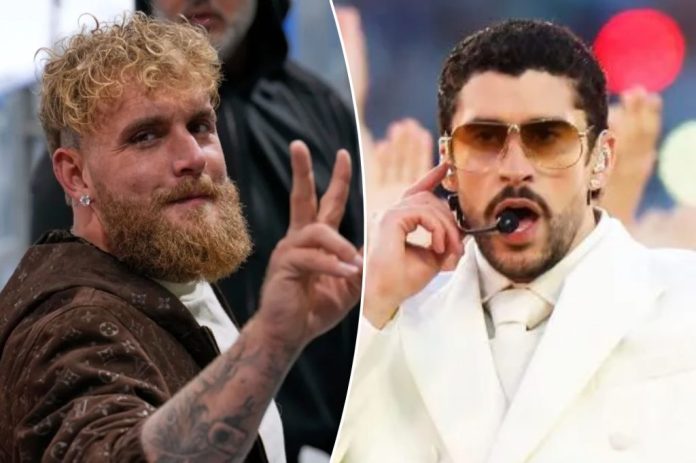
A firestorm erupted after boxer Jake Paul urged Super Bowl viewers to boycott Bad Bunny’s halftime performance, igniting a debate about citizenship, patriotism, and the power of public protest.
Paul took to social media, claiming he couldn’t support “a fake American citizen performing who publicly hates America.” This accusation stemmed from Bad Bunny’s prior criticism of Immigration and Customs Enforcement (ICE) alongside other artists at the Grammy Awards.
The controversy deepened quickly, given Paul’s current residence in Puerto Rico. Critics were swift to point out the irony of a man living in a U.S. territory questioning another’s American identity, with some, like Representative Alexandria Ocasio-Cortez, suggesting tax avoidance as a motive for his move.
Facing intense backlash, Paul attempted to clarify his position, stating he wasn’t questioning Bad Bunny’s citizenship but rather his “values and criticism of our great country.” He insisted his issue was with the artist’s public stance against ICE.
The situation took an unexpected turn when Paul seemingly reversed course, claiming he didn’t understand what transpired on his social media account the previous night. He then changed his profile description to declare himself a “Benito #1 fan.”
However, not everyone within the Paul family agreed with Jake’s initial comments. His brother, Logan Paul, firmly stated that Puerto Ricans *are* Americans and expressed joy at Bad Bunny’s opportunity to perform on such a large stage.
The incident also brought renewed attention to the Paul brothers’ past associations with former President Donald Trump. Both have collaborated with Trump on various occasions, including podcast appearances and campaign events.
Adding another layer to the political landscape, Trump’s granddaughter, Kai Trump, recently suggested a need for bipartisan compromise, expressing a desire for Republicans and Democrats to find common ground, while also maintaining a personal distance from political involvement.
The clash between Paul and Bad Bunny quickly became a flashpoint, raising complex questions about national identity, freedom of speech, and the responsibilities that come with a public platform.