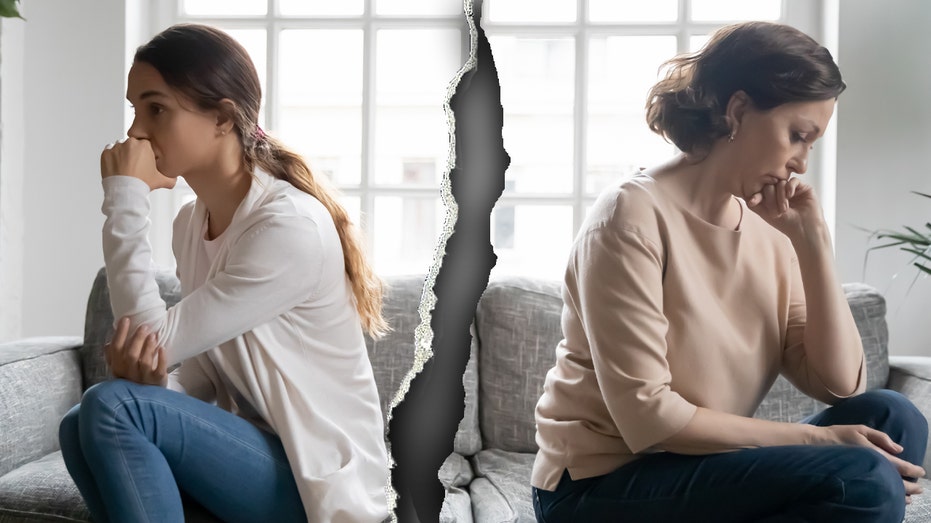
The headlines flared with Brooklyn Beckham’s family drama, but the story of fractured parent-child relationships is far older, and increasingly common. Surveys reveal a quiet epidemic of estrangement, with over a quarter of Americans – roughly 67 million people – reporting a severed tie with a family member.
Laura Wellington of Connecticut knows this pain intimately. Known online as “Doormat Mom,” her story wasn’t a slow fade, but a sudden, shocking cut-off. Invited to help plan her daughter’s wedding, she was then abruptly uninvited to attend. When she questioned the decision, both her daughter and future son-in-law blocked all contact in 2024.
“I was completely blindsided,” Wellington recounts, the raw emotion still evident. “The pain of being cut off… it’s a pain you can’t describe unless you’ve lived it.” She turned to TikTok, not to name her daughter, but to articulate the profound hurt, asking if perhaps she hadn’t been a good enough parent.
The response was overwhelming. Messages flooded in, not just from the United States, but from Germany, the U.K., Australia, and beyond. Parents desperately needed to share their experiences, to find validation, and simply, to not feel alone in their grief.
Since August 2024, Wellington’s online presence has grown, reaching nearly 150,000 people. She’s become a focal point for those navigating similar pain, and a lightning rod for criticism. But amidst the noise, a consistent thread emerges: the crushing weight of parental shame and isolation.
Many parents confided in Wellington about experiencing profound grief, isolation, and even suicidal thoughts after being estranged from their adult children. They were hesitant to speak out, fearing the inevitable question: “What did *you* do?”
Estrangement, Wellington observes, is becoming normalized, even in the absence of abuse or neglect. She points to a confluence of factors – widening political divides, shifting cultural values, and a societal narrative that increasingly prioritizes severing ties over reconciliation.
“There’s a loss of foundational family values, a loss of faith, and a skewed education system,” she explains. “Cutting off a parent is now the first impulse, not the last resort. We’re at a crossroads; what’s the point of saving a nation if we can’t save our families?”
In December 2024, during the weekend of her daughter’s wedding, Wellington released her self-published book, “Doormat Mom, No More!” It wasn’t just her story anymore, she realized, but a collective narrative of pain and resilience.
Surprisingly, Wellington has also heard from young adults seeking to mend broken relationships. There’s a desire for answers, a willingness to address problems, and a longing for connection. Not all cases are hopeless.
Of course, Wellington acknowledges that some estrangements are justified, particularly in situations involving abuse or neglect. But the increasing prevalence of estrangement driven by differing beliefs is deeply concerning.
New York City psychotherapist Dr. Jonathan Alpert confirms this trend. He’s witnessing more families torn apart by political identity and voting behavior. Disagreement has morphed into “moral injury,” and differing viewpoints are deemed “unsafe” or “toxic.”
“What would once have been handled as disagreement is now framed as moral injury,” Alpert notes. He sees estrangement becoming an automatic reflex, a form of moral signaling rather than a last resort.
Parents experience profound grief, confusion, and shame, while adult children may initially feel empowered, but often grapple with unresolved anger and a diminished capacity for emotional tolerance. Alpert’s greatest concern is the growing acceptance of estrangement as a sign of emotional health.
“Emotional health often involves learning how to stay connected across differences,” he emphasizes. “When therapy language and political culture reward rupture over repair, families are left divided long after the arguments fade.” He clarifies the crucial distinction between boundaries and estrangement: boundaries allow for a relationship with limits, while estrangement ends it entirely.
Wellington’s advice to parents struggling with estrangement is stark: don’t chase. “You can’t force a relationship,” she warns. “Once you start running after them, you lose your power. If they’re choosing to move away, you have to let them go.”
Instead, she urges parents to focus on rebuilding their own lives. “Create a life you’re proud of, find your happiness. If they’re meant to come back, they will.” There’s always hope, she believes, that her daughter might one day reconnect.
“I hope she realizes that the same woman who wants to use every ounce of her strength to keep this family going… is the same woman who created this platform to help others keep going,” she says, her voice filled with longing. “And I hope she sees her mom as a strong woman.”
Alpert agrees that reconciliation is possible, but more challenging when estrangement is reinforced by social validation or political identity. Repair requires a shared belief that relationships can survive disagreement. Ultimately, maintaining connection, even amidst difference, is a cornerstone of true emotional well-being.