The Super Bowl stage vanished, replaced by a vibrant, unexpected landscape: the rolling fields of Puerto Rico. Bad Bunny didn’t just perform; he transported the audience 3,500 miles, weaving a powerful narrative of heritage and Pan-American identity into a 13-minute spectacle.
The opening scene immediately established the theme. A sprawling sugar cane field, a nod to Puerto Rico’s history as a U.S. territory and the enduring legacy of its agricultural roots, set the stage. Dressed in pristine white – a practical choice for the Caribbean heat, but also a symbolic statement of respect and elegance – Bad Bunny embodied the iconic “jíbaro,” the Puerto Rican farmer.
Details unfolded like hidden treasures. A roadside “coco frio” stand offered a taste of authentic Caribbean refreshment, a far cry from processed alternatives. Dominoes, nail salons, taco stands – these weren’t random props, but snapshots of everyday life, carefully curated to evoke a sense of place and community.

The performance wasn’t solely focused on Puerto Rico. Piraguas, the beloved shaved ice treat, became a vehicle for a broader message. Each syrup bottle displayed a different Latin American flag, a subtle yet powerful acknowledgment of the shared history and interconnectedness of the Americas.
Celebrity appearances weren’t mere cameos. Cardi B, Karol G, Young Miko, Jessica Alba, Pedro Pascal, and Ronald Acuña Jr. – each represented a different nation, dancing together as a testament to the region’s vibrant diversity. Even the boxers, Xander Zayas and Emiliano Vargas, carried the flags of Puerto Rico and Mexico, acknowledging a decades-long rivalry steeped in pride.
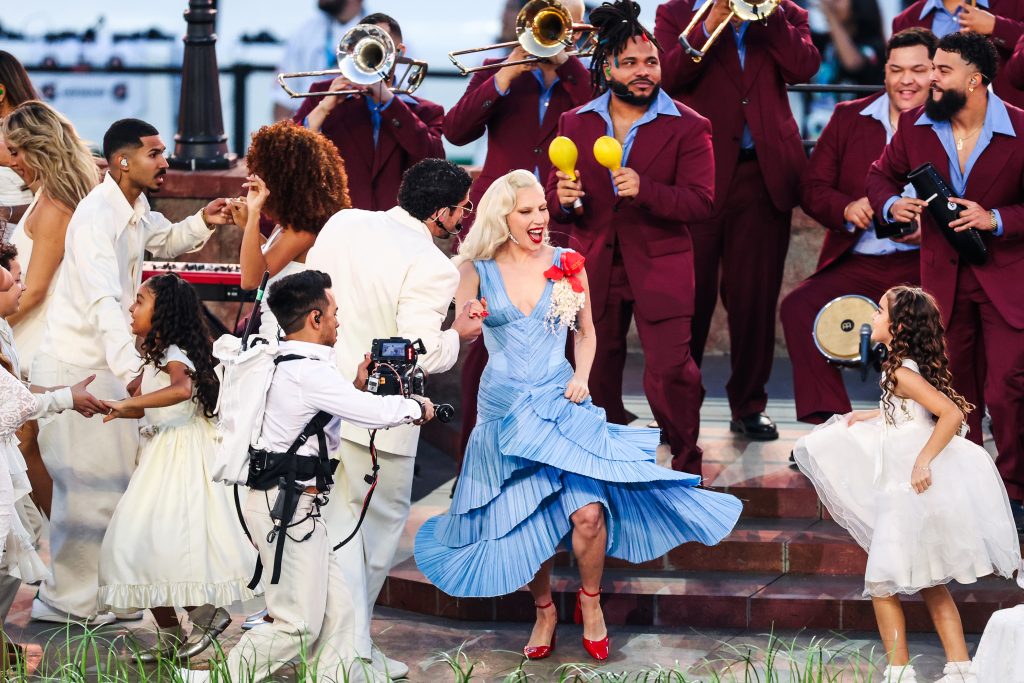
A surprise wedding officiated onstage took an even deeper turn when Lady Gaga appeared, adorned with the “flor de maga,” Puerto Rico’s national flower. It was a gesture of solidarity, a visual embrace of the island’s identity. A quiet, almost unnoticed detail – a sleeping child nestled amongst the chairs – spoke volumes about the warmth and communal spirit of Latin American gatherings.

Toñita, the owner of a historic Puerto Rican social club in Brooklyn, served up shots, a nod to Bad Bunny’s song “NuevaYol.” The branding on the makeshift bar, simply reading “Conejo” (Rabbit), playfully referenced his nickname, “El Conejo Malo.”
Ricky Martin, a fellow Puerto Rican icon, delivered a captivating performance of “Lo Que Le Pasó a Hawaii” seated on a simple white plastic chair, a common sight at gatherings and a direct echo of the cover art for Bad Bunny’s Grammy-winning album, “Debí Tirar Más Fotos.”
The most poignant moment arrived with “El Apagón” (“The Blackout”). Bad Bunny and dancers scaled sparking electrical poles, a stark and powerful representation of the devastating Hurricane Maria and the ongoing struggle with unreliable power on the island. It was a raw, unflinching portrayal of resilience in the face of adversity.
Even the Puerto Rican flag held a hidden meaning. The lighter shade of blue wasn’t a mistake; it was a deliberate choice, representing the original flag used before U.S. control, when the blue was darkened to align with the American flag. A subtle act of remembrance and a quiet assertion of identity.
The finale was a sweeping declaration of Pan-Americanism. Bad Bunny proclaimed, “God bless America,” then proceeded to name every country in North and South America as their flags streamed behind him. It was a powerful reminder that “America” is a vast and diverse continent, far exceeding the boundaries of a single nation.