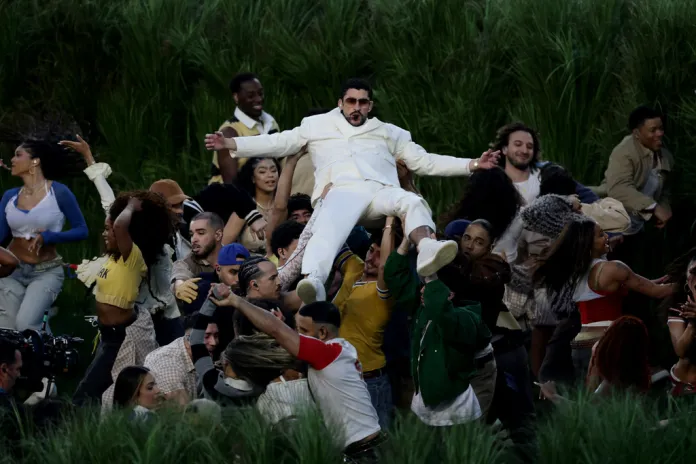
The Super Bowl halftime show ignited a firestorm, but not for the reasons the NFL anticipated. When Bad Bunny took the stage, a wave of controversy erupted, fueled by conservative activists determined to transform the event into a cultural battleground.
Despite fierce opposition – including direct criticism from former President Trump who deemed the performance “terrible” and “an affront to America” – the NFL stood firm in its support. This wasn’t simply about defending an artist; it was a calculated move with significant implications for the league’s future.
The core objective was clear: expand the NFL’s reach. Industry analyst Rich Mendelson explained that featuring a global superstar like Bad Bunny was crucial for attracting international and Latino audiences, a demographic the league desperately sought to connect with.
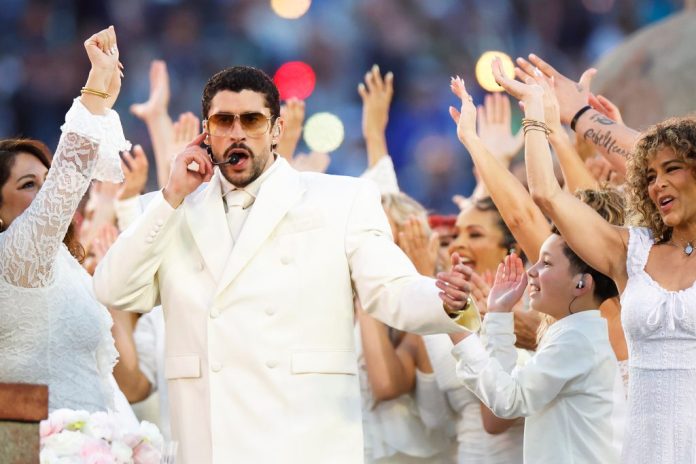
While some older team owners might not have been familiar with Bad Bunny’s music or his views, they understood the necessity of embracing diverse perspectives. Maintaining relevance in the entertainment world demanded adaptation, and connecting with prominent artists was paramount.
The impact was immediate and undeniable. Bad Bunny’s performance, delivered almost entirely in Spanish, shattered viewership records, drawing an estimated 135 million viewers. It wasn’t just a show; it was a cultural milestone, a bold statement of inclusivity.
The artist, Benito Antonio Martinez Ocasio, boasts an impressive array of accolades – six Grammys, sixteen Billboard Music Awards, and seventeen Latin Grammys – yet the Super Bowl stage amplified his influence to an unprecedented level. Even political figures like Meghan McCain publicly praised the performance, dismissing the attempts to inject politics into the spectacle.

Unexpected support emerged from surprising corners. Former Trump campaign workers and even the girlfriend of the FBI Director lauded the performance’s branding and the inclusion of Bad Bunny, recognizing its appeal and strategic value.
The controversy wasn’t limited to political divides. Brothers Jake and Logan Paul publicly clashed over the performance, highlighting the complex reactions and the deeply held beliefs surrounding the event. Jake Paul initially condemned Bad Bunny, while Logan Paul defended the artist and his American citizenship.
In response to Bad Bunny’s performance, a conservative alternative, “All-American Halftime Show” featuring Kid Rock, attempted to offer a patriotic counterpoint. Despite weeks of promotion, the show faced technical difficulties and criticisms of lip-syncing, yet still managed to attract a substantial online audience.
Conservative commentators reacted strongly, with some predicting the NFL’s downfall for “betraying” its audience. However, Mendelson asserted that the league was well aware of its audience, its numbers, and the performances that truly resonated.
This wasn’t a new battle for the NFL. In 2016, the league faced intense backlash over players kneeling during the national anthem to protest racial injustice. The controversy escalated, leading to artists refusing to perform at the Super Bowl and a period of uncertainty for the league’s marquee event.
To regain credibility and broaden its appeal, the NFL forged a partnership with Jay-Z’s Roc Nation, entrusting them with producing the Super Bowl halftime show. This strategic alliance paved the way for a diverse lineup of performers, including Shakira, Jennifer Lopez, Dr. Dre, and now, Bad Bunny.
The NFL’s decision to embrace Bad Bunny wasn’t simply about entertainment; it was a calculated risk that paid off, demonstrating the league’s willingness to adapt, evolve, and connect with a wider, more diverse audience. The controversy only served to underscore the power of the performance and the league’s unwavering commitment to its vision.


