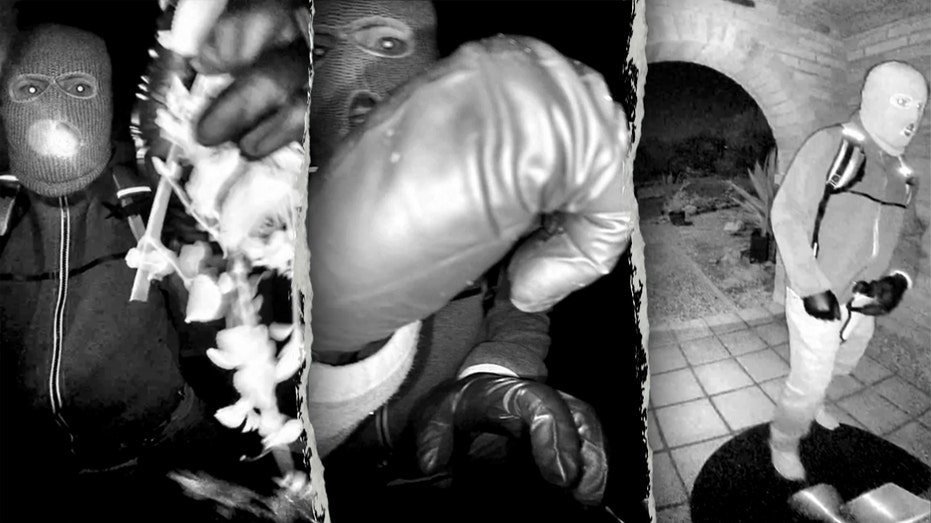
A chilling question is rapidly spreading online, casting a shadow of doubt over the investigation into Nancy Guthrie’s disappearance. Following the FBI’s release of photos and surveillance video, a growing number of observers are questioning whether the images actually depict the same individual – a discrepancy that could significantly alter the course of the case.
The uncertainty is fueling intense speculation and forcing a critical examination of how federal investigators validate crucial evidence in high-stakes investigations. The core issue isn’t simply about misidentification, but about the potential for a more complex scenario than initially presented.
Scott Duffy, a retired Supervisory Special Agent with the FBI, offered an initial assessment, stating the images appear consistent upon first review. “Right off the bat, they do look like the same person,” he explained, acknowledging the difficulty in definitively claiming two different individuals are present.
However, Duffy cautioned that even if the person captured on camera is consistent across all released materials, it doesn’t preclude the involvement of multiple individuals in the alleged crime. He emphasized the case is riddled with “so many anomalies,” suggesting a more intricate network may be at play.
Investigators, according to Duffy, would have meticulously scrutinized the images before public release, focusing on minute details. Every element – from footwear and outerwear to any visible logos – would be analyzed in an attempt to narrow the suspect pool.
The goal is to identify specific brands or manufacturers associated with the clothing, hoping to trace items back to a potential source. But Duffy pointed out the limitations of this approach, noting that mass-produced items can render such efforts largely ineffective, generating countless potential matches.
Despite advancements in facial recognition and biometric software, Duffy urged caution against relying solely on technology for identification. The suspect’s clothing presents a significant obstacle, making a definitive match through software alone highly unlikely. “Law enforcement has their work cut out for them,” he stated.
The surveillance footage, Duffy believes, will become significantly more valuable once investigators have a primary suspect. At that point, they can compare footage from multiple locations, analyze gait and physical build, and integrate digital evidence like cell phone data to establish a timeline and potential presence near Guthrie’s home.
Beyond the question of identity, the suspect’s demeanor in the footage struck Duffy as particularly noteworthy. He observed a distinct lack of urgency, describing the individual as calm and deliberate, appearing to approach the situation as a task to be completed with confidence.
This composure, Duffy suggested, could indicate the suspect didn’t fear immediate detection, potentially suggesting familiarity with the property or a belief that they wouldn’t be interrupted. It paints a picture of someone operating with a calculated sense of security.
The presence of gloves in the footage, and reports of discarded gloves found nearby, has also sparked online debate. Duffy explained that gloves are commonly used by both suspects – to avoid leaving forensic evidence – and investigators – to prevent contamination of a crime scene.
He noted that wearing latex gloves over another pair could be a deliberate attempt to prevent fiber transfer or skin contact, further demonstrating a calculated effort to conceal identity. However, he cautioned that discarded gloves alone are not conclusive proof, as law enforcement routinely use and discard them during investigations.
While public discussion continues to swirl, Duffy emphasized that investigators are likely pursuing a multi-faceted approach, combining forensic analysis, digital investigation, and community tips. Even a partial lead, he explained, can trigger deeper analysis, including cell phone location data and additional surveillance comparisons.
Duffy underscored that high-profile investigations are inherently methodical and layered, even if immediate answers remain elusive. The process is deliberate, designed to build a comprehensive case based on verifiable evidence, even as speculation continues to unfold publicly.