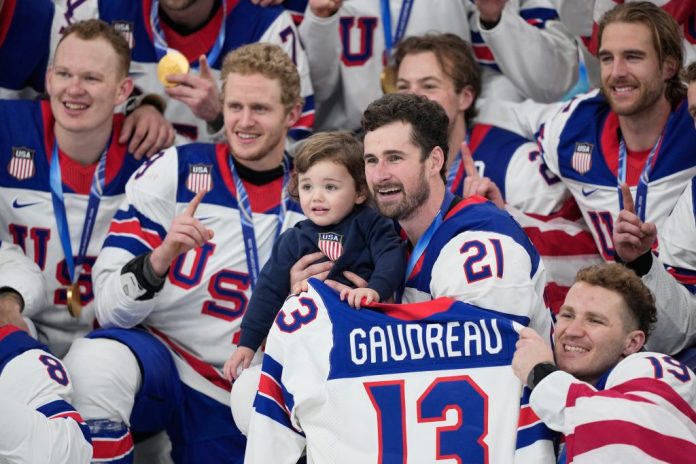
The roar of the crowd has faded, the gold medals gleam, and yet, a strange discontent hangs over the triumph of the American men’s hockey team. After a stunning victory – their third Olympic gold and a resurrection of the “Miracle on Ice” spirit – they are facing criticism, not for what happened on the ice, but for a moment of levity in the locker room.
The offense? A phone call from the President following their win, and a shared laugh at a joke. The joke itself centered on the inevitable White House invitation for the victorious women’s hockey team, delivered with a touch of political self-awareness. But for some, that laughter was a betrayal.
The accusation leveled against these athletes is a severe one: moral failure. The argument suggests that a single shared laugh somehow negates their support for the women’s team, dismissing their attendance at games and vocal encouragement as mere pretense. It demands a level of political performance that transcends athletic achievement.
This reaction isn’t isolated. A wave of criticism from certain corners of the sports media paints the team as insufficiently progressive, faulting them for engaging with a president whose politics are unwelcome. The expectation isn’t simply to win, but to use their platform to advance a specific political agenda.
The narrative emerging from these outlets seems to demand that athletes transform into political activists, prioritizing ideological purity over the joy of victory. It’s a demand that feels profoundly disconnected from the experience of most Americans.
While some demand a political statement with every action, many simply celebrate the achievement itself. For countless fans, the gold medal represents national pride and the culmination of years of dedication and sacrifice. They don’t require their heroes to echo their own political beliefs to feel that sense of accomplishment.
In this instance, the team delivered a moment of national exhilaration, a return to glory on the Olympic stage. It was a moment that resonated with a nation, a moment that, for many, was enough. Perhaps it’s the critics, not the athletes, who failed to meet the moment.


