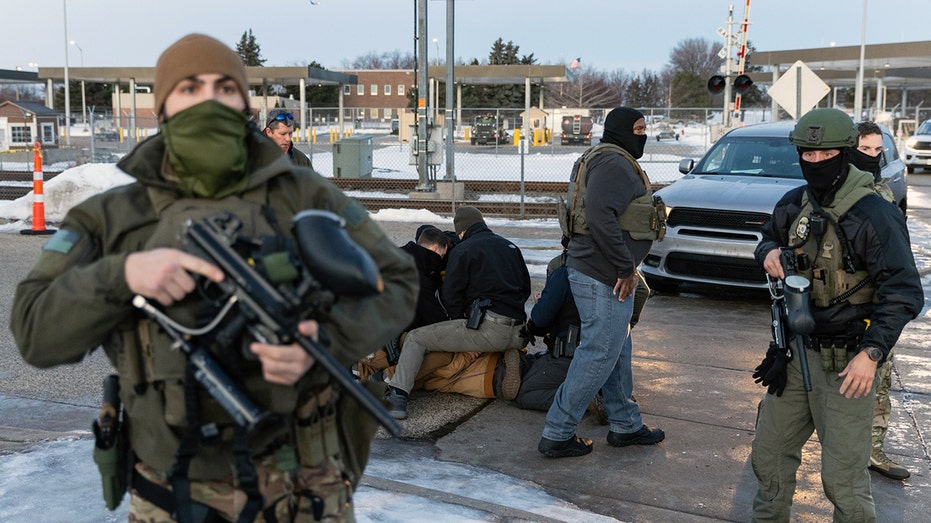
A clash is brewing in West Virginia, pitting federal judges against law enforcement and sparking a fierce debate over constitutional rights and public safety. At the heart of the conflict lies “Operation Country Roads,” a recent ICE initiative that led to the arrest of over 650 individuals.
The controversy ignited when Judge Joseph Goodwin, appointed by Bill Clinton, began ordering the release of some detainees. Goodwin didn’t simply disagree with the arrests; he openly criticized ICE’s tactics, questioning the use of masks and warrant-free arrests as an “assault on the constitutional order.” He invoked habeas corpus, allowing those detained to challenge their confinement.
One case involved Anderson Jesus Urquilla-Ramos, a Salvadoran national whose release was authorized by Goodwin. The attorney representing Urquilla-Ramos argued the decision underscored the need for constitutional boundaries in immigration enforcement. Goodwin’s rulings extended to others, including Yuri Aroca and Arley Valenzuela, detained during a routine traffic stop.
The backlash was swift and forceful. Representative Carol Miller, representing southern West Virginia, vehemently defended ICE, stating that Goodwin’s rulings appeared driven by a “personal political agenda.” She highlighted the very real threats faced by ICE officers, threats she believes the judge couldn’t comprehend from the safety of his own life.
Miller pointed to the escalating danger faced by agents, including doxxing and harassment, a stark contrast to the protections afforded to members of the judiciary. She argued the masks worn by ICE agents aren’t about intimidation, but about safeguarding their identities and protecting their families from targeted attacks.
U.S. Attorney Moore Capito staunchly defended the collaboration between state and federal law enforcement, emphasizing the commitment of officers working to secure West Virginia communities. He affirmed his office’s continued support for law enforcement and signaled an intent to appeal the release orders.
The White House also weighed in, citing a staggering 1,300% increase in assaults against ICE officers. A spokesperson directly refuted Goodwin’s claim that no specific danger justified the use of masks, asserting they are crucial for protecting agents from doxxing and ensuring their families’ safety.
Judge Irene Berger, appointed by Barack Obama, echoed similar reasoning in a separate case, ordering the release of a truck driver detained on the West Virginia Turnpike. This pattern of judicial intervention fueled concerns about a deliberate undermining of law enforcement efforts.
Representatives Riley Moore and Patrick Morrisey joined the chorus of support for ICE, condemning the rulings as prioritizing ideology over the safety of American families. Moore described the doxxing and attacks on ICE agents as unacceptable, while Morrisey affirmed the state’s unwavering support for both ICE and the Department of Justice.
The Justice Department has reaffirmed its stance on the legality of protective masking for federal agents, citing a recent California court case. A spokesperson declared the department’s commitment to law and order, and its refusal to tolerate violence directed toward law enforcement, even in the face of “activist judges.”
As the cases move toward appeal, the fundamental question remains: where does the balance lie between constitutional rights and the safety of those tasked with enforcing the law? The unfolding situation in West Virginia is a stark reminder of the complex challenges facing both law enforcement and the judicial system.