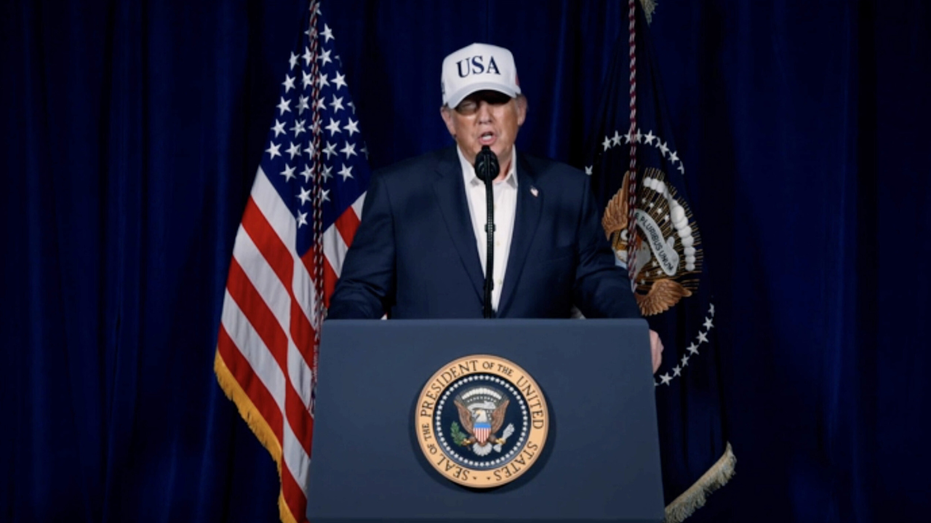
A seismic event unfolded Saturday as reports surfaced of a major military operation initiated against Iran, spearheaded by the United States in concert with Israel. The announcement from former President Trump immediately ignited a firestorm of debate, centering on a fundamental question of constitutional authority: who has the power to declare war?
The core of the controversy lies in the delicate balance between executive power and congressional oversight. The Constitution grants Congress the sole authority to declare war, yet successive administrations have navigated – and some argue, stretched – the boundaries of that power, particularly in the wake of the 2001 Authorization for Use of Military Force (AUMF). This law, originally intended to address the threat posed by al-Qaeda, is now being cited as potential justification for the current actions.
Legal scholars are divided, but many acknowledge a troubling precedent. The courts have historically shown deference to the President’s judgment in matters of national security, particularly when invoking the War Powers Resolution. This resolution, designed to limit the President’s ability to commit troops without congressional consent, has often been interpreted with a flexibility that allows for unilateral action, at least in the short term.
However, Congress isn’t powerless. Experts suggest a swift assertion of authority could curtail “Operation Epic Fury,” as the Pentagon has termed it. The longer the operation continues, the louder the calls for a formal declaration of war or a clear congressional authorization will become. The political calculus, factoring in public opinion and potential consequences, is undoubtedly weighing heavily on lawmakers.
Arguments supporting the President’s actions hinge on the interpretation of the 2001 AUMF. Some contend that Iran’s alleged harboring of al-Qaeda provides a legal basis for military intervention, regardless of the original intent of the authorization. This perspective highlights a 25-year failure by Congress to refine or repeal the broad scope of the AUMF, effectively leaving the door open for expansive presidential power.
The operation itself appears strategically layered. Reports indicate Israel is focusing on Iranian leadership, while the U.S. is targeting missile sites deemed an “imminent threat.” This division of labor may be a deliberate attempt to navigate legal complexities, potentially sidestepping restrictions on directly targeting heads of state.
The White House maintains it proactively engaged with Congress, briefing key leaders – the so-called “Gang of 8” – prior to the strikes. This preemptive communication, while not a substitute for formal authorization, suggests an attempt to mitigate the political fallout and demonstrate a degree of transparency.
The response from Capitol Hill has been predictably fractured. Republicans have largely voiced support, citing Iran’s nuclear ambitions and perceived hostility. Democrats, however, have expressed deep concern, demanding a clear justification for what many consider an act of war and a comprehensive plan to avoid a protracted conflict.
Even within the Republican party, dissenting voices have emerged. Some lawmakers, adhering to a strict interpretation of the Constitution, argue that the power to declare war was deliberately vested in Congress to serve as a check on presidential authority and to make military intervention a more deliberate, less impulsive act.
A bipartisan coalition is now mobilizing to introduce a war powers resolution, aiming to block further U.S. military action in Iran without explicit congressional approval. This isn’t the first attempt to rein in presidential power in this arena, but the current circumstances – and the potential for escalation – have imbued this effort with a renewed sense of urgency.
The unfolding situation represents a critical juncture in American foreign policy and constitutional law. The coming days will likely determine whether the executive branch can continue to operate with broad latitude in matters of war and peace, or whether Congress will reassert its constitutional authority and demand a more accountable approach to military intervention.