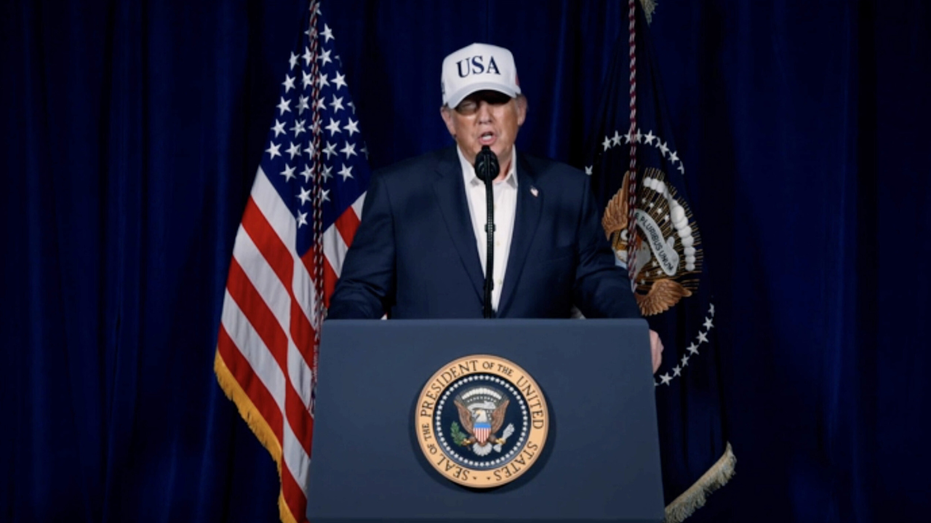
The political landscape shifted dramatically Saturday afternoon as former Vice President Kamala Harris released a scathing statement following President Donald Trump’s announcement of an attack on Iran. The move came twelve hours after Trump’s overnight address, plunging the nation into a moment of intense uncertainty.
Harris’s statement directly challenged the President’s decision, framing it as a reckless escalation that disregarded the will of the American people. She vehemently opposed what she characterized as a “regime-change war,” warning that American troops were being needlessly endangered by a conflict of Trump’s choosing.
The former Vice President’s words carried a sharp edge, accusing Trump of abandoning campaign promises to end wars and exposing previous claims about dismantling Iran’s nuclear program as falsehoods. She argued that this action wasn’t strength, but a dangerous gamble with global stability and America’s international standing.

Harris emphasized the constitutional requirement for Congressional authorization before engaging in war, even while asserting that such authorization wouldn’t legitimize the current course of action. She called on Congress to actively restrain the President and prevent further entanglement in the conflict, prioritizing the safety of troops, allies, and the nation.
The timing of Harris’s response drew attention, as it followed closely on the heels of startling reports emerging from Iran. Within an hour of her statement’s release, news outlets confirmed the death of Iran’s Supreme Leader, Ali Khamenei, in the very airstrikes she was condemning.
The death of Khamenei dramatically altered the calculus of the situation, introducing a new layer of complexity and potential for unpredictable consequences. The unfolding events signaled a rapidly escalating crisis with far-reaching implications for the region and the world.

Harris concluded by offering prayers for the safety of American service members, acknowledging their bravery and skill while stressing their need for a Commander-in-Chief who exercises prudence and discipline in matters of war and peace. The nation now braced for an uncertain future, grappling with the ramifications of a bold and controversial decision.