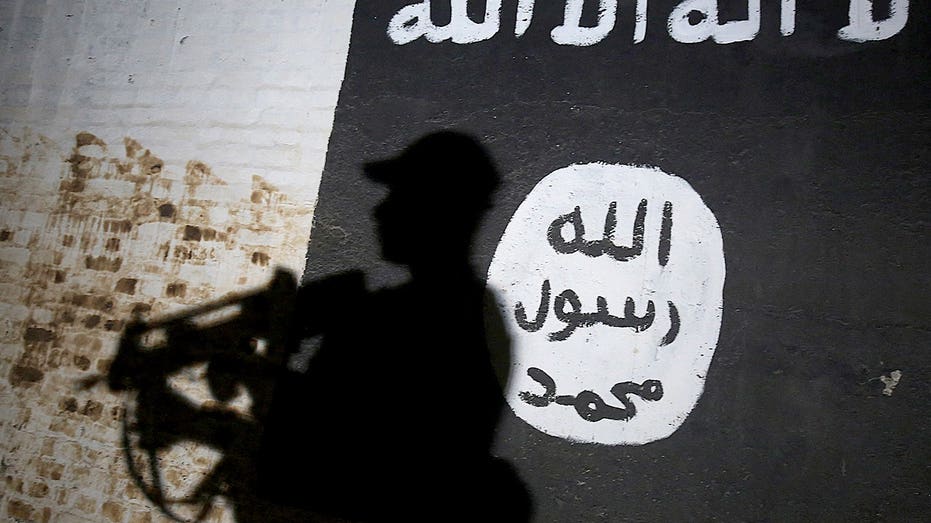
The Islamic State is quietly rebuilding as the United States prepares to complete its withdrawal from Iraq by September 30, raising concerns that a security vacuum could be exploited by the terror group.
A regional security expert warned that Iraq may be entering its most dangerous period since ISIS seized Mosul in 2014, as Baghdad attempts to bring Iran-backed militias under state control.
The expert noted that ISIS historically positions itself within gaps in security and governance, waiting to exploit instability. The central question is not whether U.S. forces will depart, but what capabilities and oversight leave with them.
Militias often cite the ISIS threat to justify retaining their weapons, while ISIS draws recruits from the grievances those same militias generate. This dynamic mirrors conditions that weakened Mosul before its 2014 capture.
More than a decade ago, ISIS spent years building underground networks through assassination, extortion, and infiltration before overrunning Mosul. Iraqi security forces collapsed, and the group seized U.S.-made weapons and hundreds of millions of dollars.
Iraqi forces, backed by a U.S.-led coalition, recaptured Mosul in July 2017. Although the U.S. combat mission ended in 2021, ISIS has continued operating in parts of Iraq and Syria.
U.S. Central Command has stated it will continue efforts to dismantle ISIS networks and prevent resurgence. However, citing Iraqi intelligence, the expert said ISIS fighter numbers in neighboring Syria have grown from roughly 2,000 to as many as 10,000 since the collapse of the Syrian government in 2024.
The Popular Mobilization Forces, integrated into Iraq's security structure, were never disbanded after ISIS's territorial defeat. The force is estimated at 238,000 members, receives billions in government funding, and includes Iran-aligned factions operating beyond direct state control.
Baghdad is now pushing to bring armed factions under full state authority. The expert described September 30 as a dual deadline: the U.S. withdrawal and the domestic disarmament effort occurring simultaneously.
Militias and ISIS are deeply interdependent, each justifying the other's existence. Both thrive in unstable spaces the central state cannot firmly hold.
The withdrawal follows a 2024 U.S.-Iraq agreement envisioning an end to the Iraq mission by 2025, with continued support for anti-ISIS operations in Syria through September 2026. The expert cautioned against repeating past complacency that preceded the 2014 fall of Mosul.
Mosul did not fall because ISIS was overwhelmingly strong, but because detection systems, attention, and honest ground reporting had been withdrawn while global focus shifted elsewhere.
A recent White House meeting where the Iraqi prime minister secured confirmation of the U.S. troop departure drew condemnation from Tehran. An Iranian adviser called the visit regrettable and claimed it damaged Iraq's dignity.
The expert said Iran's influence in Iraq is now more critical than at any point in a decade, as the country represents a key remaining asset after U.S. strikes degraded parts of its proxy network. Tehran's primary fear is not ISIS resurgence but its own irrelevance.
Iran fears an Iraq where militias are disarmed, U.S. forces leave on Baghdad's terms, and no security crisis remains to justify armed groups outside state control. The regime's strategic calculation centers on maintaining leverage.
What unfolds across the region after September will not be determined by stated intentions or diplomatic assurances. The expert warned that whether ISIS grows large enough to threaten Iran or stays limited to serve its interests will be a defining question in the year after withdrawal.