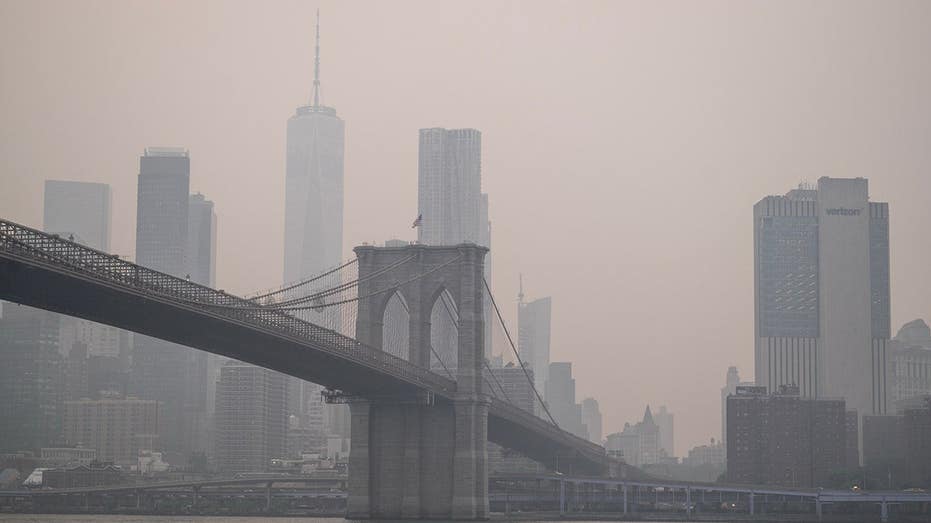
Smoke from Canadian wildfires continues to drift across parts of the United States, prompting renewed scrutiny of forest management practices north of the border.
The issue reached the White House on Friday, when the president accused Canada of failing to properly maintain its forests and threatened to factor the economic cost of cross-border smoke into tariffs on Canadian imports.
The president said he planned to call the Canadian prime minister and characterized the country's avoidance of basic forest management and debris removal as willful negligence.
Forestry policy experts have argued that Canada's wildfire strategy has underprioritized active land management. Critics cite a refusal to build firebreaks, thin overgrown forests, or maintain water reservoirs as contributing factors.
Earlier this week, four Republican members of Michigan's congressional delegation sent a letter to the Canadian prime minister stating that residents were again experiencing unhealthy air from drifting wildfire smoke.
The lawmakers rejected apologies in lieu of action, accusing Canada of underinvesting in forest thinning, fuel reduction, and prescribed burns, and demanded measurable prevention plans.
Canada's own Senate has reached a partly similar conclusion. While attributing longer and more severe fire seasons to climate change, a committee report found the country must do substantially more to prepare forests before ignition.
The Senate Committee on Agriculture and Forestry released its findings in June after 17 meetings, 79 witnesses, and 23 written briefs from scientists, officials, Indigenous leaders, and industry experts.
The committee determined that the three most recent wildfire seasons showed climate change accelerating fire behavior beyond the capacity of existing systems, while prevention efforts lagged the growing threat.
Much of the report centers on fuel management: reducing dry grass, dead trees, and fallen branches that allow small fires to escalate into destructive events.
Multiple witnesses told the committee that prescribed fire is the most important risk-reduction tool for managing landscape wildfire and restoring ecological integrity.
One forestry professor testified that climate change intensifies fire conditions through less snowpack and larger, hotter fires, but proactive management can still restore landscape resilience.
Another researcher advocated shifting focus from emergency response to preventive work, including spacing, thinning, and prescribed burns to lessen fire intensity.
Experts acknowledged that implementing such measures across Canada is difficult. Many fires occur in remote northern regions far from roads, requiring costly aerial access.
Senate witnesses also warned of non-management constraints, including shortages of wildfire expertise and an aging aircraft fleet with more than 20 planes needing immediate replacement.