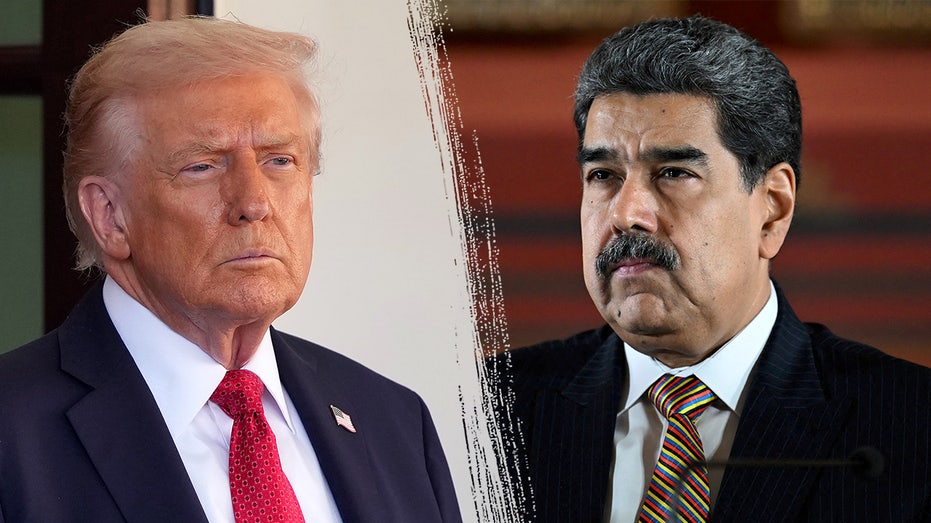
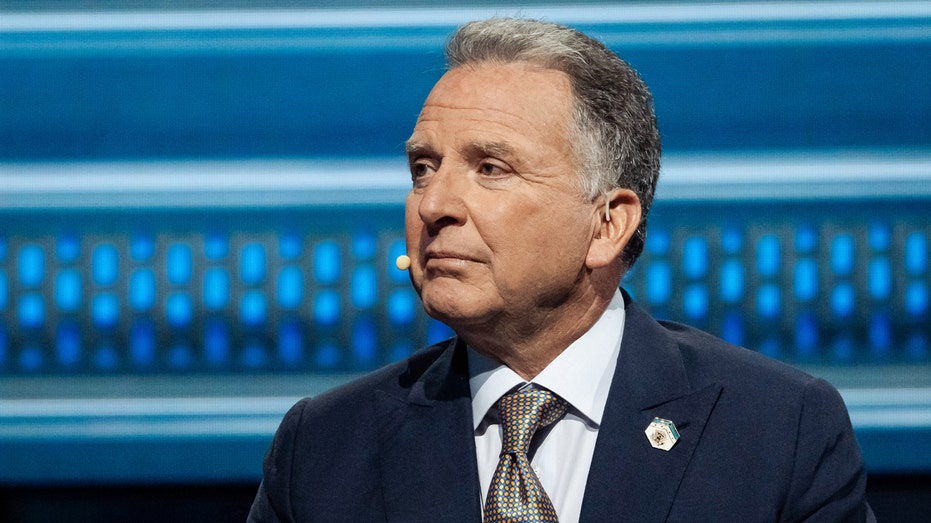
A former Navy commander and current congressional candidate has revealed a chilling assessment of the situation in Venezuela, warning it’s no longer simply a failing state, but an active threat to the United States.
Jay Furman, a decorated Blackhawk pilot with decades of experience in national security, paints a picture of Venezuela as a launchpad for a sophisticated hybrid war. He explains that recent actions, like the temporary airspace closure over the country and increased U.S. naval presence, weren’t merely symbolic.
Furman describes the airspace restriction as a critical step in “conditioning the battlefield,” a deliberate clearing of civilian air traffic to allow for targeted operations against drug trafficking networks, terrorist cells, and regime assets. It was, in his view, a clear signal of intent – a warning to Caracas, Tehran, and their allies.

The transformation of Venezuela, once a promising democracy, is now complete, according to Furman. It’s become a cartel-controlled narco-state, led by an illegitimate ruler clinging to power through rigged elections and a brutal security apparatus.
This isn’t just about political instability; it’s about a deliberate campaign targeting the United States. The flow of fentanyl and other deadly drugs, smuggled by sea, air, and across the southern border, is characterized as a form of “chemical-biological warfare” against American communities.
Furman connects this drug trade to a broader strategy of hybrid warfare, encompassing weaponized migration and interference in U.S. elections. He asserts that Venezuela has honed the art of “election engineering,” refining techniques that are now being deployed within the United States to erode public trust in the democratic process.
The stakes are incredibly high. Furman warns that once faith in the integrity of elections is lost, the very foundation of American rights and freedoms begins to crumble. He goes further, describing Venezuela as effectively “the Hezbollah of the South,” a haven for Iranian-backed terrorist groups.
Venezuela, he explains, provides a base of operations for Hezbollah, the Houthis, Hamas, and other proxies, allowing them to exploit ungoverned spaces and the porous border to position sleeper cells and facilitate illicit activities. This network collaborates with Venezuela’s powerful Cartel de los Soles to move drugs, launder money, and prepare for potential attacks.
Recent reports of Russia evacuating its citizens from Venezuela, Furman notes, suggest that even adversaries recognize the seriousness of the situation and the potential for decisive action. He believes a firm stance, similar to the one taken after the elimination of Qassem Soleimani, is forcing Caracas, Moscow, and Tehran to reconsider their calculations.
Energy policy plays a crucial role. Furman criticizes the current administration’s approach to the petrodollar system, contrasting it with the pressure tactics employed previously. He argues that rogue producers like Venezuela destabilize global markets, using their oil reserves as leverage against the West.
Neutralizing the Maduro regime and severing its ties with Russia and Iran, he contends, would not only stabilize global oil markets but also cut off a vital source of funding for hostile regimes. A long-term solution, however, requires a comprehensive plan for post-Maduro Venezuela, preventing it from becoming a permanent source of instability.
Furman frames the situation with stark clarity: Venezuela represents an existential security threat in America’s own hemisphere. He believes a strong, decisive approach – potentially including covert operations and targeted strikes – is necessary to dismantle the narco-terror nexus, secure the border, and restore stability for both Venezuelans and Americans.