A final chapter closed in a remarkable story of survival and resilience. The last monkey from a group that escaped a highway crash in Mississippi has found a permanent home at an animal sanctuary in New Jersey, finally safe from the turmoil that upended his life.
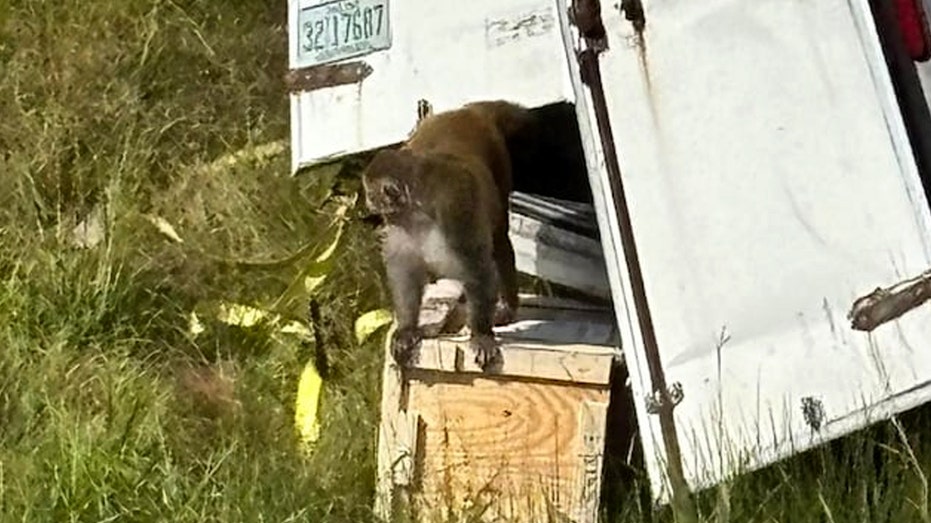
The harrowing incident began on October 28th when a transport van carrying 21 rhesus macaque monkeys overturned. These animals were en route from Tulane University in New Orleans, destined for a biomedical research facility. The crash unleashed chaos, and tragically, conflicting reports about the monkeys’ health led authorities to fatally shoot five of them, leaving thirteen still confined.
Three monkeys managed to escape the wreckage, disappearing into the surrounding landscape. Two were quickly located and shot by local residents in the days following the accident. The fate of the third remained unknown, fueling a week-long search that captivated the region.
Rescuers finally located the lone survivor, now affectionately named Forrest. He had spent days navigating an unfamiliar world, a stark contrast to the controlled environment he once knew. Because of his time on the run, a return to the research program was impossible, opening the door for a new life.
Popcorn Park Animal Refuge stepped forward, offering Forrest lifelong sanctuary. He arrived bearing only a tattooed identification number – “NI 62” – a symbol of his previous existence as a research subject. Now, within the refuge’s Monkey House, he’s slowly adjusting to a life of safety and care.
Caretakers report Forrest is gradually building trust, recognizing faces, and even discovering favorite treats, with grapes topping the list. His increasing vocalizations are a particularly encouraging sign, indicating a growing sense of comfort and confidence in his new surroundings.
The story, while offering a rare positive outcome, also sparked a wider debate about the ethics of animal research. Advocates point to Forrest’s survival as a poignant reminder of the suffering inherent in the system, arguing that no animal should require a catastrophic event to find freedom.
The monkeys originated from a research center receiving federal funding, prompting calls for increased oversight and a reevaluation of primate testing. Following the incident, the Centers for Disease Control and Prevention agreed to phase out experiments on monkeys, a significant victory for animal welfare organizations.
This decision was hailed as a monumental step forward, acknowledging the failures of decades-long research efforts and the inherent risks associated with importing and housing primates. Concerns about disease transmission and regulatory lapses within the primate supply chain had been mounting for years.
Forrest’s story, therefore, represents more than just one monkey’s rescue. It embodies a growing movement towards prioritizing humane, human-relevant science and ending the reliance on animal experimentation, offering a glimmer of hope for a more compassionate future.