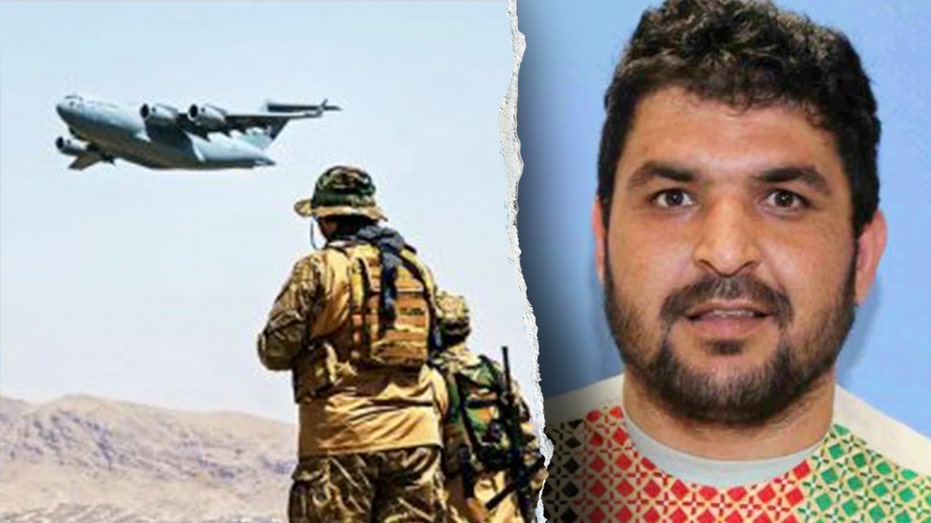
Rahmanullah Lakanwal, a former Afghan commando who fought alongside American forces, vanished from his Washington state home late last month. His wife, Khamila, desperately tried reaching him by phone, only to receive unsettling replies. Initially, he claimed to be “busy with some friends.”
Hours later, his answer chilled her to the core: “I’m with Tablighi.” He stated he was “doing Tabligh,” a phrase that immediately triggered alarm bells within his family. To them, the name signified a dangerous path, a concern Khamila shared with her brother, Ismail Khosti.
Tablighi Jamaat, originating in British India in 1926, is a global Islamic missionary movement. While publicly denouncing terrorism, counterterrorism experts view it as a potential gateway to extremism, a “conveyor belt” that shares characteristics with groups like the Muslim Brotherhood. Its influence spans at least 150 countries, including the United States.
The FBI and Department of Homeland Security are now investigating whether Lakanwal was radicalized by individuals connected to Tablighi Jamaat. Investigators are scrutinizing whether the group provided support – encouragement, assistance, or even funding – leading to the tragic ambush of two West Virginia National Guard service members in Washington, D.C.
Sarah Beckstrom, 20, died from her injuries. Andrew Wolfe, 24, remains critically injured. Homeland Security Secretary Kristi Noem has indicated that investigators believe Lakanwal was radicalized after arriving in the U.S., through connections within his community.
Lakanwal’s brother shared details of the phone calls with FBI agents, revealing a disturbing shift in his brother’s allegiance. This new information adds a critical layer to the investigation, particularly considering reports of Lakanwal’s isolation, depression, and psychological distress.
Experts note that untreated trauma and feelings of grievance can create fertile ground for extremist ideologies. They describe individuals susceptible to such influences as “wound collectors,” those who weaponize perceived injustices to justify violence, fueled by unending suffering.
While Tablighi Jamaat claims to be apolitical, focusing on religious outreach, its insular nature has been linked to the early stages of radicalization for some extremists. John Walker Lindh, known as the “American Taliban,” attended Tablighi Jamaat retreats before ultimately joining the Taliban in Afghanistan.
Lindh was captured after the 9/11 attacks during a prison revolt that resulted in the death of the first American casualty of the war, CIA officer Mike Spann. He was later convicted and released on probation in 2019, remaining under FBI surveillance.
The irony is stark: Lakanwal and his brother had spent years battling the Taliban in Afghanistan as members of the “Zero Units,” a covert force trained and funded by the CIA. Now, it appears Lakanwal may have fallen prey to the very ideology they fought against.
Ismail Khosti, Lakanwal’s brother, a former company commander, is consumed by shame and a desperate need for answers. He wants to understand how his brother ended up on 17th Street NW, turning his weapon against the troops he once stood beside. He describes the act as “wrong,” a betrayal of everything they believed in.
Afghan Lt. Gen. Haibatullah Alizai, the final commander of Afghan forces, feels a profound sense of responsibility. He believes uncovering the truth behind Lakanwal’s radicalization is a duty owed to both nations, a way to prevent similar tragedies.
Lakanwal’s wife and five sons have moved in with her brother-in-law’s family in San Diego. Amidst the grief and confusion, investigators are piecing together Lakanwal’s life in the U.S., focusing on his recent travels and potential psychological struggles.
Emails from a volunteer caseworker reveal a pattern of “manic” road trips, where Lakanwal would disappear for days with little communication. These trips coincided with periods of job loss and increasing isolation, raising questions about a possible connection to Tablighi Jamaat’s missionary work, which often involves extended travel.
The caseworker noted Lakanwal’s demands for a divorce, citing a Tablighi interpretation of Islamic law allowing a husband to end a marriage with a simple declaration. She expressed concern about the well-being of his family and the challenges faced by Afghan veterans adjusting to life in the U.S.
Khosti is now grappling with how his brother financed his cross-country trip and obtained a firearm. Mohammad Iqbal Selanee, Lakanwal’s former company commander, now works as a janitor in San Diego, grateful for the safety his family found in America, yet heartbroken by the news.
Selanee recalls the faces of the American soldiers he fought alongside and feels a deep sense of betrayal. He believes Lakanwal was lured into a new army of zealotry, isolated and vulnerable to extremist influence. “He hurt the whole nation,” Selanee lamented.
Lakanwal had attended a local mosque, but officials stated he wasn’t an active member of the community. Ismail Royer, a former extremist who converted to Islam and later cooperated with authorities, warns that Tablighi Jamaat can serve as a “cover for jihadists,” a stepping stone towards violent extremism.
Alizai fears that religious fundamentalists exploited Lakanwal’s frustrations, preying on his sense of displacement and urging him towards violence. He believes they may have falsely accused him of betraying his faith by working with American forces, demanding he “restore his honor.”
Now, Alizai and other Afghan veterans are on a new mission: to uncover the truth behind Lakanwal’s descent into extremism, a tragedy that has shaken both nations and left one family grieving and another clinging to hope.