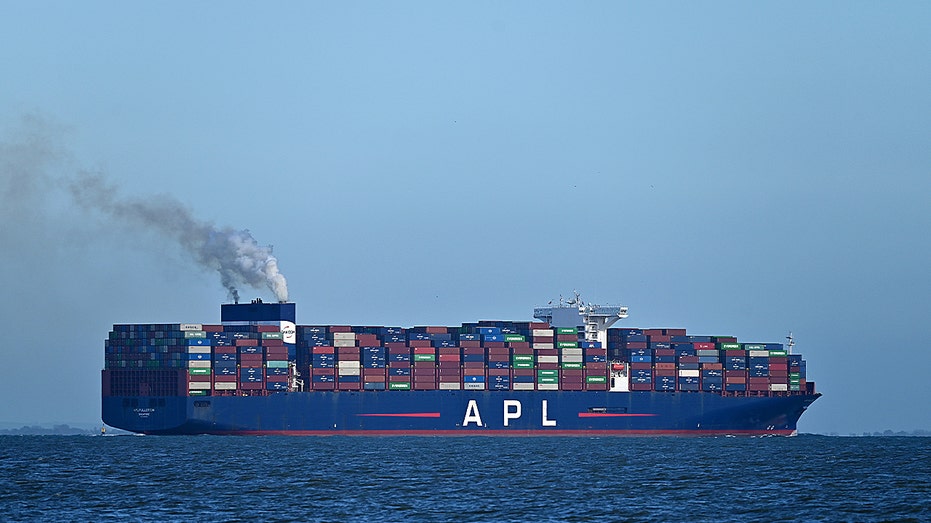
A chilling revelation has surfaced: two individuals suspected of being Russian operatives quietly infiltrated the United Kingdom, slipping past traditional security measures. Their entry wasn't through bustling airports or heavily guarded borders, but via the seemingly innocuous routes of commercial cargo ships.
Intelligence suggests these men arrived throughout the spring and summer, utilizing ports in Torquay, Middlesbrough, and Grangemouth. These weren’t flagged as Russian vessels, nor were they part of the Kremlin’s known “shadow fleet,” deliberately avoiding suspicion and blending into the vast network of global trade.
A high-ranking defense source confirmed a link to President Putin’s military and intelligence apparatus, painting a picture of calculated and deliberate action. The method of entry itself is a significant concern, exploiting vulnerabilities in maritime security that were previously underestimated.
NATO officials have corroborated this information, revealing a pattern of Russian operatives utilizing ordinary cargo vessels for discreet travel. These ships, they explain, offer the perfect camouflage – a natural and expected presence in international waters, allowing for undetected movement of personnel.
One operative reportedly journeyed from Finland, landing in Torquay. The other, previously identified near an intelligence facility in Moscow, is believed to have arrived from Kaliningrad, utilizing the ports of Middlesbrough and Grangemouth as entry points.
The second operative’s movements after disembarking are particularly unsettling. Time spent near a storage facility in Grangemouth was followed by a visit to a retail park in Falkirk, raising questions about the nature of his reconnaissance.
Adding to the gravity of the situation, both ports – Middlesbrough and Grangemouth – are currently being considered by the Ministry of Defence as potential locations for new UK weapons factories. These currently unused sites represent a potential security risk, now under heightened scrutiny.
Experts in intelligence analysis believe this tactic is a logical extension of Russian espionage. It’s not simply about reaching existing contacts within the UK, but about deploying dedicated operatives to conduct specific, sensitive activities on the ground.
The ability to identify and exploit weaknesses in European port security demonstrates a sophisticated understanding of logistical vulnerabilities. Russian agents appear to have actively monitored and “tested” these locations, searching for points of entry that would evade detection.
This isn’t a case of accidental oversight; it’s a deliberate strategy to circumvent traditional security protocols, highlighting the evolving challenges faced by Western intelligence agencies in a world of increasingly complex global trade networks.