The premiere of “The War Between The Land And The Sea” arrived last night, brimming with potential yet ultimately leaving a lingering sense of dissatisfaction. Despite flashes of brilliance, the series stumbles with its political undertones and a troubling portrayal of its female characters.
From the outset, the narrative prioritizes character over spectacle. While framed by an apocalyptic conflict with global consequences, the story anchors itself in the experiences of ordinary people. Russell Tovey’s performance as Barclay immediately establishes this connection, serving as an accessible entry point for viewers unfamiliar with the broader universe.
Tovey injects a vital warmth and humor into the proceedings, preventing the narrative from descending into bleakness. His portrayal feels deliberately grounded, a relatable human face amidst extraordinary circumstances. He doesn’t just play a character; he invites the audience to experience the unfolding events alongside him.
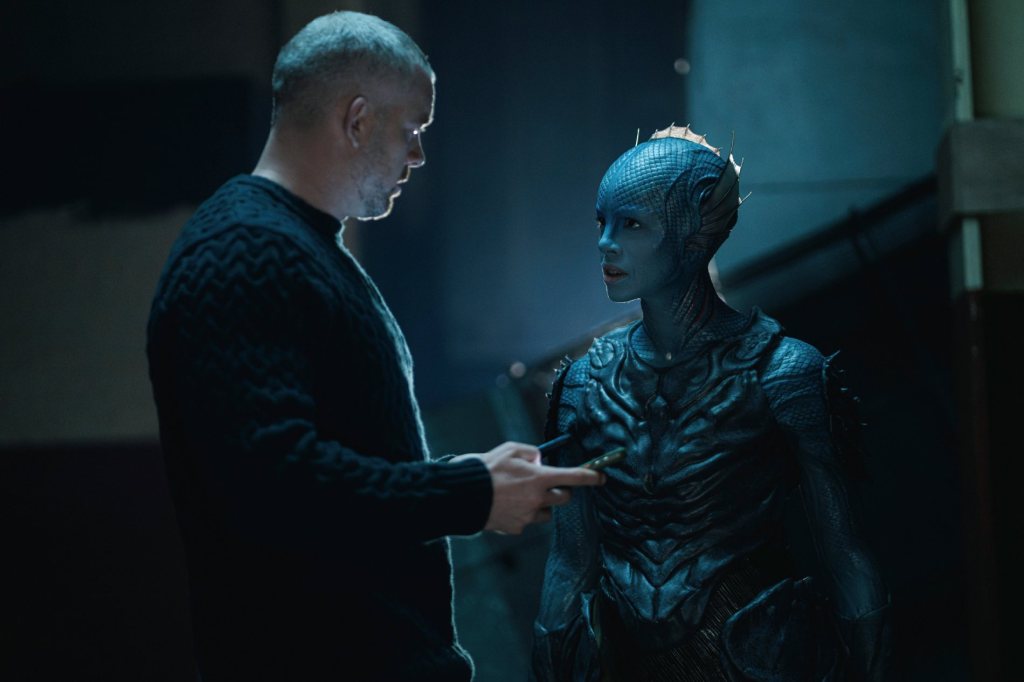
Technically, the production is undeniably impressive. The increased resources are evident in the stunning visuals and genuinely unsettling creature design. The reimagined Sea Devils, now known as ‘Homo Aqua,’ are a striking departure from their original appearance, and the redesign proves remarkably effective.
The series doesn’t shy away from its central metaphor: a full-blown climate disaster. The allegory is direct and urgent, presented without subtlety or ambiguity. It’s a deliberate choice, demanding the audience confront the implications rather than deciphering hidden meanings.
However, the show falters in its treatment of female characters, most notably Salt, portrayed by Gugu Mbatha-Raw. A pivotal scene depicts a barrage of dismissive aggression from male leaders, undermining Barclay’s authority. Salt’s response – a transformation into a more traditionally masculine presentation – is deeply unsettling.

This ambiguity feels profoundly unproductive. Is the scene intended as a critique of male aggression, a commentary on gendered power dynamics, or a disheartening endorsement of the notion that authority requires a masculine facade? The lack of clarity leaves a sour taste.
Despite attempts to establish its own identity, “The War Between The Land And The Sea” struggles to fully separate itself from its origins. Frequent references to “The Doctor” reinforce its status as a spin-off, potentially alienating viewers without prior investment in the established universe.
Interestingly, the series feels markedly stronger than recent iterations of “Doctor Who” itself. This raises the question of whether Russell T Davies focused his creative energy on this new venture, resulting in sharper character work, more controlled pacing, and a more cohesive thematic focus.
For dedicated fans of “Doctor Who,” this series will likely prove essential viewing. While it may not revolutionize the landscape of science fiction, it represents a promising start, offering a compelling narrative and a captivating central performance.