A clandestine financial network, orchestrated by Hamas under the direction of Iran, has been uncovered operating within central Turkey. Israeli intelligence agencies revealed compelling evidence this week detailing how exiled Gazans are leveraging Turkey’s financial systems to funnel substantial funds to the organization.
The scale of these transfers is staggering, reaching hundreds of millions of dollars. This isn’t simply about small transactions; it’s a sophisticated operation designed to rebuild Hamas’s capabilities far beyond the confines of Gaza, effectively establishing a financial stronghold outside its traditional territory.
Documents obtained by Israeli security forces reveal a pattern of currency transfers, representing only a fraction of the total activity. The network functions as a conduit for Iranian funds, receiving, storing, and ultimately distributing them to Hamas and its key leaders.
Three individuals have been identified as central figures in this operation: Tamer Hassan, a senior Hamas finance official operating directly under Khalil al-Hayya; and currency exchangers Khalil Farwana and Farid Abu Dair. Their roles are critical to the flow of money and the network’s continued operation.
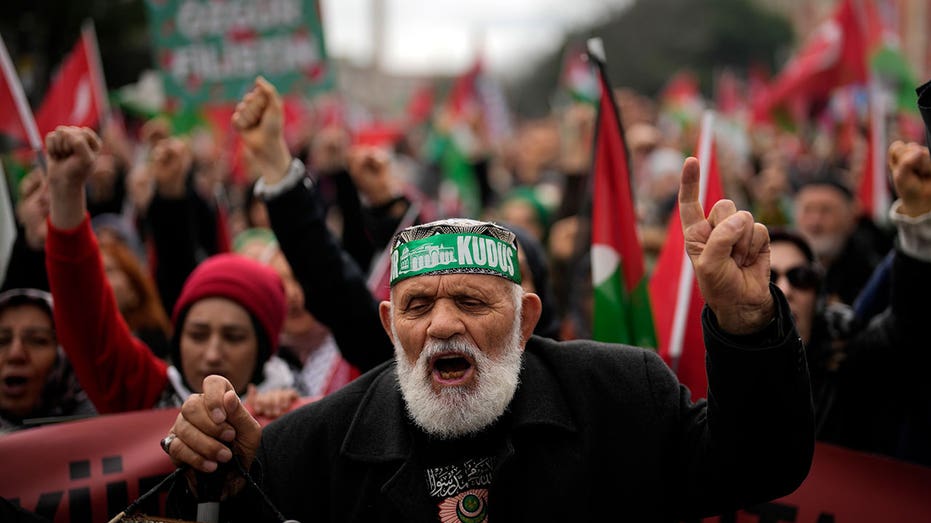
This revelation arrives at a critical juncture, coinciding with ongoing debate in the United States regarding Turkey’s role in the region and its complex relationship with Hamas. For years, Turkey has provided a haven for Hamas figures, even seeking a prominent position in any potential postwar Gaza reconstruction efforts.
Experts suggest that Turkey’s political protection of Hamas, coupled with its adversarial stance towards Israeli military actions, has created an environment where this network can flourish. Israeli pressure alone is insufficient to dismantle it, highlighting the depth of the problem.
The network’s existence isn’t merely a financial concern for Israel; it’s a stark strategic warning. Iran is steadily embedding itself within Turkey’s economic landscape, empowering a regional proxy to regenerate and potentially launch future attacks, jeopardizing Israel’s security objectives.
Turkey’s support for Hamas is deeply intertwined with domestic political considerations. President Erdoğan has consistently positioned himself as a champion of the Palestinian cause, a stance that resonates with his conservative base and fuels his political survival.
However, behind the scenes, Erdoğan has demonstrated a degree of pragmatism, particularly in his dealings with the United States. Reports suggest that Hamas leadership has been quietly asked to leave Turkey at times, and Erdoğan even attempted to persuade Hamas to accept a previous Gaza proposal from the U.S. administration.
Israeli officials have long maintained that Turkey’s permissive environment allows Hamas to operate external networks, including those financially supported by Iran. The newly released intelligence serves as further confirmation of these risks and underscores the potential dangers of increased Turkish involvement in Gaza’s future.
The IDF and ISA have issued a clear warning: individuals and institutions engaging with this network, or any other financial arm linked to Hamas, risk contributing to terrorist financing and aiding the organization’s efforts to rebuild its infrastructure abroad. The implications are severe and far-reaching.